
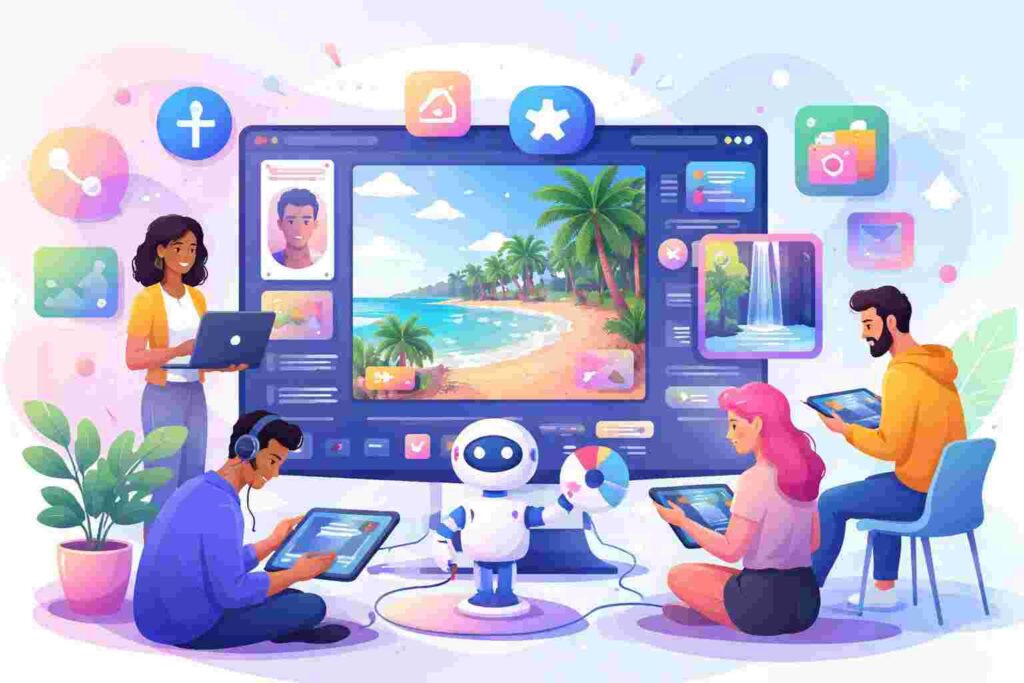
In today’s digital landscape, AI image editing tools have emerged as game-changers in how visual content is created and transformed. These innovative tools leverage sophisticated technologies to enhance images, streamline workflows, and empower creators to push the boundaries of their artistic expression. This article delves into the intricate world of AI image editing, exploring its foundational principles, technical workings, and remarkable applications across various industries. By the end, you’ll have a comprehensive understanding of how these tools are reshaping content creation and what the future holds.
Understanding AI Image Editing Tools
In an era where visuals dominate content consumption, AI image editing tools offer users unprecedented capabilities. They harness the power of artificial intelligence to automate processes that were once time-consuming and labor-intensive.
What is AI Image Editing?
AI image editing refers to the use of artificial intelligence technologies to alter or enhance images dynamically. These tools utilize machine learning algorithms to analyze, modify, and improve images, allowing users to achieve sophisticated results with minimal effort. By recognizing patterns and elements within an image, AI can make adjustments that enhance colors, correct lighting, and even generate completely new visuals from scratch.
Key Technologies Behind AI Image Editing
- Machine Learning: Algorithms that learn from data inputs and can improve with experience to enhance image features and recognize objects.
- Neural Networks: Layered structures that simulate human brain functions, enabling complex tasks like image classification and generation.
- Generative Adversarial Networks (GANs): Frameworks that consist of two neural networks competing against each other to create more realistic images.
- Image Processing Techniques: Traditional methods combined with modern AI approaches to enhance image quality and performance.
Overview of Popular AI Image Editing Tools
Several leading tools exemplify the capabilities of AI image editing. These include:
- Adobe Photoshop: Integrating AI features for tasks like auto-tagging and intelligent object selection.
- Canva: An accessible design platform with AI-driven templates and design suggestions.
- Luminar AI: Focused on enhancing photographs with AI tools for sky replacement and portrait enhancements.
- Fotor: A robust online editor using AI for enhancing images and creating collages.
How AI Image Editing Works
Understanding the mechanics of AI image editing reveals how these tools deliver rapid and impressive results. The core technologies at play are fascinating.
Image Recognition Algorithms
Image recognition is the backbone of AI image editing programs. These algorithms can effectively identify and categorize elements within an image, such as objects, faces, and scenery. By training on massive datasets, the algorithms learn to distinguish between different visual components, allowing them to apply specific edits based on identified features.
Deep Learning Techniques in Image Editing
Deep learning, a subset of machine learning, enables AI systems to learn from vast amounts of data without human intervention. These techniques facilitate tasks like generating photorealistic images or adjusting features automatically. For instance, they can analyze user-uploaded images to suggest style adjustments tailored to existing aesthetic trends.
Computer Vision and Its Role
Computer vision technology plays a pivotal role in the functioning of AI image editing tools. By enabling computers to interpret and understand visual information, it allows for sophisticated analyses of images. This understanding is critical for tasks such as enhancing image resolution, detecting and removing blemishes, or even altering the background while retaining focus on subjects.
Business Applications of AI Image Editing
AI image editing tools are not just creative assets; they are powerful business tools that provide measurable benefits across various sectors.
E-commerce and Retail
In the e-commerce realm, visually appealing images are crucial for successful sales. AI image editing tools help businesses create enticing product visuals that enhance customer engagement. For example, they enable the generation of high-quality images from simple pictures, making listings more attractive and potentially boosting conversion rates.
Marketing and Advertising
Marketers utilize AI-driven images to create persuasive campaigns. From targeted social media ads to tailored email marketing visuals, these tools allow for rapid content creation without sacrificing quality.
Media and Entertainment
The media industry benefits significantly from AI image editing. News organizations can quickly edit photographs to suit their narratives, while film studios can use AI to enhance visual effects and post-production processes.
Healthcare Imaging
AI image editing has profound implications in healthcare, particularly in radiology. Tools that optimize imaging can assist in more accurate diagnoses, making treatments more effective.
Education and E-learning
E-learning platforms utilize AI image editing to create engaging visual content, enhancing the learning experience. Accessible, visually appealing educational materials draw in learners, facilitating better knowledge retention.
Strategic Advantages of AI Image Editing
Organizations that adopt AI image editing tools stand to gain various strategic advantages that can enhance productivity and creativity.
Cost-Effectiveness
- Reduced labor costs associated with image editing.
- Minimized need for extensive photography sessions due to enhanced editing capabilities.
- Lower resource consumption through automated systems.
- Increased ROI from improved visual content performance.
Speed and Efficiency
AI tools enhance operational speed significantly. They can complete complex editing tasks in seconds that would traditionally take hours or days, allowing teams to focus on other creative aspects.
Enhanced Creativity and Customization
With AI handling mundane tasks, creatives have more bandwidth to experiment and innovate. Custom templates and suggestions lead to unique creations that align with branding.
Limitations of AI Image Editing Tools
Despite their advantages, AI image editing tools come with limitations and risks that users must consider.
Quality Control Issues
While AI excels in rapid edits, the quality may not always meet professional standards. Automated edits can sometimes overlook nuanced details that a human editor would catch.
Ethical Concerns
- Potential for misuse in creating misleading images.
- Inapplicability in sensitive industries where accuracy is paramount.
- Issues surrounding copyright and ownership of AI-generated images.
Dependence on Technology
Over-reliance on AI tools can lead to a decline in traditional editing skills among professionals. Maintaining a balance between technology and creativity is crucial to avoid diminishing human artistry.
Comparing Popular AI Image Editing Tools
As the market for AI image editing tools grows, a comparative analysis can help users make informed choices based on their unique needs.
Feature Comparison Table
| Tool | Key Features | Pricing | User Experience |
|---|---|---|---|
| Adobe Photoshop | Advanced editing, AI filters, cloud integration | $20.99/month | Comprehensive with a steep learning curve |
| Canva | Templates, drag-and-drop interface, collaboration tools | Free, Pro at $12.99/month | User-friendly, intuitive design |
| Luminar AI | AI portrait enhancement, sky replacement, mood editing | $79 one-time fee | Simplistic and fast for beginners |
| Fotor | One-click editing, collage maker, UI toolkit | Free, Pro at $8.99/month | Accessible for all skill levels |
Statistics and Market Trends in AI Image Editing
The landscape of AI image editing tools is rapidly evolving. Currently, the market for AI-powered image editing is projected to grow at a CAGR of 24% during the forecast period from 2022 to 2027, indicating a robust demand driven by technological advancements and increased user adoption.
User Adoption Rates
According to industry studies, approximately 65% of professionals in creative fields have begun incorporating AI tools into their workflows. This statistic highlights a significant shift towards automating tedious editing processes, allowing creatives to focus on their core competencies.
Impact on Content Creation Industries
AI image editing tools are not only improving efficiency but are also influencing creative industries. As the tools become more accessible, they are democratizing content creation, enabling even non-professionals to produce high-quality visual content.
Real-World Case Studies of AI Image Editing
To illustrate the value of AI image editing, several companies have reported measurable outcomes from integrating these tools into their operations.
Case Study from E-commerce
A popular e-commerce company adopted AI image editing tools for enhancing product photos. Before implementation, their product photo quality suffered, leading to a high bounce rate. After integrating AI editing tools, they observed a 30% increase in conversion rates within four months.
Such transformations underscore the tangible benefits of leveraging these technologies for real-world impacts.
Case Study in Advertising
A marketing firm utilized AI to quickly create visually compelling ad creatives for multiple campaigns simultaneously. Their turnaround time for creating ads decreased from weeks to days, resulting in a 50% improvement in campaign performance. The impressive results underscore the efficiency that AI brings to marketing endeavors.
Before and After Metrics
Many companies utilizing AI tools report enhancements not just in efficiency but also in the quality of their output. For instance, a media outlet that adopted AI for photo enhancements reported a 40% increase in audience engagement post-transition, illustrating the effectiveness of these tools.
The Future of AI Image Editing Tools
Looking ahead, the future of AI image editing is promising with potential shifts that could redefine the space.
Emerging Technologies
New developments in machine learning and computer vision are expected to produce even more sophisticated editing tools. Innovations such as real-time editing, where changes occur live as users adjust images, could set a new standard in the industry.
Predicted Industry Changes
As AI continues to integrate deeper into the creative process, manual editing roles may pivot towards more strategic positions focused on directing AI outputs. Machine learning’s capabilities will evolve, granting tools the ability to learn user preferences over time, ultimately enhancing the personalization of edits.
AI Ethics Considerations
With these advancements, ethical considerations will remain paramount. Establishing guidelines for the responsible use of AI in image editing will be critical to avoid detrimental impacts on authenticity and originality in visual content.
Frequently Asked Questions about AI Image Editing Tools
How do AI image editing tools work?
AI image editing tools function by leveraging algorithms that analyze and modify images based on a range of inputs. These tools rely on technologies such as machine learning and computer vision to identify features within images and implement changes automatically. This automated process allows users to achieve high-quality results without extensive manual labor.
What are the best tools available?
Some of the top AI image editing tools include Adobe Photoshop for its advanced features, Canva for its user-friendly interface, Luminar AI for its specialized photo enhancements, and Fotor for quick edits. Each of these tools offers unique capabilities that can cater to different user needs, whether for professional-quality edits or simple adjustments.
Are AI image editing tools user-friendly?
Many AI image editing tools are designed with user-friendliness in mind. Platforms like Canva cater to beginners with intuitive interfaces and drag-and-drop functionality, making them accessible to individuals with no prior editing experience. Conversely, more advanced tools like Adobe Photoshop may have a steeper learning curve but provide extensive capabilities for users willing to invest time in mastering them.
What industries benefit the most from AI image editing?
Several industries derive significant benefits from AI image editing tools, including e-commerce, marketing and advertising, media and entertainment, healthcare, and education. Each industry leverages these tools to enhance their visual offerings, making content more engaging and effective in reaching targeted audiences.
What are the ethical implications?
Ethical implications surrounding AI image editing primarily revolve around authenticity and ownership. Questions arise regarding the manipulation of images and the potential for creating misleading representations. As AI technology evolves, it’s vital for industries to establish ethical standards to ensure responsible use and maintain the integrity of visual content.
Can AI replace human editors?
While AI image editing tools can significantly enhance productivity and streamline processes, they are unlikely to fully replace human editors. Rather, they are designed to augment human creativity, allowing for faster and more efficient workflows. The nuanced understanding and artistic judgement of human editors remain invaluable, particularly in contexts where emotional resonance and storytelling are essential.
Conclusion
In summary, AI image editing tools are revolutionizing the way visual content is created, offering diverse applications across industries and providing measurable benefits. As technology continues to advance, these tools will only grow more powerful, reshaping the future of content creation. By integrating AI image editing into workflows, creators and businesses alike can enhance their productivity, creativity, and overall impact.
Recap of Key Points
The importance of AI image editing tools is evident in their ability to increase efficiency, improve quality, and empower users to create stunning visuals. Simultaneously, being aware of the limitations and ethical considerations is crucial for responsible implementation.
Final Thoughts on Future Prospects
Looking ahead, embracing AI in the creative process will be essential for staying competitive in an increasingly visual world. As we navigate this exciting frontier, fostering creativity, accountability, and thoughtful integration will be key to unlocking the full potential of AI image editing.

I learned something new from this post.
Keep up the great work.
Keep up the great work.
Keep up the great work.
Keep up the great work.