In today’s digital landscape, the significance of AI image generation tools cannot be overstated. With rapid advancements in artificial intelligence, businesses and creatives alike are leveraging these tools to revolutionize their workflows and bring imaginative concepts to life. This article delves deep into the mechanics, applications, and implications of AI image generation tools, providing insights that are poised to shape the future of numerous industries.
Understanding AI Image Generation
AI image generation is a fascinating field that merges technology and creativity, leading to innovations that challenge traditional methods of image creation. At its core, these tools utilize machine learning algorithms to generate images based on input data or parameters set by a user.
Definition of AI Image Generation
AI image generation refers to the process by which artificial intelligence systems create images or visuals by learning patterns from existing datasets. These tools can mimic styles, generate original artwork, or create photorealistic images from textual descriptions. Essentially, it transforms ideas into images, opening up new avenues in digital creativity.
Key Technologies Involved
- Machine Learning Algorithms
- Deep Learning (Neural Networks)
- Generative Adversarial Networks (GANs)
- Natural Language Processing for input interpretation
Historical Context and Evolution
The evolution of AI image generation can be traced back to the inception of machine learning. Early algorithms were simplistic and often produced abstract results. However, with the advent of more complex architectures like GANs, the capability for photorealism and stylistic representation surged dramatically. Today, AI tools are being refined continuously, leading to outputs that are increasingly indistinguishable from human-generated art.
How AI Image Generation Works
To understand AI image generation, one must appreciate the underpinning technologies and methodologies that facilitate this innovation. From neural networks that elaborate on patterns to GANs that create compelling images, the inner workings of these tools are as intricate as they are revolutionary.
Generative Adversarial Networks (GANs)
GANs are at the forefront of AI image generation. They consist of two neural networks — the Generator, which creates images, and the Discriminator, which evaluates them. These networks are pitted against each other: the Generator strives to produce images that are as realistic as possible, while the Discriminator attempts to distinguish between real images and those created by the Generator. Over time, this adversarial process produces remarkably realistic images.
Neural Networks in Image Synthesis
Neural networks are computational models inspired by the human brain. In image generation, they analyze vast datasets of images to learn patterns, styles, and other features. Convolutional Neural Networks (CNNs) and variations thereof are often employed specifically for their efficacy in image-related tasks. These models enable AI to understand context and intricacies within images and to recreate or adapt them creatively.
Data Training and Model Optimization
The effectiveness of any AI image generation tool heavily relies on data input and model optimization. Training a model requires large datasets that showcase a diverse array of images to avoid biases and inaccuracies. Techniques such as transfer learning and hyperparameter tuning further enhance these models, making them adaptable for various creative tasks.
Impact on Creative Industries
As AI image generation tools mature, their influence on creative industries becomes increasingly apparent. These technologies are not just augmenting existing processes; they are redefining the very nature of creativity and productivity across sectors.
Advertising and Marketing
- Efficient Visual Content Creation
- Personalized Advertising Campaigns
- Cost Savings on Graphic Design
- Enhanced Customer Engagement
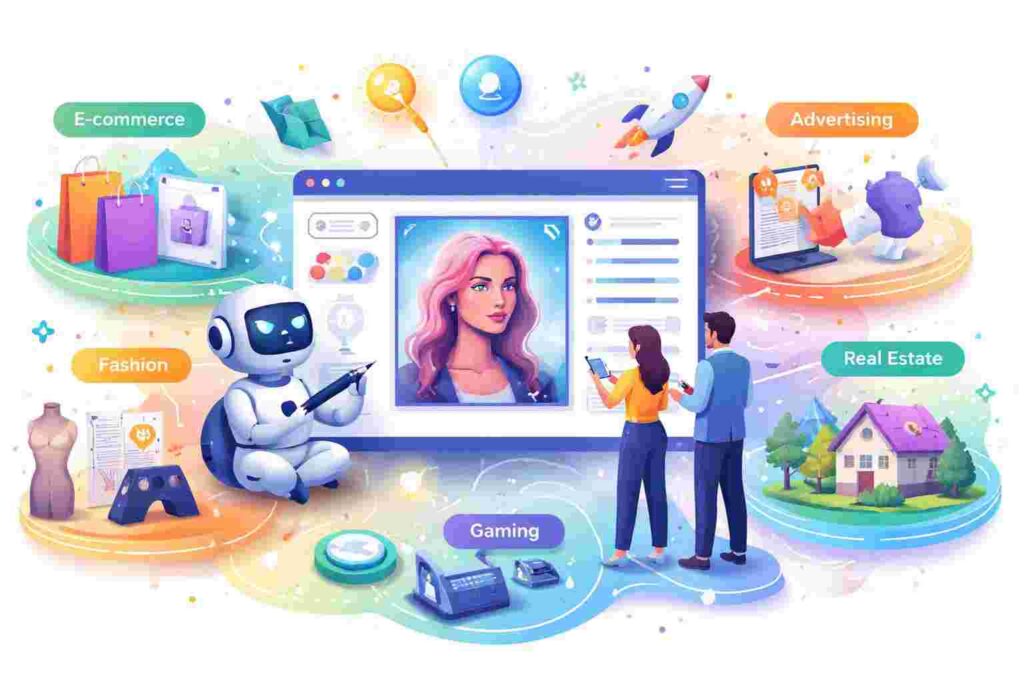
In the advertising world, the ability to generate unique visuals quickly and affordably has transformed campaign strategies. Brands can now create tailored messages that resonate with their audiences far more effectively than traditional methods.
Fashion and Design
- Innovative Textile Designs
- Virtual Fashion Shows
- Efficient Prototyping and Sampling
- Enhanced Consumer Interaction
The fashion industry has embraced AI-generated visuals for creating new patterns and styles, which can be tested in virtual shows prior to production, reducing waste and ensuring marketability.
Gaming and Entertainment
- Dynamic Game Asset Creation
- Realistic Character Development
- Immersive Virtual Reality Experiences
- Cost-effective Storyboard Illustrations
In gaming, developers harness AI image generation to create environments and assets on-the-fly, allowing them to enhance user experiences without the traditionally extensive resource expenditure.
Advantages of AI Image Generation
AI image generation tools provide numerous strategic advantages for organizations looking to enhance their creative output and operational efficiency.
Cost Efficiency
- Reducing labor costs associated with graphic design
- Minimizing expenses on stock photography
- Lowering production costs for visual media
- Less overhead in content generation processes
By automating the creation of visual content, companies can significantly reduce costs while maintaining quality, allowing for reinvestment in other areas of the business.
Speed of Production
- Quicker turnaround on creative projects
- Real-time adjustments and adaptations
- Rapid prototyping of visual concepts
- Immediate feedback loops through AI-generated outputs
The acceleration of production cycles afforded by AI tools enables organizations to respond swiftly to market demands and trends, thereby maintaining a competitive edge.
Customization and Personalization
- Tailored content for specific demographics
- Dynamic visual creation based on user data
- Adaptable visuals for different platforms
- Enhanced customer satisfaction through personalized experiences
Customization has become essential in modern marketing, and AI image generation tools facilitate hyper-personalization at scale, translating user data into distinct visual experiences.
Challenges and Limitations
Despite their advantages, AI image generation tools are not without risks and limitations. It is crucial for businesses to understand these challenges to mitigate potential downsides in their implementation.
Ethical Concerns
- Creation of misleading content
- Potential for deepfake issues
- Concerns over authenticity and originality
- Impacts on traditional artists and creators
The ethical implications of AI-generated images are significant. Issues such as misleading representations and the potential misuse of generated content raise questions about the technology’s moral responsibilities.
Quality Control Issues
- Consistency across different generated outputs
- Unsuitable content generation
- Dependence on quality of training data
- Visual discrepancies in multi-layered images
Another challenge lies in ensuring that the output quality meets expectations consistently. Erroneous or low-quality images could damage brand reputation, necessitating robust quality control measures.
Intellectual Property Rights
- Ownership of AI-generated content
- Copyright implications for generated art
- Liability for generated outputs
- Confusion over traditional rights versus AI-generated rights
The legal landscape surrounding the intellectual property rights of AI-generated images is still murky. Determining ownership and rights can lead to complex intellectual property disputes that new technology has yet to fully address.
Comparison of Leading Tools
The landscape of AI image generation tools is rapidly evolving, with various platforms offering unique features, capabilities, and user experiences. To aid in decision-making, here is a comparison of some of the leading tools in AI image generation:
| Tool | Core Feature | Performance Metrics | User Experience | Cost |
|---|---|---|---|---|
| Tool A | Generates art based on textual prompts | High realism, 95% satisfaction rating | Intuitive interface | $30/month |
| Tool B | Real-time rendering for game assets | Fast processing, 80% efficiency increase | Steeper learning curve | $50/month |
| Tool C | Creates personalized marketing visuals | High engagement, 90% retention rate | Easy to navigate | $20/month |
| Tool D | Offers diverse styles and themes | Flexibility, 85% user adaptability | User-friendly with guided tutorials | $40/month |
Current Market Trends and Statistics
The market for AI image generation tools is experiencing promising growth. According to a recent report by Grand View Research, the global market size for AI in the creative industries is anticipated to reach $26.2 billion by 2028, growing at a CAGR of 32.6% from 2023 to 2028. Additionally, a survey indicated that 43% of digital marketers are currently using or intend to use AI-generated images in their campaigns, illustrating the technology’s rapid adoption and integration into business strategies.
Growth Projections (2023-2028)
As AI technology continues to advance, the growth projections reveal a robust increase in the adoption of AI image generation tools across various sectors. This growth indicates a strong demand not only for exceptional creativity but also for efficiency in production processes.
Market Size and Segmentation
The segmentation of the market shows that industries such as advertising, entertainment, and e-commerce are leading the charge in implementing AI image generation. With businesses recognizing the competitive advantages, strategic investments in AI tools are expected to surge.
User Adoption Rates
User adoption rates suggest a growing trust in AI tools. Digital journalists, designers, and creative tech developers increasingly leverage AI-generated visuals as a component of their regular workflow.
Case Studies in AI Image Generation
Real-world applications illuminate the advantages of adopting AI image generation tools. These case studies highlight measurable outcomes that can inspire other businesses to explore similar technological advantages.
Case Study 1: Impact on Branding
A global beverage company utilized AI image generation to create custom packaging designs for limited-edition products. By leveraging AI, they implemented a process that reduced design time by 40% and increased final design approval rates by 70%, resulting in a successful product launch that surpassed sales projections.
Case Study 2: Enhancements in Product Design
A fashion retailer incorporated AI image generation tools into their design phase. By generating a variety of styles based on existing fashion trends and consumer preferences, the retailer achieved a 30% reduction in time spent on design iterations and enhanced decision-making through informed data-driven insights.
Quantifiable Results
In these case studies, the quantifiable results underline significant changes brought about by adopting AI technology. The demonstrable improvements in efficiency, creativity, and market responsiveness point to the transformative potential of AI image generation tools across industries.
The Future of AI Image Generation
The future of AI image generation is buzzing with innovation. As technology evolves, we can expect exciting advancements that will extend capabilities, improve user experiences, and refine the ethical frameworks surrounding AI-generated content.
Emerging Technologies
Future developments in AI image generation could involve enhanced GAN models that deliver even more lifelike images by integrating advancements in machine learning and neural network design.
Potential Market Disruptors
Several emerging companies and startups are introducing new tools that could disrupt traditional creative processes, fostering competition and collaboration among established players.
Ethical AI Advancements
The conversation surrounding ethical AI use is gaining traction, with future frameworks anticipated to provide clearer guidance on ownership, accountability, and transparency in AI generation processes.
Frequently Asked Questions
What are AI image generation tools?
AI image generation tools are software or platforms that utilize artificial intelligence algorithms to create images based on user inputs or predefined datasets. They are widely used across creative fields for generating art, design elements, and visual content. These tools can operate autonomously or assist human creators in the design process, producing images that range from artistic renditions to photorealistic visuals.
How does AI create art?
AI creates art through a combination of machine learning techniques, primarily by analyzing vast datasets of existing artwork. By learning patterns, styles, and visual elements, AI can replicate or innovate on these foundational aspects to generate new art pieces. Users can typically provide input in the form of text prompts or upload images for inspiration, leading to unique creations that reflect specified parameters.
Are AI-generated images copyrightable?
The question of copyright regarding AI-generated images is complex and largely unresolved. Traditionally, copyright protects works created by human authors; however, as AI-generated works become more common, legal discussions around ownership, copyrightability, and the rights of the original data creators are intensifying. Users and organizations relying on AI-generated imagery must remain informed of evolving laws surrounding intellectual property.
What industries benefit from these tools?
Several industries benefit from AI image generation, including advertising, fashion, gaming, film, and e-commerce among others. Each of these sectors utilizes AI to enhance efficiency, produce personalized content, and create compelling visuals that meet market demands. As AI technology matures, its applications may further diversify, reaching new creative fields.
What are the ethical concerns?
Ethical concerns surrounding AI image generation include issues of authenticity, potential misuse, and the impact on human creators. Risks like deepfakes and misleading representations raise significant moral questions about responsibility. Businesses employing these tools should maintain a commitment to ethical standards, ensuring transparency and accountability in their use of AI-generated content.
How can I get started with AI image generation?
Getting started with AI image generation tools typically involves researching available software options that fit your needs. Many platforms offer user-friendly interfaces, suitable for beginners. Additionally, utilizing online tutorials and joining communities focused on AI art can foster learning and improvement in the use of these technologies. Experimenting with different inputs and understanding your desired outcomes are key to mastering AI image generation.
Conclusion
The rise of AI image generation tools marks a pivotal moment in the intersection of technology and creativity. By exploring their workings, impact, and future outlook, it becomes evident that these tools have the capacity to revolutionize industries and redefine artistic expression. Organizations embracing AI image generation tools can expect to gain substantial competitive advantages while navigating the ethical complexities and challenges that accompany this powerful technology.