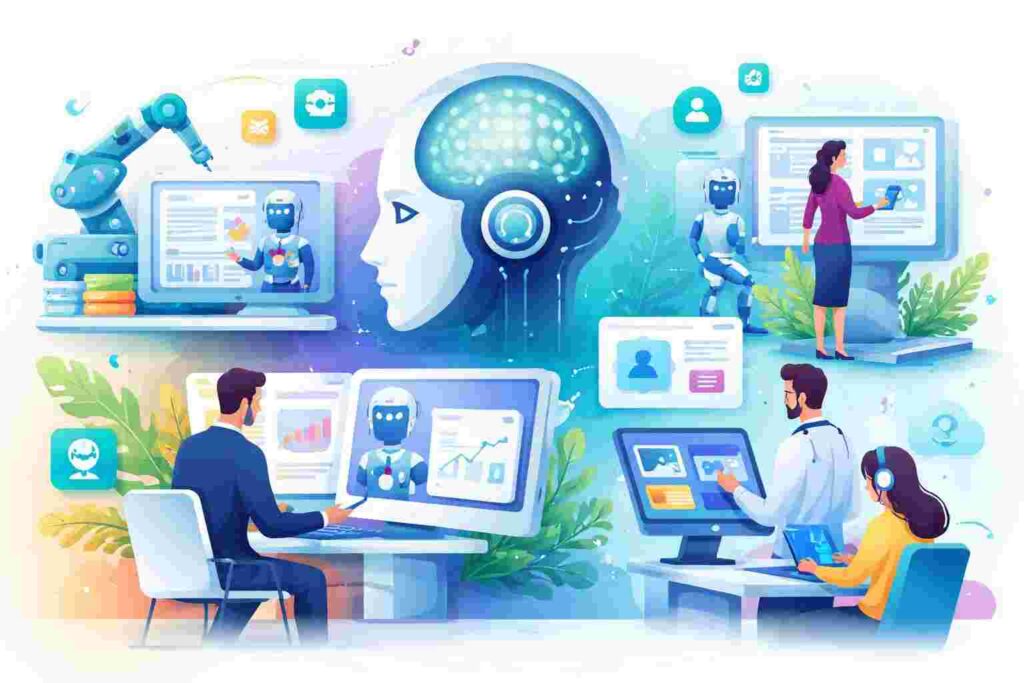
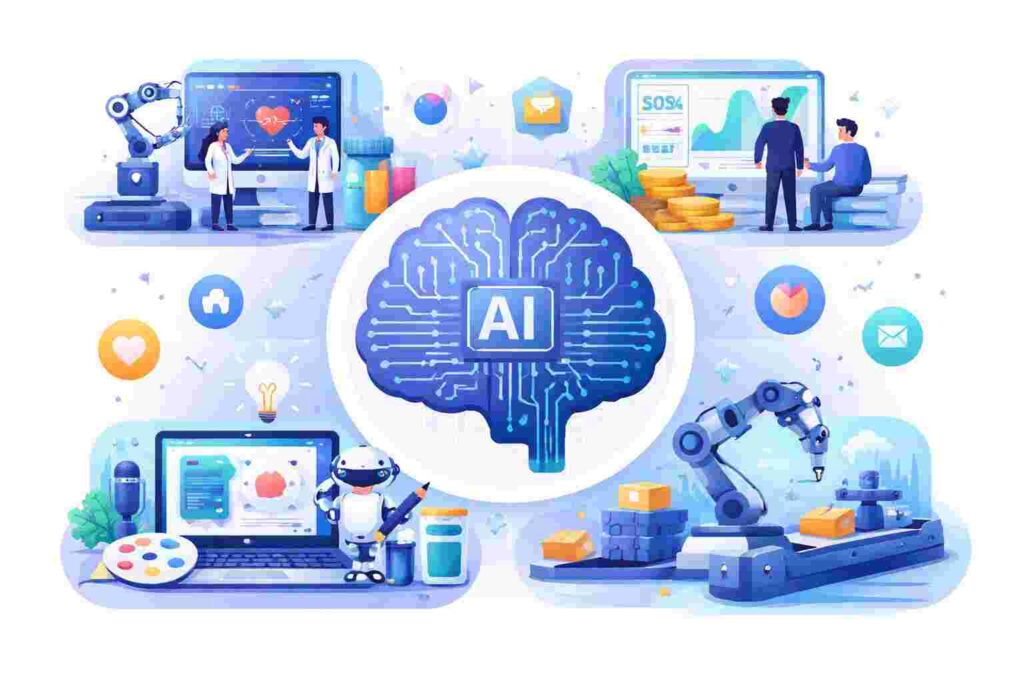
Artificial intelligence (AI) tools have become a cornerstone in modern industries, shaping how businesses operate and innovate. These tools range from simple algorithms to complex neural networks and have applications spanning multiple sectors, including healthcare, finance, and manufacturing. As companies increasingly turn to AI tools for efficiency and competitive advantage, understanding the different types available is crucial for strategic decision-making.
Foundational Concepts of AI Tools
To grasp the significance of AI tools, it’s essential to understand their foundational concepts. This section will delineate the fundamentals of AI, setting the stage for deeper exploration into specific tools and technologies.
Overview of AI Tools
AI tools are software or systems that perform tasks that typically require human intelligence. These tasks include problem-solving, understanding natural language, and learning from experience. Common types of AI tools include:
- Machine Learning Platforms
- Natural Language Processing Applications
- Robotic Process Automation (RPA)
- Computer Vision Systems
- Speech Recognition Software
Classification of AI Types
AI tools can be classified into categories based on their capabilities and functionalities:
- Weak AI: Designed for specific tasks, such as virtual assistants (e.g., Siri, Alexa).
- Strong AI: A theoretical model that exhibits human-like intelligence and reasoning.
- Reactive Machines: Focus solely on the present without memory capabilities (e.g., IBM’s Deep Blue).
- Limited Memory: Can use past experiences to inform future decisions (e.g., self-driving cars).
- Theory of Mind: Represents the next frontier, where machines can understand emotions and beliefs.
Key Technologies Driving AI
Several technologies are foundational for developing AI tools:
- Machine Learning: Allows systems to learn from data patterns.
- Deep Learning: Utilizes neural networks to handle vast amounts of data with multiple layers.
- Natural Language Processing: Enables machines to understand and generate human language.
- Computer Vision: Helps machines interpret and process visual data.
- Robotics: Integrates AI into physical machines, enhancing automation.
Technical Mechanisms Behind AI Tools
Understanding how AI tools function requires a look into the technologies that power them. This section delves into the technical specifications of prominent AI technologies.
Machine Learning Algorithms
At the heart of many AI tools are machine learning algorithms. These algorithms enable computers to identify patterns within data sets and make predictions based on previous experiences. Common types of machine learning include:
- Supervised Learning: Involves using labeled datasets to train algorithms.
- Unsupervised Learning: Deals with unlabeled data, discovering hidden patterns without predefined labels.
- Reinforcement Learning: Algorithms learn to make decisions through trial and error to maximize rewards.
Natural Language Processing Technologies
Natural Language Processing (NLP) is crucial for AI tools that interact with human language. Techniques in NLP include:
- Tokenization: Breaking text into words or phrases for analysis.
- Sentiment Analysis: Evaluating the emotional tone of text.
- Machine Translation: Converting text from one language to another (e.g., Google Translate).
Deep Learning Frameworks
Deep learning frameworks like TensorFlow and PyTorch provide tools for building and training neural networks efficiently. These frameworks support:
- Flexible model building and experimentation.
- Optimized computation for large datasets.
- Support for GPU-based training, accelerating performance.
Business Impact of AI Tools
The integration of AI tools in business processes has transformed operations across sectors. This section will highlight specific examples of how different industries leverage AI tools for increased efficiency and growth.
Healthcare Applications
AI tools in healthcare are revolutionizing patient care and diagnostics. They enhance decision-making for providers and improve patient outcomes through:
- Predictive analytics for disease diagnosis and treatment suggestions.
- Personalized medicine tailored to individual patient genetics.
- Telehealth services that consult patients remotely, improving access.
Finance Sector Enhancements
In finance, AI tools optimize operations and enable data-driven decisions, enhancing profitability. Benefits include:
- Fraud detection systems that analyze transaction patterns in real-time.
- Automated trading algorithms that execute trades at optimal times.
- Risk assessment tools that evaluate loan applications effectively.
Manufacturing Efficiency Improvements
Manufacturing companies utilize AI tools to streamline processes and reduce costs:
- Predictive maintenance to foresee equipment failures before they occur.
- Automated quality control systems that ensure product consistency.
- Supply chain optimization through advanced forecasting techniques.
Strategic Advantages of Implementing AI Tools
The strategic advantages of integrating AI tools into business operations can yield significant competitive benefits. This section outlines the primary advantages businesses gain by adopting AI technologies.
Increased Operational Efficiency
AI tools can automate repetitive tasks, allowing human resources to focus on value-added activities. This leads to:
- Reduced operational costs through optimization.
- Faster production and turnaround times.
- Improved accuracy and reduced errors in processes.
Enhanced Decision-Making
With AI tools, businesses can make more informed decisions based on data analysis. Key benefits include:
- Data-driven insights allow for better forecasting and planning.
- Real-time analytics enable agility in responding to market changes.
- Risk assessment tools provide comprehensive evaluations prior to crucial decisions.
Personalization and Customer Experience
AI tools enable businesses to tailor their offerings to meet customer needs effectively. Aspects of this personalization include:
- Customized recommendations based on user behavior.
- Chatbots that provide instant assistance and improve customer satisfaction.
- Marketing strategies driven by consumer data for better engagement.
Limitations and Risk Considerations of AI Tools
Despite the tremendous potential of AI tools, there are limitations and risks associated with their use. Understanding these challenges is critical for mitigating potential pitfalls.
Data Privacy Issues
Data privacy has increasingly become a concern as AI tools often rely on sensitive personal information. Risks include:
- Unauthorized access to personal data if security measures fail.
- Potential misuse of data leading to breaches of confidentiality.
- Compliance issues with regulations such as GDPR, leading to fines.
Bias and Fairness in AI Models
AI models can inherit biases present in the training data, leading to unfair outcomes. Risks associated with bias include:
- Discrimination against specific demographic groups in decision-making.
- Reinforcement of societal stereotypes through erroneous model predictions.
- Loss of trust among users and stakeholders due to perceived unfairness.
Dependence on Data Quality
The performance of AI tools is directly tied to the quality of data they are trained on. Limitations related to data include:
- Insufficient or poor-quality data can hinder model accuracy.
- Data shortages in niche areas may limit AI tool applicability.
- Outdated data can lead to incorrect insights and consequences.
Comparison of Popular AI Tools
When selecting AI tools, a detailed comparison based on specific metrics can help organizations make informed decisions. The following table provides a feature comparison of several popular AI tools.
| AI Tool | Key Features | Price Range | Use Cases |
|---|---|---|---|
| TensorFlow | Open-source, supports deep learning, extensive community support | Free | Image recognition, language processing |
| IBM Watson | Natural language understanding, visual recognition, strong analytics | $99/month | Healthcare, customer service |
| Azure AI | Comprehensive, integration with Microsoft products, flexible | Pay-as-you-go | Retail, finance |
| Google AI Platform | Robust tools for machine learning, scalable infrastructure | Free tier available, pay for usage | Web applications, data analytics |
| RapidMiner | Data preparation, machine learning workflows, user-friendly interface | Free for individuals, enterprise pricing applies | Marketing, research |
Statistics and Market Trends for AI Tools
Looking at the statistics and trends in the AI market can provide insights into its growth and adoption rates across various sectors. Significant data includes:
Market Size Projections
The global AI market was valued at $62.35 billion in 2020 and is projected to grow at a CAGR of 40.2%, reaching approximately $733.7 billion by 2027 (source: Statista). This explosive growth showcases the increasing reliance on AI tools across industries.
AI Adoption Rates Across Industries
A survey by McKinsey found that 50% of respondents reported adoption of AI in at least one business function, indicating a trend toward comprehensive implementation across various sectors.
Investment Trends in AI Technologies
Investment in AI technologies saw a significant increase, reaching $27 billion in 2021 alone, marking a 20% rise from the previous year. Such investments reflect confidence in the potential of AI tools to shape future business landscapes.
Real-World Case Study: AI Tool Implementation
To provide concrete evidence of the impact of AI tools, this case study examines a healthcare organization that successfully implemented AI solutions, leading to measurable improvements in patient outcomes.
Before-and-After Performance
Prior to adopting AI tools, the organization faced challenges with long patient wait times and inefficient resource allocation. After implementing AI-driven scheduling and predictive analytics, there was a marked decrease in patient wait times by 30% within the first year.
Metrics for Success
Key metrics demonstrated the success of the AI tool implementation:
- Patient satisfaction scores increased by 25%.
- Operational costs reduced by 20% through more efficient resource management.
- Diagnosis accuracy improved by 15%, leading to better treatment outcomes.
Industry Comparison
Compared to similar healthcare facilities that did not implement AI, the organization outperformed peer institutions regarding efficiency and patient care quality, showcasing the effectiveness of AI tools in real-world applications.
Future Outlook for AI Tools
The future of AI tools promises to be transformative. As technology evolves, several trends are anticipated to shape this field.
Future AI Innovations
Emerging innovations could redefine how AI tools function, especially with the development of explainable AI that increases transparency and trust in machine decision-making. Additionally, advancements in AI will broaden the range of applications available.
Potential Industry Disruptions
Industries can expect significant disruptions as AI tools become more prevalent. For instance, autonomous vehicles could transform transportation, while AI-driven insights could redefine marketing strategies.
Long-Term Impact on Employment
While AI tools can enhance productivity, there are concerns about job displacement. However, many experts suggest that AI will create new roles and require workers to adapt their skills to the evolving job landscape.
Frequently Asked Questions About AI Tools
This section addresses common inquiries regarding AI tools, offering valuable insights into their implications for businesses and society.
What are the different types of AI tools?
There are various types of AI tools categorized primarily by their function and capabilities. The most common include machine learning platforms for data analysis, natural language processing tools for understanding human language, computer vision applications for image recognition, and robotic process automation systems for automating repetitive tasks. Each type serves distinct purposes and can be integrated into a business’s workflow to enhance efficiency.
How do AI tools improve business processes?
AI tools improve business processes by automating repetitive tasks, analyzing open data for insights, and enhancing decision-making efficiency. For example, AI analytics platforms can help businesses understand customer behavior patterns and optimize their marketing strategies according to consumer preferences. Additionally, AI can speed up processing times and reduce human errors, leading to increased productivity and reduced operational costs.
What are the risks associated with AI tools?
While AI tools offer numerous benefits, they also present various risks, including data privacy concerns, algorithmic bias, and dependency on data quality. Without stringent data governance, sensitive information could be compromised, raising ethical questions. Furthermore, biases in AI algorithms can lead to unfair outcomes, impacting decision-making processes in critical sectors like finance and healthcare. Companies must implement robust practices to mitigate these risks and ensure compliance with regulations.
How do I choose the right AI tool for my business?
Choosing the right AI tool involves assessing your specific needs and objectives. Organizations should begin by identifying the tasks they wish to automate or enhance, followed by evaluating available tools based on their features, scalability, and cost. Engaging in pilot programs can help gauge tool effectiveness. Prioritize tools with strong support and a solid user community to facilitate learning and troubleshooting.
What is the future of AI technology?
The future of AI technology looks promising, with advancements in machine learning, natural language processing, and cognitive computing enhancing tool capabilities. Emerging trends suggest a shift toward explainable AI, making machine decisions more transparent and understandable for users. Furthermore, as AI becomes increasingly integrated into daily life, ethical considerations will play a crucial role in its development, promoting responsible usage while safeguarding user privacy.
Can AI tools replace human jobs?
The potential for AI tools to replace human jobs varies across sectors. While AI can automate routine tasks and improve efficiency, it is likely to create new job opportunities requiring advanced skills. As AI takes over basic functions, roles focusing on strategic oversight, interpretation of AI outputs, and human-centric tasks will become more crucial. Preparing the workforce for this transition through ongoing training and education will be essential for maximizing the benefits of AI adoption.
Conclusion
AI tools are reshaping industries by enhancing operational efficiency, optimizing decision-making, and improving customer experience. Understanding the types of AI tools available, along with their functionalities, can empower businesses to harness their power effectively. As we move forward into an era marked by rapid AI advancements, the potential for innovation appears boundless. Exploring AI further is not just advantageous but essential for staying competitive in today’s digital landscape.
- Recapping major points, AI tools serve various industries by streamlining processes and driving growth.
- Organizations are encouraged to adopt AI tools to remain competitive.
- Future advancements will undoubtedly continue changing how businesses operate.