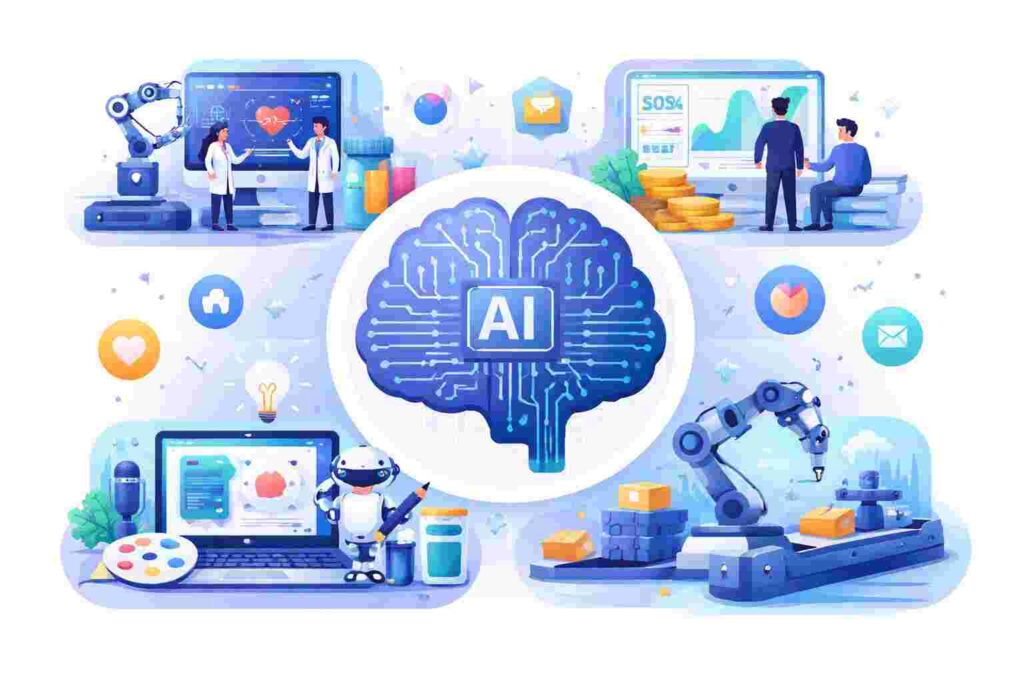
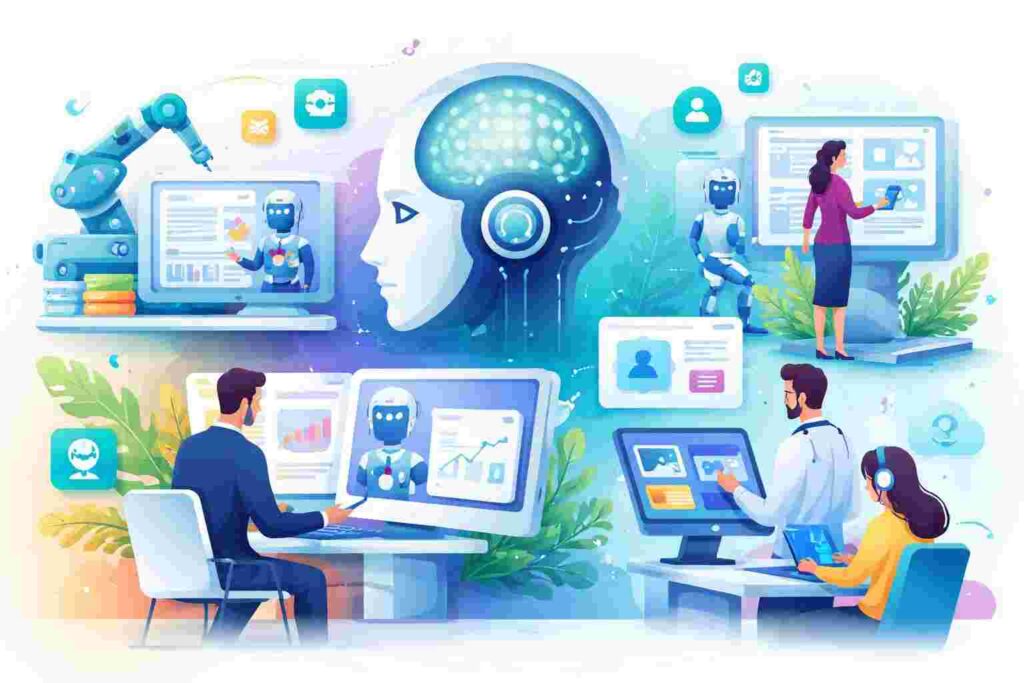
In recent years, the rise of AI tools has brought about significant advancements across diverse industries, revolutionizing how businesses operate and individuals engage with technology. AI tools utilize complex algorithms and vast data sets to assist in solving problems, automating tasks, and providing insights that traditionally relied on human intelligence. This article delves deep into the world of AI tools, exploring their types, workings, industry impacts, advantages, limitations, market trends, real-world success stories, and future outlook.
Understanding AI Tools
To fully appreciate the value of AI tools, it is essential to first understand what they are, the various types available, and how they have evolved over time.
Definition of AI tools
AI tools are software applications or platforms that incorporate artificial intelligence technologies to execute specific tasks that usually require human intelligence. These tasks can range from simple data entry to complex decision-making processes. By leveraging machine learning, natural language processing, and data analytics, AI tools enable businesses and individuals to enhance productivity and efficiency.
Types of AI tools
- Machine Learning Platforms: Tools that allow systems to learn from data without explicit programming.
- Natural Language Processing Tools: Applications that enable machines to understand and interpret human language.
- Robotic Process Automation (RPA): Software that automates routine tasks and processes.
- AI-Powered Analytics: Solutions that analyze data to deliver actionable insights.
- Chatbots and Virtual Assistants: AI applications designed to converse with users to provide support or information.
Historical evolution of AI tools
The development of AI tools can be traced back to the mid-20th century when scientists began exploring how to mimic human cognition. Initial experiments in AI primarily focused on programming early computers with rudimentary algorithms. As computational power increased, so did the complexity of AI tools, with the introduction of machine learning in the 1980s and more advanced neural networks in the 2000s. In the current era, we see a surge in AI tools driven by deep learning techniques and the availability of big data, which have further enhanced their capabilities.
How AI Tools Work
This section demystifies the core technologies that power AI tools and how they function effectively in various applications.
Machine learning algorithms
At the heart of many AI tools lies machine learning, a subset of AI that allows systems to improve their performance on a task through experience. Machine learning algorithms analyze historical data to identify patterns and make predictions. Algorithms such as decision trees, support vector machines, and neural networks are commonly used, adapted for varied tasks from image recognition to predictive analytics.
Natural language processing
Natural Language Processing (NLP) enables machines to interpret and respond to human language. NLP employs a combination of linguistics, computer science, and AI methodologies to process text and speech. Applications such as sentiment analysis, translation, and conversational interfaces are direct results of advancements in NLP technologies.
Data processing and analytics
AI tools require vast amounts of data to function effectively, relying on data processing techniques to cleanse, structure, and analyze this information. This includes collecting data from various sources, such as databases and API feeds, as well as employing data analytics techniques to derive meaningful insights that drive decision-making.
Impact of AI Tools on Various Industries
The transformative effects of AI tools are highly evident across various sectors, enhancing operations, improving customer experiences, and creating major shifts in industry practices.
Healthcare applications
In healthcare, AI tools have facilitated early diagnosis and treatment of diseases through predictive analytics and image recognition software. Tools such as IBM Watson Health utilize AI to analyze vast datasets and provide insights, improving patient outcomes.
Finance and banking
In finance, AI tools have significantly changed risk assessment, fraud detection, and customer service. Intelligent chatbots handle customer inquiries, while machine learning algorithms assess credit risks more effectively than ever, enabling faster loan approvals and personalized banking experiences.
Retail and e-commerce
The retail sector has embraced AI tools to enhance customer engagement and optimize inventory management. Personalized recommendation systems, powered by AI, analyze user behavior to suggest products, resulting in increased sales and customer satisfaction. Moreover, sophisticated analytics tools help retailers predict demand and manage stock efficiently.
Manufacturing and logistics
AI tools have also revolutionized the manufacturing and logistics sectors. Predictive maintenance tools analyze machinery performance data to predict failures before they occur, reducing downtime and maintenance costs. Meanwhile, AI-driven supply chain management tools use real-time data to optimize shipping routes and inventory levels.
Strategic Advantages of Implementing AI Tools
Organizations implementing AI tools can reap significant competitive benefits, making them vital assets in today’s dynamic business environment.
Increased operational efficiency
- Automation of repetitive tasks reduces manual workloads.
- Streamlined processes lead to faster turnaround times.
- Enhanced accuracy minimizes errors and rework.
- Improved resource allocation ensures optimal workforce utilization.
- Consistent performance across operations attracts high customer satisfaction.
Enhanced customer experience
- Personalized recommendations cater to individual customer preferences.
- 24/7 support through AI-driven chatbots ensures immediate assistance.
- Sentiment analysis tailors marketing strategies to customer sentiments.
- Faster service delivery meets growing consumer expectations.
- Feedback loops help businesses adapt to changing market demands.
Data-driven decision making
AI tools empower organizations to base their strategies on data-backed insights rather than intuition, promoting informed decision-making. By analyzing vast datasets, AI identifies trends, forecasts market behaviors, and enhances corporate strategy formulations.
Limitations and Risks Associated with AI Tools
While AI tools offer numerous advantages, they are not without limitations and risks that must be considered before implementation.
Data privacy concerns
The use of AI tools necessitates the collection and processing of large amounts of data, which raises significant data privacy concerns. Organizations must ensure that customer data is handled with care, compliant with regulations such as GDPR, to maintain trust and avert potential legal repercussions.
Bias in AI algorithms
AI algorithms can perpetuate human biases if not carefully monitored. If the datasets used to train these algorithms contain biased information, the AI tools may provide skewed outcomes, leading to discriminatory practices or erroneous conclusions.
Job displacement
The automation of tasks through AI tools has raised fears of job displacement. While AI can enhance productivity, it can also result in the elimination of jobs that perform routine tasks, prompting the need for workforce reskilling to align with the evolving job landscape.
Evaluating AI Tools: A Comparative Analysis
Organizations seeking to adopt AI tools should conduct thorough evaluations to select the most suitable solutions based on specific needs. The following table outlines a comparison of popular AI tools in five key areas:
| AI Tool | Features | Pricing Model | Best For | User Reviews |
|---|---|---|---|---|
| Tool A | Predictive analytics, NLP, automation | Subscription-based | Small to mid-sized businesses | 4.5/5 |
| Tool B | Image recognition, data processing | Pay-per-use | Large enterprises | 4.7/5 |
| Tool C | Chatbot integration, customer insights | Freemium | Retail and e-commerce | 4.6/5 |
| Tool D | Robotic automation, reporting tools | Annual license | Manufacturing | 4.4/5 |
| Tool E | Data visualization, business intelligence | Custom pricing | Corporate analysts | 4.8/5 |
Statistics and Market Trends in AI Tools
The AI tools market continues to grow at a staggering pace, presenting both opportunities and challenges for businesses. Recent statistics indicate that:
- The global AI market is projected to reach $190.61 billion by 2025, growing at a CAGR of 36.62% from 2019 to 2025, according to a report by Mordor Intelligence.
- As of 2023, approximately 40% of businesses have adopted AI technologies in operation.
Investment trends also reveal increasing venture capital funding directed towards AI startups and advancements in AI research, reflecting a robust interest in innovation within this space.
Case Studies: Success Stories with AI Tools
To illustrate the impact of AI tools further, let’s examine a few real-world case studies where organizations have achieved remarkable results.
Case study from healthcare sector
A leading healthcare provider implemented an AI tool to analyze patient data and improve diagnostic accuracy. Before implementation, the average diagnostic delay was 21 days. Post-adoption, this delay shrank to just 5 days—a 76% improvement—which led to better patient outcomes and higher satisfaction rates.
Case study from retail sector
A prominent e-commerce platform adopted AI-based analytics tools to enhance its inventory management. Initially struggling with stock shortages, the company achieved a 30% reduction in stockout occurrences after implementing the AI tool. This translated to a 20% increase in sales as customer needs were met more consistently.
Case study from finance sector
An investment firm introduced an advanced AI algorithm to predict market fluctuations. Before this intervention, the firm experienced erratic performance with a return rate of just 5%. By leveraging AI, they increased returns to 15% within a year, showcasing the power of data-driven decisions in financial services.
The Future of AI Tools
The future of AI tools looks promising, driven by continuous advancements in technology and shifting regulatory landscapes.
Advancements in AI technologies
Innovations such as quantum computing and autonomous systems are expected to propel AI tools into new realms of capability. Enhanced machine learning models will further amplify efficiency while reducing bias, creating more fair and accountable AI solutions.
Regulatory environment impacts
As AI technologies proliferate, regulatory scrutiny is likely to intensify, necessitating adherence to ethical standards and best practices in AI deployment. Organizations will need to navigate complex regulations to maintain compliance and build consumer trust.
Integration with other technologies
Future AI tools are expected to integrate seamlessly with other emerging technologies, such as the Internet of Things (IoT) and blockchain, creating superior capabilities. This integration will lead to innovative applications that can transform industries further.
Frequently Asked Questions about AI Tools
What are AI tools used for?
AI tools serve a multitude of purposes, primarily automating processes, analyzing data, and enhancing user interaction across various industries. They can be utilized for tasks like predictive analytics, customer support via chatbots, automating repetitive tasks, and improving decision-making through data insights. Essentially, any function that can be enhanced by cognitive computing can benefit from AI tools.
How do AI tools differ from traditional software?
Unlike traditional software that follows a fixed set of instructions, AI tools have the capability to learn from data, adapt to new circumstances, and make predictions based on analytics. Traditional software often requires explicit programming for every task, whereas AI tools excel in scenarios that involve uncertainty and varying success rates, using their learning capability to improve over time.
Are AI tools expensive?
The cost of AI tools can vary significantly depending on the complexity, functionality, and deployment methods. While some startups may find premium solutions to be prohibitive, various affordable options exist, including open-source AI tools that can be leveraged for many applications. Ultimately, businesses should consider the potential return on investment (ROI) that AI tools can bring versus the initial costs.
Can small businesses use AI tools?
Absolutely! Numerous AI tools are designed specifically for small-to-medium-sized enterprises (SMEs), offering scalable solutions that enhance operational efficiency without needing substantial budgets. From customer relationship management to automated marketing tools, small businesses can leverage AI to compete effectively and boost growth.
What skills are needed to work with AI tools?
Working with AI tools typically requires a foundation in data analytics, programming capabilities, and an understanding of machine learning principles. Additionally, knowledge of specific AI software and frameworks may be necessary. Continuous learning and adaptation to advancements in AI technology are crucial for professionals looking to work in this evolving field.
How do AI tools ensure data security?
AI tools employ various measures to protect data, including encryption, regular security audits, and compliance with regulations like GDPR. Utilizing advanced user authentication processes and conducting threat assessments are also standard practices to mitigate risks associated with data breaches. Ensuring data security is a top priority for AI tools providers to maintain customer trust and compliance.
Conclusion: The Role of AI Tools in the Future
As we’ve seen, AI tools are poised to redefine the landscape of various industries by enhancing efficiencies and driving innovation. They bring considerable benefits, from operational enhancements to improved customer experiences, setting the stage for a tech-driven future. As competition intensifies, organizations must embrace AI tools to remain agile and responsive to market needs. The call to action is clear: businesses that leverage AI tools strategically will pave the way toward navigating the complexities of the modern landscape. Stay informed and proactive, as the future beckons with opportunities driven by intelligent solutions.
For a deeper insight into related topics such as how Node.js can enhance web tools, consider exploring the basic overview of Node.js and its historical significance. Moreover, delving into how Node.js differs from traditional JavaScript implementations can provide valuable context in understanding web-driven AI applications.