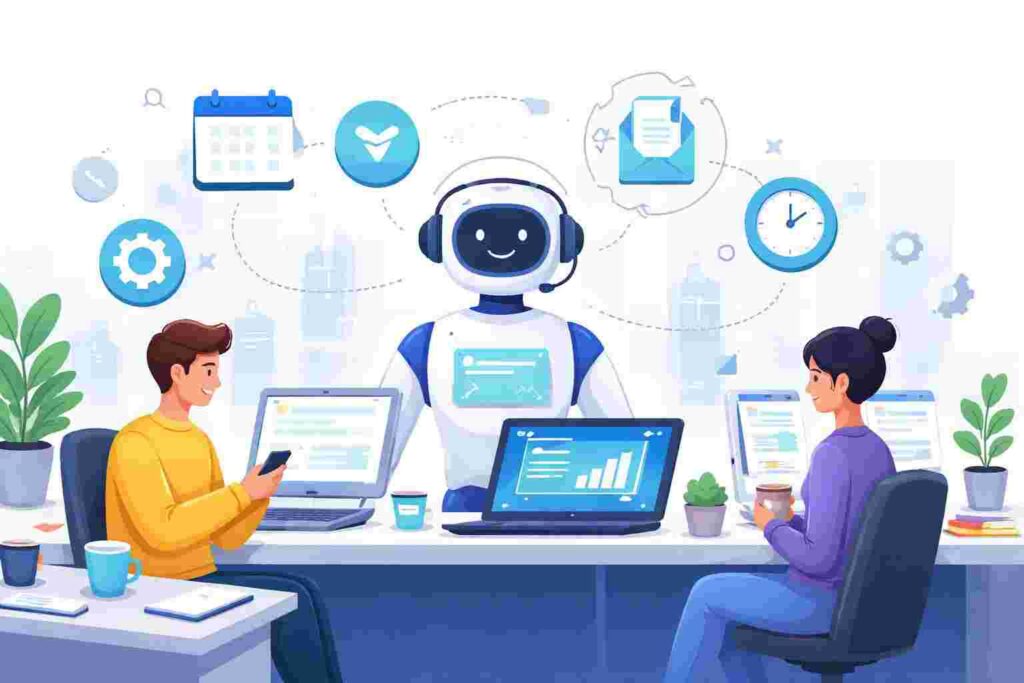
In today’s rapidly evolving digital landscape, the importance of an Autonomous Web Agent cannot be overstated. These innovative agents are revolutionizing how businesses operate online by automating various tasks, increasing efficiency, and providing a seamless user experience. As we delve into the world of autonomous web agents, this article will guide you through their core functionalities, applications across industries, and the technologies underpinning their development.
Understanding Autonomous Web Agents
At the heart of any discussion about AI and automation are the autonomous web agents that are driving change across numerous sectors. Understanding what these agents are and how they function is crucial for businesses looking to leverage technology for efficiency and innovation.
Definition of Autonomous Web Agents
An autonomous web agent is a software application designed to perform specific tasks independently of human intervention. They can browse the internet, gather data, interact with users, and make decisions based on pre-defined algorithms and machine learning models. Unlike traditional software that requires explicit commands or continuous input, autonomous agents are capable of learning from their environment and improving their performance over time.
Core Components
The architecture of an autonomous web agent typically consists of several key components:
- Sensors: These collect information from the agent’s environment, such as user interactions or data from the web.
- Actuators: These enable the agent to take action based on the input received from sensors.
- Decision Making: This component consists of algorithms that process the input data and determine the best course of action.
- Learning Mechanism: Most autonomous agents use machine learning techniques to refine their responses and improve over time.
- User Interface: This is how users interact with the agent, providing feedback or commands.
Difference between Autonomous and Non-Autonomous Agents
While both types of agents serve defined purposes, the key difference lies in their level of autonomy:
- Autonomous Agents: Can operate independently without human intervention, learn from their experiences, and adapt to new scenarios.
- Non-Autonomous Agents: Require continuous human input and direction, lacking the ability to learn or adapt without explicit instructions.
Technical Framework for Building Web Agents
Creating an effective autonomous web agent involves a solid understanding of the technical framework that underpins its functionality. In this section, we will review the programming languages, tools, and integration techniques essential for building these agents.
Programming Languages and Tools
When it comes to building autonomous web agents, several programming languages and tools are particularly effective:
- Python: Highly popular due to its simplicity and extensive libraries for AI and machine learning.
- JavaScript: Essential for web-based agents that need to interact with web pages immediately.
- Java: Offers robustness and portability, suitable for enterprise-level applications.
- Node.js: An excellent choice for creating scalable network applications, allowing real-time interaction.
APIs and Integration Techniques
APIs play a crucial role in enabling autonomous web agents to interact with other services or platforms. Common integration techniques include:
- RESTful APIs: Allow agents to communicate with web services seamlessly.
- Webhooks: Enables agents to receive real-time data and improve responsiveness.
- GraphQL: Provides a flexible way to query APIs, allowing agents to access only the data they require.
Sample Code Block for Agent Functionality
Here’s a simple example of a Python-based web scraping agent utilizing the BeautifulSoup library:
import requests
from bs4 import BeautifulSoup
url = 'https://example.com/'
response = requests.get(url)
soup = BeautifulSoup(response.text, 'html.parser')
data = soup.find_all('h2')
for item in data:
print(item.text)
This code fetches the content from a web page and extracts the text from all H2 headers, showcasing the agent’s ability to autonomously gather relevant information from the web.
Industry Applications of Autonomous Web Agents
Various industries are leveraging autonomous web agents to streamline operations, improve customer engagement, and enhance decision-making processes. Here, we examine some notable applications.
E-commerce
E-commerce platforms use autonomous agents to deliver personalized customer experiences. By analyzing user behavior, these agents can:
- Recommend products based on previous purchases.
- Handle customer inquiries via chatbots, providing instant support.
- Manage inventory levels, predicting demand using data analytics.
Healthcare
In the healthcare sector, autonomous agents are transforming service delivery by:
- Scheduling appointments and reminders for patients.
- Analyzing medical records to identify potential health risks.
- Providing remote monitoring for chronic diseases through telehealth solutions.
Finance
Financial institutions are utilizing autonomous web agents to enhance customer interaction and operational efficiency by:
- Automating transactions and fraud detection processes.
- Offering personalized financial advice through AI-driven analysis.
- Monitoring market trends in real-time to inform investment strategies.
Strategic Benefits of Implementing Autonomous Agents
The adoption of autonomous web agents offers businesses significant strategic advantages that can lead to enhanced performance and profitability:
Increased Efficiency
By automating repetitive tasks, organizations can significantly increase their operational efficiency. This reduces the time required for manual processes and allows human employees to focus on more strategic initiatives.
Cost Reduction
Implementing autonomous agents can lead to substantial cost savings. Organizations can reduce labor costs associated with routine tasks and achieve better resource allocation.
Scalability
As businesses grow, the ability of autonomous agents to scale without the need for proportional human resources enables sustained growth without compromising service quality.
Challenges and Limitations of Web Agents
Despite their advantages, deploying autonomous web agents comes with its set of challenges and limitations that businesses must consider:
Data Privacy Issues
One of the most pressing challenges is ensuring user data privacy. Organizations must adhere to strict data protection regulations while also maintaining user trust.
Dependence on Technology
Over-reliance on autonomous agents could lead to a decrease in human oversight, which raises concerns about accountability and decision-making in critical situations.
Security Vulnerabilities
Autonomous agents are susceptible to cyber-attacks. Organizations must prioritize cybersecurity strategies to protect full autonomy.
Comparison of Autonomous Agents with Traditional Web Tools
To better understand the advantages of autonomous web agents over traditional web tools, consider the following comparative analysis:
| Feature | Autonomous Web Agents | Traditional Web Tools |
|---|---|---|
| Functionality | Perform tasks independently and adapt | Require human input to operate |
| User Experience | Provide personalized experiences | Static and often generic |
| Cost-Efficiency | Reduction in long-term operational costs | Higher costs due to labor and maintenance |
| Scalability | Easily scalable with business growth | Difficult to scale without additional manpower |
| Learning Capability | Improves through artificial intelligence | No learning ability |
Market Trends and Statistics in Autonomous Web Agent Development
The market for autonomous web agents is rapidly evolving, marked by significant growth statistics and emerging trends:
Growth Rate of Autonomous Agents Market
According to recent reports, the autonomous agents market is projected to grow at a compound annual growth rate (CAGR) of 28.4%, reaching approximately $9.26 billion by 2030.
Investment Trends
Investments in AI technologies, including autonomous web agents, have surged, with venture capital funding in AI startups reaching $33 billion in 2020, indicating confidence in the technology’s future.
User Adoption Rates
Surveys show that about 73% of consumers have interacted with some form of AI-driven service, underlining the growing acceptance and reliance on autonomous agents.
Case Studies: Success Stories of Autonomous Web Agents
Real-world applications provide valuable insights into the effectiveness of autonomous web agents. Below are some notable case studies:
Case Study from E-commerce Sector
A leading e-commerce platform implemented an autonomous customer service agent that reduced response times by 70% and increased customer satisfaction ratings by 30% within a few months of deployment.
Case Study in Healthcare Innovations
An autonomous health monitoring agent was introduced by a telehealth provider. This agent decreased hospital readmission rates by 15%, showcasing its effectiveness in chronic disease management.
Before-and-After Metrics
In the finance sector, adoption of an autonomous trading agent resulted in a 40% increase in trading efficiency and improved profitability by 25% over a year, demonstrating the transformative impact of such technologies.
Future Vision: Where are Autonomous Web Agents Headed?
The future of autonomous web agents holds exciting possibilities, driven by upcoming technologies and integration with AI innovations:
Upcoming Technologies
As advancements in artificial intelligence continue, future autonomous agents will become more capable, featuring enhanced self-learning abilities and improved reasoning skills.
Integration with AI
AI integration will further empower autonomous agents to analyze vast datasets, predict patterns, and make informed decisions, contributing to improved operational efficacy.
Predictions for 2030
By 2030, it is anticipated that autonomous agents will handle over 80% of routine business tasks, paving the way for a more efficient operational paradigm where humans focus on strategic decisions.
Frequently Asked Questions about Autonomous Web Agents
What is an Autonomous Web Agent?
An autonomous web agent is a self-operating application that can perform tasks on the web without requiring human intervention. This technology applies complex algorithms and machine learning to adapt to different tasks, making them efficient in diverse environments.
How do I build one?
Building an autonomous web agent typically involves selecting the right programming language (such as Python or JavaScript), defining its core functionalities, and integrating APIs for smooth operation. Continuous testing and iterative development are critical to ensure effectiveness.
What are the costs involved?
The costs of implementing an autonomous web agent can vary widely based on its complexity and the technology stack used. Initial development can require significant investment, but the potential long-term savings through increased efficiency and reduced labor costs can offset these initial expenses.
Can they replace human jobs?
While autonomous web agents can increase automation and efficiency, they are primarily designed to assist rather than replace human jobs. The strategic focus shifts toward more complex decision-making roles, allowing humans to engage in higher-value tasks.
What are the best practices for implementation?
Best practices for implementing autonomous web agents include conducting thorough requirement analysis, ensuring robust cybersecurity measures, and continuously improving the agent based on user feedback and technological advancements.
How can they enhance user experience?
By automating routine tasks, providing personalized interactions, and ensuring quicker responses, autonomous web agents can significantly enhance user experiences, leading to increased satisfaction and loyalty.
Conclusion: The Future of Autonomous Web Agents
In conclusion, autonomous web agents represent a significant evolution in technology that promises efficiency, cost reduction, and improved user experiences across various industries. As organizations continue to harness the power of these agents, understanding their functionalities, limitations, and future potential will be crucial for maintaining a competitive edge in the digital landscape. The evolution of AI technologies will only enhance the capabilities of these agents, enabling businesses to adapt and thrive in a rapidly changing environment.