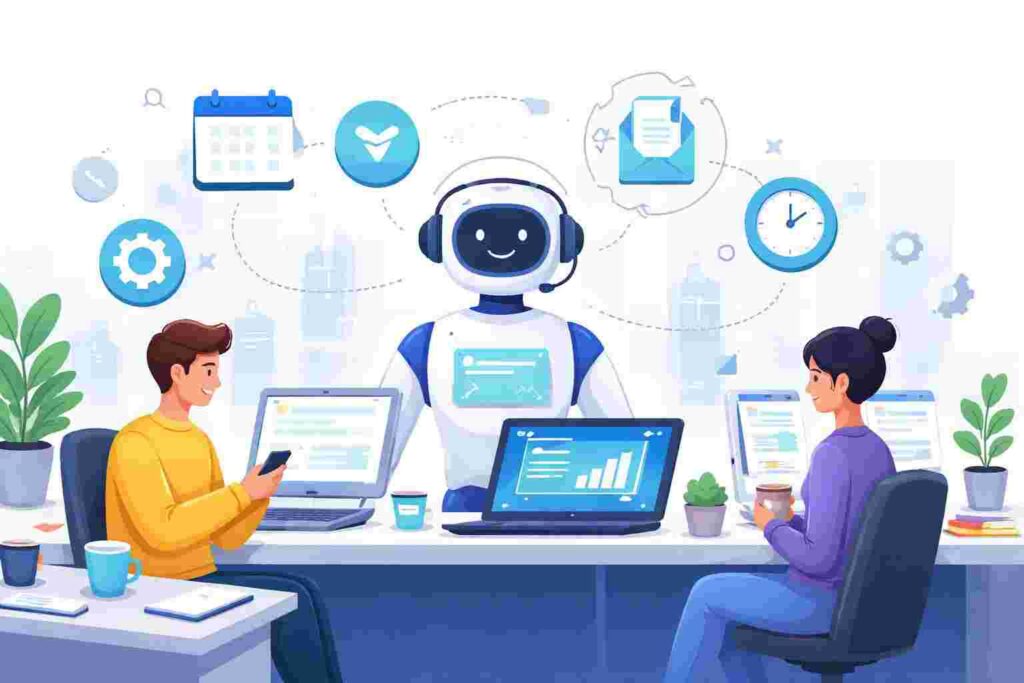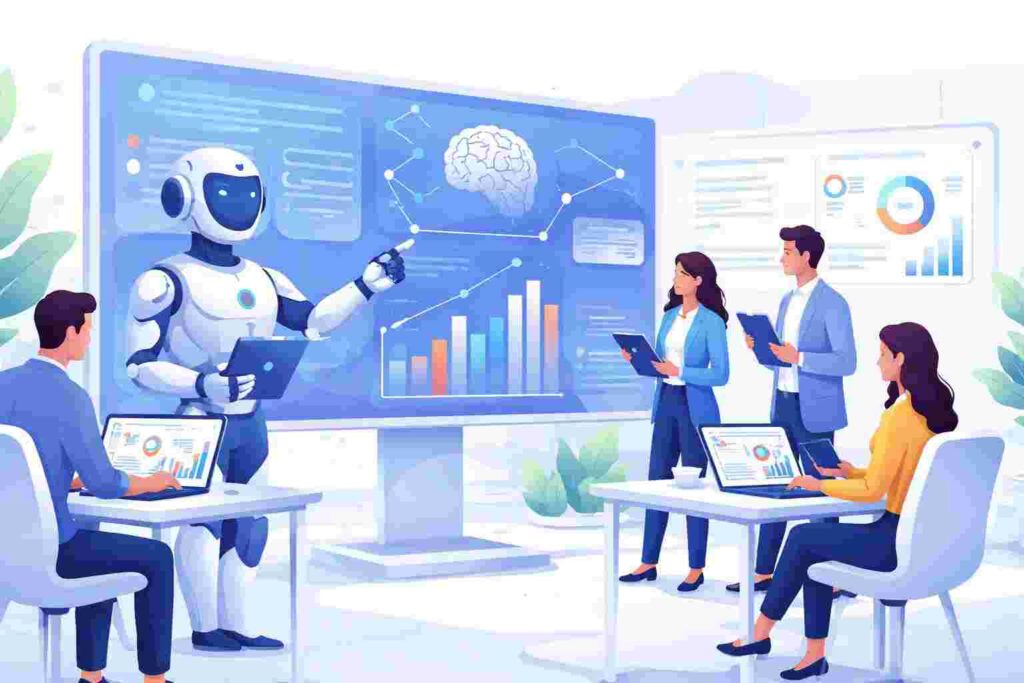
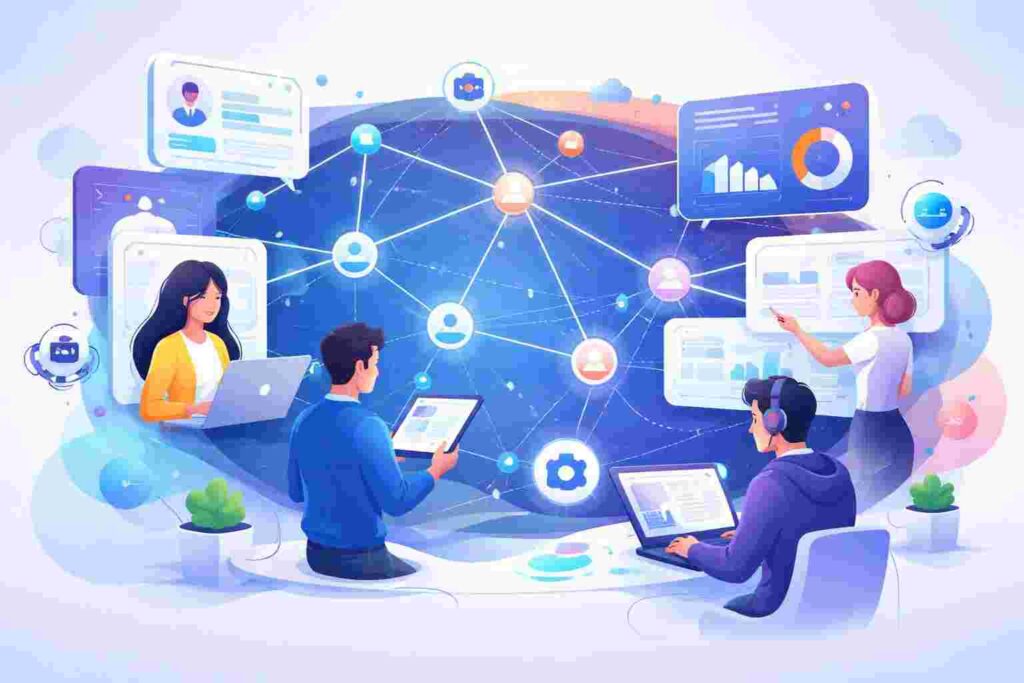
The concept of a Multi-Agent Collaboration System is pivotal in enhancing interactivity and efficiency across various domains, ensuring that complex problems are addressed effectively through the synergistic efforts of multiple agents. Such systems leverage autonomous agents that communicate and collaborate to achieve common goals. As industries continue to evolve with technological advancements, understanding how these systems function becomes increasingly essential for organizations aiming to optimize processes and improve outcomes. This article delves into the intricate design, implementation, and impact of multi-agent systems.
Understanding Multi-Agent Systems
Before delving into the practical applications of multi-agent systems, it’s crucial to grasp the foundational elements that define these systems. Understanding the key components and dynamics can help organizations design better collaborative solutions.
Definition of agents and environments
An agent is essentially an entity capable of perceiving its environment and acting upon it to achieve specific objectives. Environments can be static or dynamic, resulting in varied complexities in agent interactions. Agents can range from simple reactive models to sophisticated proactive one that employs machine learning to adapt and optimize decisions based on situational analysis.
Types of multi-agent systems
- Cooperative Systems: Agents work together towards a common goal.
- Competitive Systems: Agents operate in opposition, such as in trading scenarios.
- Hybrid Systems: These combine elements of both cooperative and competitive dynamics, often seen in market simulations.
Communication protocols between agents
For effective collaboration, agents require robust communication protocols. These protocols define how agents share information, negotiate, and coordinate actions. Common protocols include FIPA ACL (Foundation for Intelligent Physical Agents Agent Communication Language), KQML (Knowledge Query and Manipulation Language), and custom protocols tailored to specific systems.
Frameworks for Building Multi-Agent Systems
With the foundational understanding in place, organizations can explore various frameworks that facilitate the development of multi-agent systems. The choice of these frameworks heavily influences system capabilities and scalability.
Overview of popular frameworks (like JADE, SPADE)
- JADE: Java Agent DEvelopment Framework is widely used for developing multi-agent systems, allowing inter-agent communication and lifecycle management.
- SPADE: A Python-based framework that supports the development of multi-agent systems through an easy-to-use interface and scalability options.
- Other Frameworks: These also include AgentScape and GAMA, each tailored for specific applications and environments.
Choosing the right framework for specific needs
When selecting a framework, organizations need to consider factors such as programming language preference, scalability requirements, and community support. Each framework comes with its unique strengths and weaknesses, making the decision critical for long-term success.
Integration with existing systems
Seamless integration of multi-agent systems with existing infrastructure is vital. This process can be complicated and may involve the use of APIs to ensure compatibility between various software components.
Business Implications of Multi-Agent Collaboration
Multi-agent systems are not merely technological innovations; their implications for businesses can be transformative. By understanding their impact across different sectors, organizations can harness their potential for improved performance.
Healthcare sector applications
- Patient Management Systems: Agents can manage patient data and assist in triaging patients based on urgency.
- Telemedicine: Agents facilitate communication between patients and healthcare providers, improving access.
- Resource Allocation: In hospitals, agent systems can help in optimizing the use of limited resources, like staff and equipment.
Manufacturing and production
- Factory Automation: Agents can autonomously adjust production schedules based on demand forecasts.
- Supply Chain Optimization: Multi-agent systems can enhance coordination among suppliers, manufacturers, and distributors.
- Quality Control: Agents monitoring the production process ensure quality standards are upheld with less human intervention.
Finance and trading industries
- Algorithmic Trading: Agents operate autonomously in trading environments, reacting to market fluctuations much faster than humans.
- Risk Management: Multi-agent systems assess risks in portfolios and suggest optimal strategies for risk mitigation.
- Fraud Detection: Agents analyze transaction patterns to detect anomalies that may indicate fraudulent behavior.
Strategic Advantages of Multi-Agent Collaboration
Implementing a multi-agent collaboration system yields several strategic advantages that can significantly enhance organizational performance and effectiveness.
Increased efficiency and productivity
By distributing tasks among multiple agents, companies can enhance productivity. Agents working concurrently can tackle various aspects of a project simultaneously, reducing time-to-completion significantly.
Scalability of operations
- Flexibility: As businesses grow, multi-agent systems can scale efficiently to manage increasing loads without a total system overhaul.
- Resource Optimization: Organizations can deploy additional agents to manage shifts in demand without significant investments in physical infrastructure.
- Load Balancing: Operations can efficiently distribute workload, minimizing bottlenecks during peak periods.
Improved decision-making processes
The data aggregated by multiple agents leads to more informed decision-making processes. Agents facilitate real-time analytics, helping organizations adapt strategies swiftly based on data-driven insights.
Challenges and Limitations of Multi-Agent Systems
While there are many advantages to implementing multi-agent systems, several challenges and limitations must be considered before full-scale adoption.
Security concerns and vulnerabilities
Multi-agent systems, especially those that rely heavily on communication over networks, introduce potential security vulnerabilities. These can include unauthorized access, data breaches, and agent manipulation.
Integration and interoperability challenges
- Legacy Systems: Existing software and processes may not support the integration of new multi-agent solutions, leading to additional costs.
- Standardization: Lack of standard communication protocols can hinder seamless collaboration between different agent systems.
- Vendor Lock-in: Some frameworks may limit flexibility due to proprietary technologies, complicating future upgrades or changes.
Complexity in management
Managing a multi-agent system introduces complexity, especially as the number of agents increases. Leadership must ensure that effective monitoring and control mechanisms are in place to prevent inefficiencies and failure.
Comparative Analysis of Multi-Agent System Approaches
Different approaches to designing multi-agent systems vary significantly in terms of architecture, behavior, and application. A detailed comparison can provide insights into the most suitable choices for specific needs.
Reactive vs. proactive agents
Reactive agents respond to immediate stimuli in their environment without planning ahead, while proactive agents can foresee potential scenarios and act accordingly. Proactive agents typically exhibit higher intelligence and adaptability in complex situations.
Centralized vs. decentralized architectures
Centralized systems rely on a single coordinator managing all agents, while decentralized systems allow agents to operate independently, leading to enhanced robustness but requiring more sophisticated communication protocols.
Traditional vs. modern AI techniques
- Traditional AI encompasses rule-based systems and expert systems, whereas modern AI incorporates machine learning methodologies that allow agents to learn and evolve over time.
- Modern AI agents can handle complex data patterns and adapt more fluidly to changes in their environment.
- Leveraging modern AI can significantly enhance the capabilities of multi-agent systems in unpredictable environments.
| Approach | Pros | Cons |
|---|---|---|
| Reactive Agents | Simple to implement; quick response times | Lack of foresight; limited functionality |
| Proactive Agents | Higher adaptability; better long-term performance | More complex to design; may require extensive training data |
| Centralized Architecture | Simplified management; easier to control | Single point of failure; can become a bottleneck |
| Decentralized Architecture | Robustness; flexibility; no single failure point | Complex management; potential for miscommunication |
| Traditional AI | Established methodologies; proven frameworks | Limited by rigid rules; not adaptable |
| Modern AI | Ability to learn; high adaptability | Requires significant computational resources |
Statistics and Market Trends in Multi-Agent Systems
The market landscape for multi-agent systems is rapidly evolving. Analysis of recent statistics reveals significant trends indicating growth and opportunity in the sector.
Market growth projections
- The multi-agent system market is projected to grow from $60 billion in 2023 to $95 billion by 2028, reflecting a compound annual growth rate (CAGR) of 9.3%.
- As organizations increasingly turn towards automation and AI, investment in these systems is anticipated to rise sharply.
Adoption rates across industries
Several industries are increasingly adopting multi-agent systems, with the healthcare sector noting a 40% rise in 2023 compared to the previous year. Additionally, financial services have experienced a 35% increase in the use of agent-based trading platforms.
Investment trends in AI and automation
- Investment in AI technology is expected to surpass $150 billion by 2025, with multi-agent applications being a central part of this growth.
- Organizations are realizing the tactical advantage of adopting AI-driven approaches in operations.
Case Studies in Multi-Agent Collaboration
Real-world applications of multi-agent systems illustrate their transformative potential and measurable success in various scenarios.
Case study in logistics optimization
In a recent implementation at a global shipping company, multi-agent systems successfully streamlined logistics operations. Before the integration, the company faced delays of up to 30% in shipment times due to manual processes. Post-implementation, agents optimized routes and managed inventories, reducing shipment times by 20% and increasing overall efficiency.
Improving customer service with multi-agent systems
A tech enterprise implemented an AI-driven customer support system powered by multi-agent technology. Initially, customer query resolution rates hovered at 70%. Post-implementation, this rate improved to 85%, with agents working collaboratively to provide quicker responses, resulting in higher customer satisfaction scores.
Enhancing supply chain management
A manufacturing giant utilized a multi-agent system to enhance its supply chain management. By leveraging agent-based processes, they reduced operational costs by 15% and achieved a 25% improvement in resource allocation efficiency. Agents facilitated coordination and communication across various touchpoints in the supply chain.
Future Trends in Multi-Agent Systems
As technologies continue to advance, the future for multi-agent systems looks promising, with potential new applications and enhancements on the horizon.
Advances in AI and machine learning capabilities
With rapid advancements in AI, especially in deep learning and reinforcement learning, the capabilities of agents are expanding. Future agents will likely possess even greater cognitive abilities, enabling them to understand and predict user needs better and adapt to novel situations spontaneously.
Potential applications in IoT environments
- Smart Homes: Multi-agent systems could efficiently manage interconnected devices, optimizing energy usage.
- Industrial IoT: Agents can enhance real-time monitoring and control over manufacturing processes.
- Agricultural Innovations: In farming, agents may coordinate sensor data and machine operations to improve yields and reduce waste.
Integration with blockchain technology
Combining multi-agent systems with blockchain can enhance security and transparency. Agents can guarantee the authenticity and integrity of transactions within networks, paving the way for new applications in finance, supply chain management, and more.
Frequently Asked Questions (FAQs) About Multi-Agent Collaboration
What are the key benefits of using multi-agent systems?
The primary benefits of using a multi-agent collaboration system involve enhanced efficiency, improved decision-making, and scalability. Organizations can distribute tasks effectively among agents, facilitating faster completion of projects. Agents also adapt and learn from their environments, which leads to more informed and timely decision-making. Furthermore, these systems can evolve in complexity as an organization grows, ensuring sustainable operational efficiency.
How do agents communicate in a collaborative environment?
Agents communicate through well-defined protocols tailored for specific environments. Common methods include message-passing systems where agents can send and receive messages to coordinate actions. This communication ensures that agents can work together cohesively, exchanging data and insights that help them work toward a common goal, whether through formal protocols like FIPA ACL or informal interactions based on mutual understanding of shared goals.
Are multi-agent systems suitable for small businesses?
Absolutely, multi-agent systems can be tailored to fit the needs of small businesses. While often associated with larger enterprises, the ability to automate redundant tasks, optimize resource allocation, and enhance customer interactions can significantly benefit smaller organizations. By implementing a multi-agent approach, small businesses can streamline operations and compete effectively in their respective markets.
What industries can benefit the most from multi-agent systems?
Multi-agent systems have applications across various industries. Key sectors include healthcare, where they can enhance patient management; logistics, for optimizing supply chains; and finance, for improving trading efficiency and risk management. Other industries such as manufacturing and agriculture can also reap substantial benefits through automation and enhanced resource management.
How do I choose the right framework for my needs?
Selecting the right framework requires evaluating your specific project needs, programming capabilities, and expected scalability. Consider factors such as the complexity of the system you wish to create, your team’s expertise with particular programming languages, and the required technical support. Additionally, analyzing case studies and existing implementations can provide valuable insights that lead to a more informed decision.
Can multi-agent systems evolve over time?
Yes, one of the most exciting aspects of multi-agent systems is their ability to evolve. Using advanced machine learning techniques, agents can adapt to changing environments and learn from past experiences. This evolution allows organizations to refine processes, continually enhancing operational efficiency and adapting to new challenges in real-time.
Conclusion: The Future of Collaboration
In conclusion, multi-agent collaboration systems represent a frontier of innovation that can significantly transform how organizations operate. Their adaptability, efficiency, and collaborative potential make them invaluable in today’s fast-paced market environments. Investment in these technologies not only enhances operational capabilities but also positions organizations for future growth. As advancements continue, organizations must stay informed and proactive in leveraging these systems to maintain a competitive edge.
Recapping the salient points, it’s clear that understanding the foundational aspects of multi-agent systems, recognizing their business implications, and staying ahead of technological trends will be paramount for organizations looking to thrive in the new economy.
As a final thought, embracing these systems now can lead to remarkable rewards, but it starts with informed decision-making and a strategic vision. Organizations are encouraged to explore multi-agent collaboration systems’ potential to elevate their operations and drive future success.