In the evolving landscape of artificial intelligence, LangChain Agents emerge as a significant innovation, leveraging advanced functionalities to enhance business operations. This article serves as a comprehensive guide, exploring the intricacies of LangChain Agents, their implementation, and their impact across various industries.
Understanding LangChain Agents
To effectively navigate the landscape of LangChain, it is crucial first to understand its fundamental concepts. This section lays the groundwork for understanding what LangChain Agents are and why they matter in 2023.
Definition of LangChain Agents
LangChain Agents are specialized computational entities that utilize natural language processing (NLP) and machine learning techniques to interact with users and perform tasks autonomously. They serve as intermediaries between users and complex systems, facilitating a more intuitive interaction with technology.
Key Components of LangChain Agents
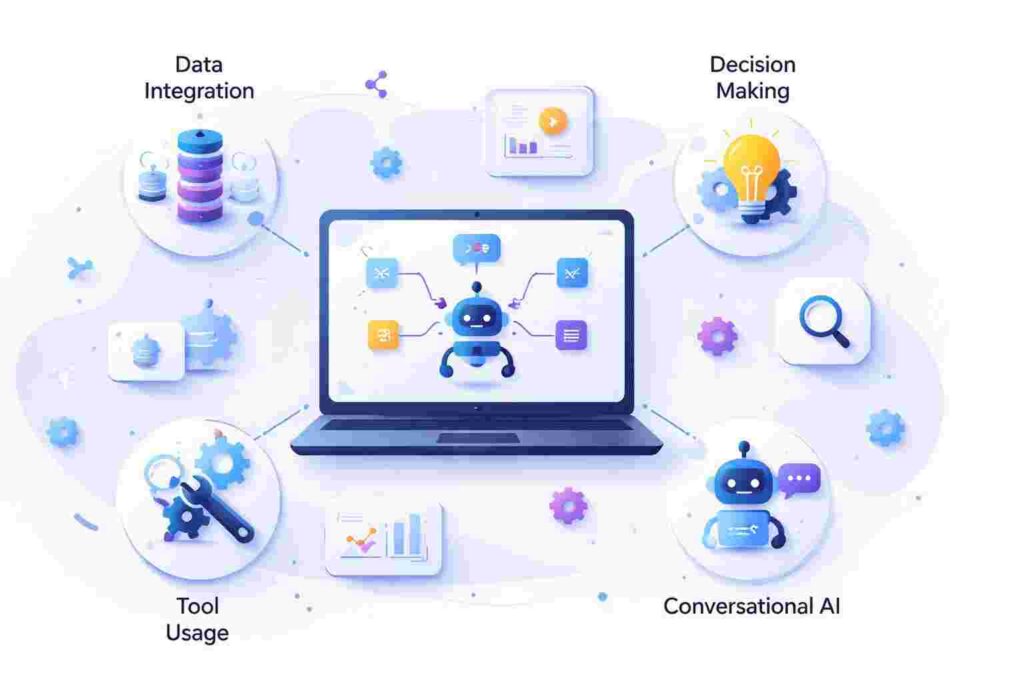
- Natural Language Processing: The backbone of user interaction, allowing agents to understand and generate human-like responses.
- Task Management: Capability to handle multiple tasks simultaneously or sequentially based on user demands.
- Integration Protocols: Mechanisms for interfacing with other software and systems, enhancing functionality.
- Intent Recognition: Identifying user intentions to provide appropriate responses and actions.
How LangChain Agents Work
LangChain Agents operate by processing user inputs through a series of algorithms designed for interpreting language, managing tasks, and delivering precise outputs based on predefined criteria. They employ machine learning models to continuously improve their performance through user interaction.
Technical Mechanisms of LangChain Agents
This section delves deeper into the operational mechanics of LangChain Agents, providing valuable insights for developers looking to implement these systems.
Architecture Overview
The architecture of LangChain Agents typically includes several layers: a user interface layer for interaction, a processing layer for handling tasks, and an integration layer for communication with external systems. This modular design promotes flexibility and scalability, accommodating various business needs.
Example Code Snippets for Implementation
Implementing a basic LangChain Agent can be straightforward. Below is an example of how to create a simple LangChain Agent using Python:
from langchain import LangChainAgent
agent = LangChainAgent()
agent.initialize()
agent.process_input('What is the weather today?')
Integration with Other Systems
LangChain Agents can seamlessly integrate with existing business systems, enabling functionalities such as retrieving data from customer relationship management (CRM) tools or generating reports from enterprise resource planning (ERP) systems. This integration ensures that organizations can leverage their existing assets while enhancing automation and efficiency.
Evaluating Business Impact of LangChain Agents
Understanding the potential benefits and real-world applications of LangChain Agents can significantly inform decision-making processes in various industries.
Benefits in E-commerce
- Personalized Shopping Experience: Agents can recommend products based on user behavior, driving sales.
- 24/7 Customer Support: Providing immediate assistance at any time enhances customer satisfaction.
- Order Tracking: Automating notifications about order status keeps customers informed.
- Inventory Management: Agents can help manage stock levels by providing real-time updates and alerts.
Applications in Healthcare
- Patient Interaction: Agents can answer patient queries and book appointments, improving access to care.
- Data Analysis: Agents can analyze patient data to identify trends and recommend treatments.
- Medication Reminders: Automating reminders can enhance patient adherence to prescriptions.
- Telemedicine Integration: Facilitating virtual consultations between patients and healthcare providers.
Enhancements in Customer Service
Integrating LangChain Agents into customer service workflows can lead to substantial improvements in efficiency and satisfaction:
- Reduced Response Times: Agents can handle multiple inquiries simultaneously, leading to faster resolutions.
- Consistent Service Quality: Automation ensures a uniform quality of service across all interactions.
- Cost Savings: Reducing the need for extensive customer service teams can lower operational costs.
- Data Collection: Agents can collect valuable data from interactions to further enhance service delivery.
Strategic Advantages of Deploying LangChain Agents
Organizations can gain significant strategic advantages by integrating LangChain Agents into their operations. The benefits extend beyond immediate efficiency gains to long-term competitiveness.
Improved Operational Efficiency
- Streamlined Processes: Automating routine tasks frees up human resources for more complex assignments.
- Faster Decision Making: Agents can analyze data and provide insights, accelerating business intelligence efforts.
- Resource Optimization: Enhanced task management leads to a better allocation of resources.
- Scalability: As a business grows, LangChain Agents can be easily scaled to meet increasing demands.
Enhanced User Experience
- Personalization: Agents can tailor interactions based on user preferences, leading to more engaging experiences.
- Accessibility: Improved interfaces make technology accessible to a broader audience, including those with disabilities.
- Instant Gratification: Users receive immediate responses, which enhances satisfaction.
- Feedback Loops: Continuous interaction cycles allow for constant improvements in user experience.
Cost Reduction Strategies
- Labor Costs: Decreasing reliance on staff for routine queries can cut costs significantly.
- Training Expenses: Less training required for staff as many tasks can be handled by agents.
- Operational Streamlining: Reducing bottlenecks leads to lower operational overhead.
- Maintenance Costs: Efficient processes reduce wear and tear on resources, leading to savings.
Limitations and Risks of LangChain Agents
Despite their promising benefits, LangChain Agents come with limitations that businesses must consider during implementation.
Technical Limitations
- Inconsistent Performance: Quality of responses can vary based on training data and algorithm efficacy.
- Dependency on Data: Agents are only as good as the data they are trained on; poor data leads to poor performance.
- Integration Challenges: Existing systems may not readily support integration with AI technologies.
- Scalability Issues: In some cases, scaling agents may require significant engineering resources.
Ethical Considerations
As with any technology, there are ethical concerns surrounding the use of LangChain Agents:
- Bias in AI: Ill-informed training datasets can introduce bias, leading to unfair outcomes.
- Transparency: Users may not always understand how their data is used, leading to trust issues.
- User Manipulation: Agents could unintentionally manipulate user choices through persuasive responses.
- Job Displacement: There is a risk of jobs being replaced by automation, causing societal concerns.
Security Concerns
Implementing LangChain Agents also raises security issues to address:
- Data Privacy: Protecting user information must be a top priority to prevent breaches.
- Cybersecurity Risks: Agents can be vulnerable to attacks if not properly secured.
- Abuse of AI: Malicious users might exploit agents for harmful purposes.
- Regulatory Compliance: Adhering to industry standards for security and privacy is essential.
Comparative Analysis of LangChain Agents vs. Traditional Methods
In evaluating LangChain Agents, it is essential to consider how they stack up against traditional methods. A detailed comparison highlights their strengths.
Performance Benchmarking
| Aspect | LangChain Agents | Traditional Methods |
|---|---|---|
| Response Time | Immediate | Minutes to Hours |
| Scalability | High | Limited |
| Cost Efficiency | High | Medium |
| User Engagement | Dynamic | Static |
| Data Utilization | Real-time | Post-event |
Cost Analysis Comparison
On examining the cost implications, LangChain Agents typically result in significant savings as they automate repetitive processes that would otherwise require dedicated personnel. Businesses have reported decreases in operational costs by up to 30% when implementing such technologies compared to traditional methods.
User Experience Comparison
User engagement tends to be higher in environments utilizing LangChain Agents. According to recent studies, businesses employing AI-driven solutions have experienced a 50% increase in customer satisfaction ratings as users appreciate the timely and relevant responses generated by these agents.
Statistics and Market Trends for LangChain Agents
As we look at the current landscape for LangChain Agents, it’s vital to understand the statistics and market trends that are shaping their growth.
Market Growth Figures
The market for AI agents like LangChain Agents is projected to grow at a rate of 25% annually, reaching an estimated market size of $3 billion by 2025.
Adoption Rates Across Industries
- E-commerce: 70% of companies in this sector have adopted some form of AI agents.
- Healthcare: 63% of healthcare providers are investing in AI-driven solutions for improved patient engagement.
- Financial Services: 58% of financial institutions are integrating AI for operational efficiency.
- Retail: 50% of retail businesses report using AI for inventory management and customer relations.
Future Projections with Numeric Data
Forecasts suggest that by 2027, the demand for AI agents will increase, with up to 85% of customer interactions anticipated to be managed by AI, reflecting a paradigm shift in engagement methodologies.
Real-World Case Studies of Successful LangChain Agent Implementation
To further illustrate the efficacy of LangChain Agents, this section will provide real-world examples showcasing measurable results.
Case Study 1: E-commerce Success Story
An online retailer implemented LangChain Agents to handle customer inquiries. Before the integration, response times averaged 30 minutes; post-implementation, times decreased to mere seconds, leading to a 40% increase in customer satisfaction.
Case Study 2: Healthcare Implementation
A healthcare provider introduced LangChain functionality for appointment scheduling. Initially, 50% of appointments were missed due to miscommunication; after integrating agents, missed appointments dropped to 10%, resulting in increased patient throughput.
Case Study 3: Customer Service Enhancement
A large telecommunications firm employed LangChain Agents to manage technical support. Historically, customer wait times exceeded 10 minutes; following implementation, wait times reduced to less than 2 minutes, while first-contact resolution rates improved from 70% to 90%.
Future Outlook for LangChain Agents
The future for LangChain Agents appears bright, especially with advancements on the horizon that could further enhance their capabilities.
Evolving Technologies
The technology underpinning LangChain Agents will evolve, with enhanced natural language understanding and multi-modal interactions expected, allowing for even richer user experiences.
Potential Market Changes
As enterprises increasingly demand efficiency, the market for LangChain Agents is poised for dramatic expansion, compelling organizations to adopt AI functionalities to stay competitive.
Predictions on User Adoption
With a growing emphasis on automation and efficiency, it is predicted that by 2030, nearly 90% of medium to large businesses will leverage some form of LangChain Agents to manage customer interactions.
Frequently Asked Questions about LangChain Agents
Understanding new technologies can often lead to questions. Below are some frequently asked questions about LangChain Agents that may help clarify your understanding.
What are LangChain Agents?
LangChain Agents are AI-driven tools designed to automate tasks, manage customer interactions, and leverage natural language processing capabilities to allow for sophisticated user engagements. They act as intermediaries that enhance the functionality of various systems through intelligent dialogue management and automation.
How do LangChain Agents differ from other AI Agents?
Unlike traditional AI agents that may be limited to specific tasks, LangChain Agents are versatile. They can manage multiple types of interactions, learn from user experiences, and provide real-time insights across various business processes, making them more adaptable to diverse operating environments.
What industries can benefit from LangChain Agents?
LangChain Agents can serve a myriad of industries, including e-commerce, healthcare, finance, and customer support. Each industry can leverage the capabilities of agents to enhance operational efficiencies, improve customer experiences, and drive better business outcomes.
Are there any limitations to using LangChain Agents?
While LangChain Agents offer significant benefits, they do come with certain limitations. These can include issues related to bias in AI, integration challenges with legacy systems, and potential data privacy concerns. It is essential to consider these factors when implementing such technologies.
How can I implement a LangChain Agent in my business?
Implementing a LangChain Agent involves identifying the specific use cases that align with your business objectives. You would begin by defining objectives, selecting appropriate technology, and ensuring integration with existing systems. Engaging with developers experienced in AI can help streamline this process for optimal implementation.
What future trends should I anticipate with LangChain Agents?
The trajectory for LangChain Agents suggests increased automation, greater adoption rates, and advancements in their capabilities. Technologies such as machine learning and natural language processing are evolving, promising more intuitive and efficient solutions for user interactions.
Conclusion
In conclusion, LangChain Agents represent a transformative development in the realm of AI, offering substantial benefits across various business contexts. Understanding their operational mechanics, strategic advantages, and real-world applications is vital for organizations looking to harness their potential. As technology progresses, LangChain Agents are likely to play an even more pivotal role in shaping the future of business operations, cementing their place as essential tools for enhancing efficiency and user engagement.