
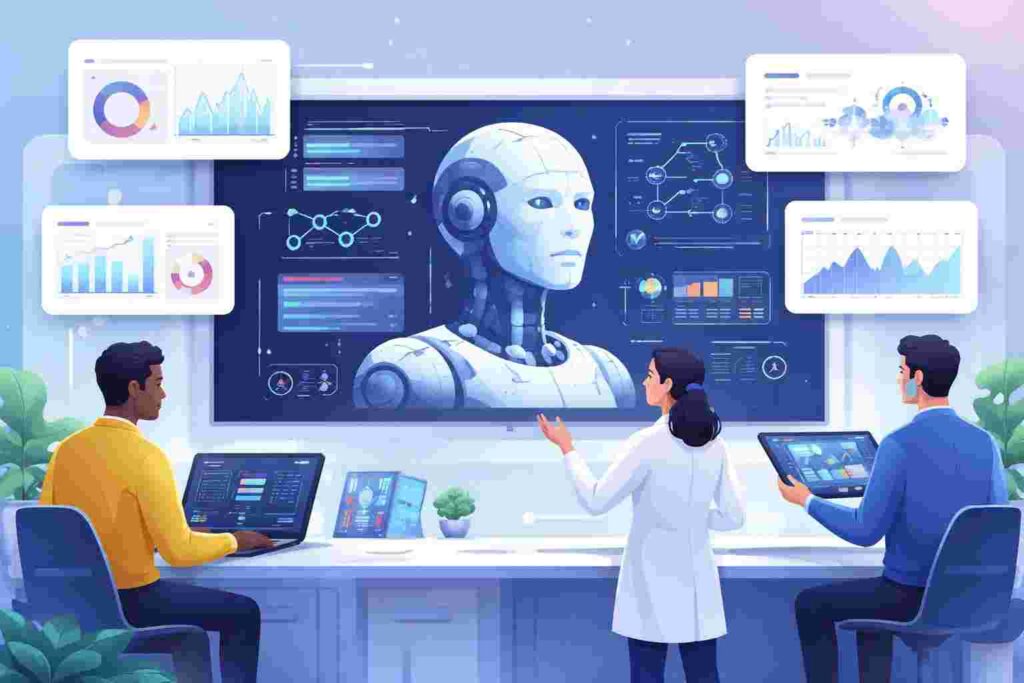
The emergence of agentic AI systems has highlighted the paramount importance of observability in agentic AI. As these systems become increasingly capable and complex, ensuring their reliability and transparency through effective debugging practices is more crucial than ever. In today’s technology landscape, businesses must develop structured approaches to observability in order to navigate the inherent challenges associated with these advanced systems. This article delves into the intricate world of observability and debugging, providing a comprehensive framework for understanding their significance in agentic AI systems.
Understanding Observability in AI Systems
Observability is an essential concept in software engineering, and it takes on new dimensions when applied to AI systems, especially those that exhibit agency. But what is observability, and why is it so vital for agentic AI? Let’s break it down.
Definition of Observability
In the context of AI, observability refers to the ability to measure and understand the internal state and behavior of the system from its outputs. This concept includes monitoring the interaction between the AI agent and its environment, ensuring that performance metrics align with expected outcomes.
Core Principles of AI Observability
- Transparency: Offering insight into decision-making processes.
- Accountability: Tracking the actions and recommendations of AI agents.
- Interpretability: Clarifying how agents arrive at conclusions based on data.
- Feedback Loops: Installing mechanisms for continual learning and error correction.
The Role of Data in Observability
Data is the lifeblood of any AI system. The effectiveness of observability structures depends heavily on the quality and volume of data collected. By implementing rigorous data collection practices, organizations can foster better insights into AI performance, leading to optimized outcomes.
Mechanisms of Debugging Agentic AI
Debugging in agentic AI systems encompasses a range of techniques designed to isolate and rectify issues that impede performance. These mechanisms constitute a critical pathway for enhancing observability.
Debugging Tools and Frameworks
Numerous tools exist to aid in debugging AI systems, each catering to different aspects of the process. Some popular ones include:
- TensorBoard for visualizing metrics and performance over time.
- MLflow for managing the machine learning lifecycle.
- PyTorch Debugger for tracing errors in model execution.
- DataRobot for casual monitoring of model performance.
Common Debugging Techniques for AI
Effective debugging often employs standard methodologies that have evolved through years of software development practices. Key techniques consist of:
- Unit Testing: Isolating chunks of code to test individual components.
- Integration Testing: Assessing how different modules work together within the system.
- Simulation: Testing the agent’s behavior under various hypothetical scenarios.
- Logging: Capturing system performance data for analysis.
Code Examples for Debugging AI Models
Below is a simplified example to illustrate how logging can be integrated into AI model implementation:
import logging

logging.basicConfig(level=logging.INFO)

def train_model(data):
    logging.info('Starting model training with data: {}'.format(data))
    # Model training code...
    logging.info('Model training complete.')
Business Impact of Observability Across Industries
Observability isn’t just a technical concern; its implications ripple through businesses, enhancing performance and driving ROI. Let’s explore how different industries are harnessing the power of observability.
Healthcare Sector Insights
In healthcare, observability can lead to improved patient outcomes. For example, real-time monitoring of AI systems can help detect anomalies in patient data, facilitating timely interventions.
Finance and Banking Applications
In the financial sector, observability is critical for regulatory compliance. Transparent AI-driven decisions must be explainable, ensuring accountability while minimizing risks.
Manufacturing Efficiency Gains
Manufacturers are leveraging observability to enhance operational efficiency, reducing downtime and predictive maintenance through AI analysis of machinery data.
Strategic Advantages of Enhanced Observability
Adopting robust observability frameworks doesn’t just address technical issues; it offers several strategic advantages for organizations.
Improved Decision-Making
- Enhanced data visibility enables informed choices.
- Data-driven insights reduce guesswork in strategy formulation.
- Quick identification of emerging trends fosters proactive planning.
- More accurate risk assessments allow for smarter resource allocation.
Optimization of Resources
Resource optimization is paramount in every industry. Enhanced observability allows organizations to fine-tune their resource allocations based on actionable insights, leading to substantial cost savings.
Fostering Innovation
Ultimately, observability paves the way for innovation. When organizations have a clear understanding of their AI systems, they are better positioned to explore new frontiers and technologies.
Limitations and Considerations in Implementation
The deployment of observability practices is fraught with challenges that need careful consideration. While robust observability frameworks yield significant benefits, organizations must also navigate potential pitfalls.
Cost Implications
Implementing advanced observability tools can require substantial investment, particularly for smaller businesses. Organizations need to weigh the long-term benefits against immediate financial expenditure.
Complexity in Integration
Integrating new observability tools with existing systems can be complex. A thorough understanding of current architectures is necessary to minimize disruption and maximize effectiveness.
Data Privacy Concerns
Privacy and ethical data handling are critical in observability. Organizations must establish robust data governance frameworks to safeguard sensitive information while still deriving actionable insights.
Evaluating Observability Solutions: A Comparison
As companies seek observability solutions, comparing various tools can be daunting. The following table presents a snapshot of several observability tools, highlighting essential features:
| Tool | Key Features | Use Cases | Pricing |
|---|---|---|---|
| TensorBoard | Visualization, Graphing | Model training performance tracking | Free |
| MLflow | Model Lifecycle Management | Experiment Management | Subscription-based |
| DataRobot | AutoML, Model Monitoring | Predictive Analytics | Contact for pricing |
| PyTorch Debugger | Error Tracing | Deep Learning Projects | Free |
Vendor Evaluation Criteria
- Scalability: Can the tool grow with your organization?
- Usability: Is it user-friendly?
- Support: What kind of customer support is available?
- Compatibility: Does it integrate well with existing systems?
Case Studies of Tool Implementation
Organizations that have effectively implemented observability frameworks report measurable improvements over time. These implementations have not only streamlined operations but also enhanced overall AI system effectiveness.
Statistics and Market Trends in AI Observability
Understanding current market statistics can provide context to the trends in AI observability. The landscape is evolving rapidly, underscoring the need for timely adaptations.
Growth Rate of Observability Tools
According to Gartner, the market for observability tools is projected to grow at a Compound Annual Growth Rate (CAGR) of 20% over the next five years. This acceleration reflects a rising recognition of the value that observability brings to AI implementations.
Investment Trends in AI Technologies
Furthermore, a recent report by McKinsey indicated that investment in AI technologies reached an all-time high of $57 billion in 2022, with a significant portion directed towards enhancing observability and AI debugging capabilities.
Adoption Rates Across Industries
- Finance: 75% of financial institutions are investing in observability frameworks.
- Healthcare: 65% of healthcare providers are exploring AI observability tools.
- Manufacturing: 55% have integrated observability into production environments.
- Retail: 45% are leveraging AI-based observability solutions.
Real-World Case Studies: Measurable Outcomes
Examining real-world implementations of observability in agentic AI provides tangible evidence of its benefits. These case studies reveal measurable impacts that organizations have experienced after applying robust observability frameworks.
Case Study: AI in Healthcare
A prominent healthcare provider applied observability practices in its AI-driven diagnostics tool. By enhanced monitoring and feedback loops, the organization reported a decrease in diagnostic errors by 30% after implementing observability frameworks.
Case Study: AI in Finance
A leading financial institution adopted an observability tool to monitor AI transaction systems. They observed a 25% reduction in false positives and a significant improvement in customer satisfaction ratings as a result.
Case Study: Large Scale AI Deployments
A multinational manufacturing company integrated observability across its AI systems managing logistical operations. The implementation led to a 40% reduction in operational costs, demonstrating substantial financial return.
Future Outlook of AI Observability and Debugging
As technology continues to evolve, so too will the practices surrounding observability in AI. The future holds exciting possibilities that organizations must prepare for.
Emerging Technologies
With advancements in quantum computing and machine learning, there is potential for innovative observability frameworks that can self-optimizing in real-time. Leveraging these technologies will be essential for staying ahead.
Ideas for Future Research
Future research efforts could focus on developing more sophisticated methods for capturing insights from complex agentic systems, particularly in domains prone to high uncertainty.
Trends in AI Development
As AI development progresses, we can expect to see increased integration of observability practices not just in toolkits, but as foundational components in AI architecture.
Frequently Asked Questions about AI Observability
What is the difference between observability and debugging?
Observability refers to the capacity to understand a system’s internal workings based on its outputs. Debugging, on the other hand, is the process of identifying and fixing issues within that system. Observability provides the context necessary for effective debugging by offering insights into performance and behaviors, making it easier to spot and address faults.
How can organizations implement observability?
Organizations can start implementing observability by first identifying key performance indicators (KPIs) relevant to their AI systems. Next, selecting appropriate tools to monitor these KPIs is essential. Training staff on how to utilize these tools effectively and establishing a culture of feedback are also crucial steps to enable continuous improvement and adaptation of monitoring methods.
What are best practices for monitoring AI systems?
Best practices for monitoring AI systems involve proactively defining metrics that measure performance, creating comprehensive visibility via detailed logging, and enabling alerting mechanisms for immediate action on anomalies. Regularly reviewing these metrics helps in understanding trends, aligning the AI’s performance with objectives, and facilitating optimal functionality.
How does observability improve AI performance?
Observability enhances AI performance by providing actionable insights into system behavior. By understanding how agents interact with their environment, organizations can refine processes, reduce errors, and tailor the AI’s learning pathways. This iterative improvement leads to better decision-making and overall output accuracy.
What are the common pitfalls in AI observability?
Common pitfalls in AI observability include overlooking data quality, neglecting to establish clear monitoring goals, and failing to integrate observability within the workflow. It’s vital for organizations to adopt a structured approach to monitoring to prevent these issues from leading to performance inefficiencies.
Which industries benefit the most from AI observability?
Industries such as healthcare, finance, and manufacturing stand to gain immensely from AI observability. As observed, these sectors face unique challenges where decision-making processes greatly impact outcomes. Therefore, effective observability can drive improvements in operational efficiency, patient care, and regulatory compliance.
Conclusion: The Path Forward in Agentic AI
In conclusion, the significance of observability in agentic AI systems cannot be overstated. As we’ve seen, its impact spans across various industries, improving decision-making, resource optimization, and fostering innovation. To truly harness the potential of agentic AI, businesses must embrace structured observability and continuous improvement practices.
Key Takeaways
- Observability provides critical insights necessary for debugging and optimization.
- Different industries can achieve substantial performance gains through effective observability frameworks.
- Awareness of limitations and potential risks is vital for successful implementation.
Call to Action for Businesses
It’s imperative for organizations to leverage observability in their AI systems to remain competitive. By selecting the right tools and frameworks, they can ensure robust monitoring and adaptation of their AI capabilities.
Future Research Directions
Future exploration into observability should look at the integration of emerging technologies and new methodologies that enhance the understanding of agentic AI systems. These innovations will shape the next generation of AI development.