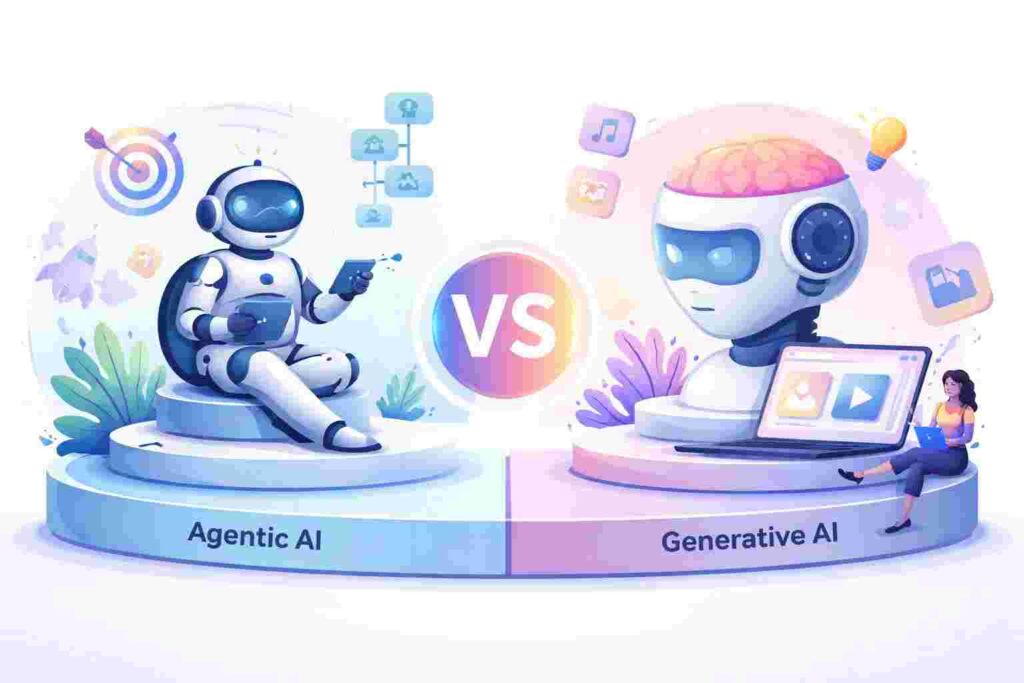
In recent years, the landscape of artificial intelligence has evolved dramatically, giving rise to concepts such as Agentic AI and Traditional AI, which now play pivotal roles in various sectors. Understanding these two forms of AI is essential as they represent distinct approaches to machine intelligence, shaping the present and future of technology. This article delves into the nuances of Agentic AI and Traditional AI, examining their features, applications, and implications for society.
Table of Contents
Defining Agentic AI and Traditional AI
To fully appreciate the differences between Agentic AI and Traditional AI, it’s crucial to establish clear definitions and characteristics for each.
Key characteristics of Agentic AI
- Autonomous decision-making capabilities
- Adaptive learning and self-improvement
- Enhanced user interaction and personalization
- Ability to operate in complex, dynamic environments
Key characteristics of Traditional AI
- Rule-based systems and predetermined responses
- Dependence on static datasets for learning
- Lack of self-learning or adaptation capabilities
- Limited interaction and customization options
Historical context and evolution of AI technologies
The journey of AI began with Traditional AI, which focused on data processing and predefined algorithms. It has served as the foundation for many early applications where tasks were completed through a series of set rules. Over time, advancements in machine learning, neural networks, and cognitive computing paved the way for Agentic AI, characterized by its ability to learn from interactions and adapt to new scenarios. Today, the evolution continues, as both types of AI find their roles in different niches.
Core Mechanisms of Agentic AI
Understanding the underlying technologies and algorithms is key to grasping how Agentic AI differentiates itself from its Traditional counterpart.
Machine learning frameworks in Agentic AI
Agentic AI typically employs advanced machine learning frameworks such as reinforcement learning and deep learning. These frameworks enable the system to learn from experiences and improve its performance without explicit programming. For example, in gaming applications, Agentic AI can interact with its environment, adjust strategies in real-time, and optimize its gameplay based on past engagements.
Decision-making processes in Agentic AI vs Traditional AI
While Traditional AI relies heavily on predefined rules to make decisions, Agentic AI processes information in a more fluid manner. Agentic systems utilize vast amounts of data to model behaviors and predict outcomes, allowing them to make increasingly informed decisions autonomously. This shift not only improves efficiency but also enhances data utilization.
Self-learning capabilities
Self-learning is perhaps the most distinguishing feature of Agentic AI. It allows systems to refine their models continuously by learning from new data. This capability means they can adapt to changing conditions, making them crucial for applications in rapidly evolving fields such as finance and healthcare.
Business Applications of Agentic AI
The integration of Agentic AI within various industries has led to notable transformations, providing significant business advantages.
Healthcare applications
- Diagnosis improvement through predictive analytics
- Personalized treatment plans based on patient data
- Real-time patient monitoring and alerts based on AI insights
- Streamlining administrative processes to reduce waiting times
Finance and investment strategies
- Algorithmic trading leveraging real-time market data
- Risk management and fraud detection using pattern recognition
- Personalized financial advice based on customer behavior
- Predictive analytics for market trend forecasting
Manufacturing optimizations
- Predictive maintenance to reduce downtimes
- Supply chain optimization through real-time data analysis
- Quality control powered by machine learning algorithms
- Enhanced inventory management using AI-driven insights
Retail and customer experience enhancement
- Personal shopping assistants adapting to consumer preferences
- Dynamic pricing strategies based on demand forecasting
- Inventory management that adjusts in real-time to sales
- Customer sentiment analysis through natural language processing
Competitive Advantages of Agentic AI
When businesses deploy Agentic AI, they unlock a range of strategic benefits over Traditional AI systems.
Enhanced adaptability and resilience
Agentic AI’s self-learning capabilities allow companies to respond quickly to market changes. Unlike Traditional AI, which may falter when confronted with new challenges, Agentic AI can pivot strategies and adapt without requiring extensive reprogramming. This flexibility is crucial in sectors where responsiveness is key.
Improved efficiency and cost-effectiveness
Operational efficiency often improves with the integration of Agentic AI, as these systems can analyze data faster and with greater accuracy. This results in cost savings through reduced wasted resources, optimized workflows, and predictive maintenance models that prevent costly downtimes.
Greater user personalization options
Agentic AI’s ability to learn from user interactions enables more customized experiences. This personalization fosters stronger customer relationships and can significantly enhance retention rates. In contrast, Traditional AI’s limited adaptability often leads to generic solutions that may not meet individual user needs.
Limitations and Risks Associated with Agentic AI
Despite its advantages, Agentic AI presents potential drawbacks and challenges that warrant careful consideration.
Ethical concerns and biases
As with any AI application, ethical considerations are critical. Agentic AI systems can inadvertently perpetuate or even amplify existing biases present in their training datasets. This can lead to inequitable outcomes in areas such as hiring, lending, and law enforcement, raising concerns over fairness and accountability.
Technical limitations and reliability issues
While Agentic AI’s self-learning capabilities are a strength, they can also introduce challenges related to reliability. Systems may reach incorrect conclusions based on insufficient or flawed data. Moreover, the complexity of these systems can make troubleshooting difficult, leading to potential oversights in critical applications.
Regulatory and compliance challenges
As regulatory landscapes evolve, the deployment of Agentic AI may encounter compliance issues. Regulators will need to develop frameworks that address the intricacies of AI technologies, and companies may struggle to adapt their systems to new laws and regulations, impacting operational efficiency.
Evaluating Agentic AI vs Traditional AI
To thoroughly understand the distinctions between Agentic and Traditional AI, a comparative analysis can provide clarity and insights.
| Feature | Agentic AI | Traditional AI |
|---|---|---|
| Learning Approach | Self-learning and adaptive | Rule-based and static |
| Decision-Making | Autonomous | Dependent on predefined rules |
| Complexity | Handles complex, dynamic data | Simplistic, linear models |
| User Interaction | Highly personalized | Generic responses |
| Operational Efficiency | Higher due to predictive capabilities | Lower, often reliant on past data |
Statistics and Market Trends in AI Technologies
The growth of AI technologies is significant, with projections suggesting that the global AI market could reach $126 billion by 2025, highlighting a substantial increase in investment and application. Specifically, a recent report indicates that the segment focused on Agentic AI is expected to grow at a compound annual growth rate (CAGR) of 40% through the next decade, outpacing traditional AI sectors.
Investment trends showcase a marked shift, with 60% of organizations planning to incorporate Agentic AI strategies within their business practices, demonstrating a clear preference for systems that promise greater adaptability and return on investment.
Real-World Success Stories of Agentic AI
Examining real-world applications helps to underscore the tangible impacts of Agentic AI across industries. Here are several notable case studies:
Case study in healthcare: patient outcomes before and after
One leading hospital integrated Agentic AI predictive analytics into its patient management system, resulting in a 25% improvement in patient diagnosis accuracy. Prior to this implementation, misdiagnoses were rampant, leading to delayed treatments. After introducing the AI system, patient outcomes have significantly improved, allowing faster, more effective treatment plans and enhancing overall patient satisfaction.
Case study in finance: investment performance improvements
In the finance sector, a major investment firm adopted an Agentic AI model that analyzes real-time market data. The firm reported a 30% increase in portfolio returns within the first year of implementation, compared to traditional methods. By leveraging comprehensive data analysis and adaption to market fluctuations, the firm was able to make far better-informed investment decisions.
Case study in manufacturing: efficiency gains
A manufacturing powerhouse deployed Agentic AI for predictive maintenance of its machinery. Before this implementation, unscheduled downtime resulted in losses exceeding 15% annually. Post-implementation, the downtime decreased by 50%, leading to remarkable efficiency gains and substantial cost savings, which directly bolstered the company’s bottom line.
Future Outlook for Agentic and Traditional AI
The future of AI technologies is vibrant, with significant innovations anticipated in both Agentic and Traditional frameworks. Emerging technologies will likely integrate advanced neural networks and quantum computing capabilities, pushing the boundaries of what AI can achieve.
Emerging technologies and innovations
Expect to see rapid developments in self-learning algorithms that continuously evolve based on user interactions and environmental changes. This could lead to more sophisticated applications across diverse sectors, from autonomous vehicles to personalized education systems.
Predicted shifts in industry adoption
Industries heavily reliant on data-driven decision-making, such as finance, healthcare, and logistics, are expected to embrace Agentic AI more than their Traditional counterparts. As scalability becomes a critical requirement, businesses will seek adaptable AI solutions that offer real-time insights and enhanced versatility.
Long-term societal implications
As Agentic AI continues to permeate different facets of society, its implications regarding employment, ethics, and accountability will necessitate robust dialogue among stakeholders. Future discussions will need to revolve around establishing ethical guidelines and standards for responsible AI use to mitigate risks while maximizing benefits.
Frequently Asked Questions about Agentic AI vs Traditional AI
What is the difference between Agentic AI and Traditional AI?
The primary difference lies in their operational methods. Agentic AI functions autonomously, utilizing self-learning algorithms to adapt to data changes and make decisions without human intervention. In contrast, Traditional AI typically operates based on static rules and cannot learn or adapt to new information unless explicitly programmed to do so. This fundamental divergence impacts how each type of AI can be applied effectively in various real-world scenarios.
What are the ethical implications of using Agentic AI?
Ethical implications include concerns regarding bias, privacy, and decision accountability. Because Agentic AI learns from data, it can inadvertently reflect existing biases found in those datasets, leading to unfair outcomes. It’s crucial for organizations using Agentic AI to establish oversight mechanisms that ensure fairness and transparency, as well as comply with ethical standards in their data collection and usage practices.
How does Agentic AI impact job markets?
Agentic AI has the potential to disrupt traditional job markets dramatically. By automating complex tasks and providing efficiencies in various sectors, it could lead to significant shifts in employment patterns. While some jobs may be replaced, particularly roles focused on routine tasks, new opportunities may arise in areas related to AI maintenance, oversight, and development. Organizations will need to prepare their workforce with appropriate training programs to meet the demands of an AI-integrated economy.
Can Traditional AI be upgraded to Agentic AI?
While Traditional AI systems can be enhanced, upgrading them to achieve characteristics typical of Agentic AI is not straightforward. It often requires significant redesign of the underlying algorithms and integration of self-learning capabilities. Companies would need to assess their current systems and the level of investment required to transition effectively to more autonomous AI solutions.
What are the primary industries benefiting from Agentic AI?
Many industries are now capitalizing on the benefits of Agentic AI, including healthcare, where it can improve diagnostic accuracy; finance, where it enhances risk assessments; manufacturing, where it optimizes production processes; and retail, where personalized experiences drive customer engagement. These applications demonstrate the versatility and transformative potential of Agentic AI across sectors.
What future developments can we expect in AI technologies?
Ahead, we can anticipate rapid advancements in AI technologies such as improvements in natural language processing, enhanced cognitive computing capabilities, and the integration of AI with other emerging technologies like blockchain and Internet of Things (IoT). These developments will likely lead to more sophisticated AI applications that can provide deeper insights and more tailored experiences for users.
Conclusion and Key Takeaways
In summary, understanding the distinctions between Agentic AI and Traditional AI provides valuable insights into their respective roles in today’s technology landscape. While Traditional AI offers foundational capabilities, the adaptive nature of Agentic AI presents significant opportunities for innovation, efficiency, and personalization across numerous industries.
The implications of adopting one over the other can affect strategic direction and operational success. As organizations continue to navigate this evolving landscape, awareness of both AI types will be essential for leveraging their strengths effectively and responsibly.
Ultimately, the evolution of AI technologies will shape not just business practices but also societal norms, making an ongoing discourse about their ethical use both necessary and urgent.