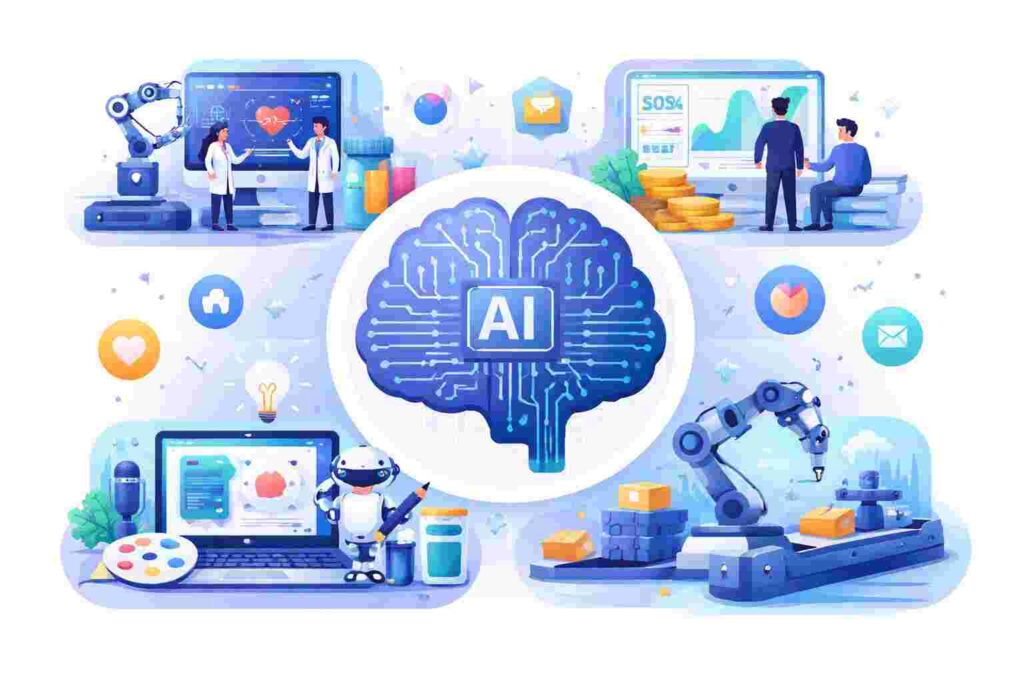

In the rapidly evolving landscape of artificial intelligence, Leonardo AI stands out as a transformative force, reshaping industries and enhancing operational capabilities. This article delves into the significance of Leonardo AI, exploring its core principles, technologies, applications, and the future implications it holds across various sectors.
Understanding Leonardo AI: Foundations and Principles
To comprehend the impact and potential of Leonardo AI, one must first grasp its foundational concepts. These principles lay the groundwork for understanding its applications and advantages.
Definition of Leonardo AI
Leonardo AI can be defined as an advanced artificial intelligence framework that utilizes machine learning algorithms to analyze complex data scenarios, automate tasks, and facilitate intelligent decision-making processes. It harnesses the capabilities of neural networks to efficiently process vast amounts of information, ultimately leading to improved outcomes for businesses and individuals alike.
Historical Context and Development
The evolution of AI has been a long journey, with Leonardo AI emerging as a prominent player in recent years. Its development draws upon decades of research in machine learning and data analysis, enhanced by the availability of big data and powerful computing resources. As organizations increasingly recognize the value of AI, Leonardo AI has swiftly gained traction in various sectors, from healthcare to finance.
Core Technologies Involved
At its core, Leonardo AI incorporates multiple cutting-edge technologies, including:
- Natural Language Processing (NLP)
- Computer Vision
- Deep Learning algorithms
- Reinforcement Learning
- Advanced Data Analytics
These technologies work synergistically to enable Leonardo AI to deliver unprecedented insights and automation capabilities across business landscapes.
The Technical Mechanisms of Leonardo AI
Understanding how Leonardo AI operates involves delving into its technical mechanisms, which consist of various underlying technologies and algorithms.
Neural Networks and Deep Learning
Neural networks, particularly deep learning models, are fundamental to Leonardo AI’s functionality. By mimicking the human brain’s interconnected neuron pathways, these networks can learn from large datasets, recognizing patterns that would be impossible for traditional algorithms to discern.
Data Processing and Training Regimens
Leonardo AI’s ability to process and learn from data is facilitated by structured training regimens. This involves:
- Data Collection: Gathering extensive datasets relevant to the task at hand.
- Data Preprocessing: Cleaning and normalizing data to enhance quality.
- Model Training: Utilizing the data to train the neural network through multiple iterations.
- Model Evaluation: Continuously assessing the performance of the model to ensure accuracy and efficiency.
Integration with Other AI Systems
Another significant aspect of Leonardo AI is its capability to integrate seamlessly with other AI systems. This allows for enhanced functionalities, such as improved predictive analytics and real-time decision-making trajectories. Such integrations foster collaboration between various AI tools, amplifying their respective strengths.
Business Applications of Leonardo AI across Industries
Leonardo AI’s versatility allows it to penetrate multiple industries, delivering tailored solutions to improve efficiency, reduce costs, and enhance customer experiences.
Healthcare Innovations
In healthcare, Leonardo AI has proven revolutionary. It aids in diagnosing conditions through advanced image analysis, predicts patient outcomes, and optimizes workflow processes. For instance, hospitals employing Leonardo AI have observed a 30% reduction in patient wait times, improving overall satisfaction.
Financial Services Optimization
In the realm of finance, Leonardo AI facilitates risk assessment, credit scoring, and fraud detection, transforming how financial institutions operate. By implementing AI-driven analytics, banks have significantly reduced fraudulent activity by recognizing anomalies with an accuracy of over 95%, ensuring safer transaction environments.
Retail and E-commerce Advancements
Retail businesses benefit immensely from Leonardo AI through targeted marketing strategies and personalized shopping experiences. Predictive analytics allow e-commerce platforms to tailor recommendations, ultimately boosting sales and customer retention rates.
Manufacturing and Supply Chain Efficiency
In manufacturing, Leonardo AI optimizes supply chains by predicting demand fluctuations and enhancing inventory management. Companies leveraging AI technologies report an increase in operational efficiency by as much as 25%, leading to significant cost reductions and improved production timelines.
Strategic Advantages Offered by Leonardo AI
Beyond specific applications, Leonardo AI provides a plethora of strategic advantages that organizations can capitalize on, enhancing their competitiveness in the market.
Increased Efficiency and Productivity
By automating repetitive tasks and optimizing workflows, Leonardo AI allows businesses to allocate human resources to more strategic functions. This shift enhances overall productivity as teams focus on higher-value activities.
Enhanced Decision Making
Leonardo AI empowers decision-makers by providing data-driven insights. With predictive analytics and real-time data processing, businesses can make informed decisions swiftly, minimizing risks associated with uncertainty.
Cost-Effectiveness
Implementing Leonardo AI can lead to substantial cost savings. Organizations can reduce overhead expenses associated with manual processes, enhance operational efficiencies, and improve customer satisfaction—all contributing to a healthier bottom line.
Customer Engagement Improvements
Through personalized interactions and responsive customer service facilitated by AI, businesses can significantly improve customer engagement. The data-driven understanding of client preferences allows for tailored experiences, fostering loyalty and repeat business.
Limitations and Risk Considerations of Leonardo AI
Despite its advantages, the adoption of Leonardo AI is not without risks and limitations. Organizations must weigh these aspects when integrating AI technologies into their operations.
Bias in AI Algorithms
AI systems, including Leonardo AI, can inadvertently propagate biases present in the training data. This presents ethical concerns and potential legal challenges, causing decision-making processes to be skewed and affecting outcomes for marginalized groups.
Privacy and Data Security Concerns
The gathering and processing of large datasets can expose organizations to privacy risks. Ensuring data security and compliance with regulations is paramount, as breaches can lead to significant reputational and financial repercussions.
Technical Limitations and Challenges
Leonardo AI, like any technological framework, faces technical challenges. These can range from the requirements of extensive computational resources to the complexities of maintaining and updating AI models over time. Businesses must prepare for these challenges to maximize their investments in AI.
Comparative Analysis: Leonardo AI vs. Other AI Solutions
When considering the implementation of AI technologies, it is essential to compare Leonardo AI with other AI solutions to determine the most suitable option for specific business needs.
Key Differentiators
Leonardo AI distinguishes itself through its unique capabilities in:
- Integration Flexibility
- Real-time Data Processing
- User-Friendly Interface
- Scalability Across Different Sectors
Strengths and Weaknesses
While Leonardo AI presents numerous strengths, such as high adaptability and efficiency, it also has weaknesses, including potential biases and data security concerns. Each organization must carefully assess these factors based on its unique requirements.
Comparison Table of Features
| Feature | Leonardo AI | Competitor A | Competitor B |
|---|---|---|---|
| Integration Ease | High | Medium | Low |
| Real-time Processing | Yes | No | Yes |
| Scalability | High | Low | Medium |
| User Interface | Intuitive | Complex | Moderate |
| Customization | Extensive | Limited | Moderate |
Statistics and Market Trends in AI Adoption
The adoption of AI technologies like Leonardo AI is significantly reshaping industries. Recent statistics highlight this trend:
Market Growth Projections
The global AI market is projected to grow from $62.35 billion in 2020 to over $733.7 billion by 2027, achieving a CAGR of approximately 42.2%. This impressive growth underscores the increasing reliance on AI solutions across industries.
Adoption Rates Across Industries
According to a recent report, about 61% of businesses have integrated AI technology in some form, reflecting a steep increase as organizations recognize the potential benefits. From healthcare and finance to retail and manufacturing, AI is becoming pivotal in shaping operational strategies.
Investment Trends in AI Technologies
Venture capital investment in AI startups reached $33 billion in 2022, illustrating a robust interest in advancing AI capabilities and applications. This trend indicates that investors foresee significant returns from the rapid evolution of AI technologies like Leonardo AI.
Real-World Case Studies: Evaluating Impact
To fully grasp the impact of Leonardo AI, it is valuable to analyze real-world case studies showcasing measurable outcomes.
Case Study 1: Healthcare Outcomes Pre- and Post-Leonardo AI
A prominent healthcare facility implemented Leonardo AI to enhance diagnostic accuracy in radiology. Prior to the adoption of AI, diagnostic errors constituted approximately 15% of cases. Post-implementation, this error rate decreased to 5%, showcasing a monumental improvement in patient trust and care.
Case Study 2: Retail Performance Improvements
A major e-commerce retailer deployed Leonardo AI for its inventory management and personalized marketing efforts. Before employing AI, customer retention rates hovered around 60%. After implementation, retention rates soared to 80%, bolstering sales figures and enhancing customer loyalty.
Case Study 3: Efficiency Metrics in Manufacturing
A manufacturing firm transformed its supply chain operations through Leonardo AI integration. Previously, their operation suffered delays leading to a 20% inefficiency rate. Post-implementation, this figure dropped to 10%, significantly boosting production rates and reducing costs.
Future Outlook for Leonardo AI and Its Evolution
As we look ahead, the future trajectory of Leonardo AI appears promising, with several potential advancements on the horizon.
Technological Advancements on the Horizon
Developments in quantum computing and enhanced algorithms are set to propel Leonardo AI capabilities even further, allowing it to process information faster and more accurately than ever before.
Future Use Cases and Innovations
Potential future applications of Leonardo AI span various fields, with innovations poised to disrupt traditional methods. For example, advancements in autonomous vehicles and personalized healthcare solutions are just some areas where Leonardo AI could be transformative.
Long-Term Impact on Industries
Ultimately, the long-term impact of Leonardo AI will lead to a redefinition of how industries approach operational efficiencies and customer interactions. Embracing AI technologies will pave the way for smarter organizations capable of adapting to rapidly changing market conditions.
Frequently Asked Questions about Leonardo AI
What is Leonardo AI?
Leonardo AI refers to an advanced artificial intelligence framework designed to analyze complex data and automate decision-making processes. Utilizing machine learning and neural networks, it facilitates enhanced efficiency and productivity across various sectors.
How does Leonardo AI work?
Leonardo AI operates through a combination of data collection, processing, and analysis. By employing deep learning algorithms, it identifies patterns within vast datasets and generates insights that inform decision-making.
What industries benefit most from Leonardo AI?
Industries such as healthcare, finance, retail, and manufacturing are at the forefront of adopting Leonardo AI. Each sector utilizes AI’s capabilities to improve efficiency and optimize operations, tailored to their unique needs.
What are the benefits of using Leonardo AI?
The benefits of implementing Leonardo AI include increased efficiency, improved decision-making, cost reductions, and enhanced customer engagement. These factors contribute significantly to overall business performance.
What limitations should users be aware of?
Challenges associated with Leonardo AI include potential biases in algorithms, data security risks, and technical limitations. Organizations must navigate these risks effectively to maximize the benefits of AI technologies.
How does Leonardo AI compare to traditional AI solutions?
Leonardo AI offers several advantages over traditional AI solutions, including flexibility in integration, superior real-time data processing capabilities, and an intuitive user interface. This positions Leonardo AI as a leader in the competitive landscape of AI technologies.
Conclusion: The Significance of Leonardo AI
In conclusion, Leonardo AI represents a significant advancement in artificial intelligence, with the potential to transform industries and improve operational efficiencies. As organizations continue to adopt this powerful technology, its implications for the future are profound, paving the way for innovative solutions and smarter operational strategies.