Introduction
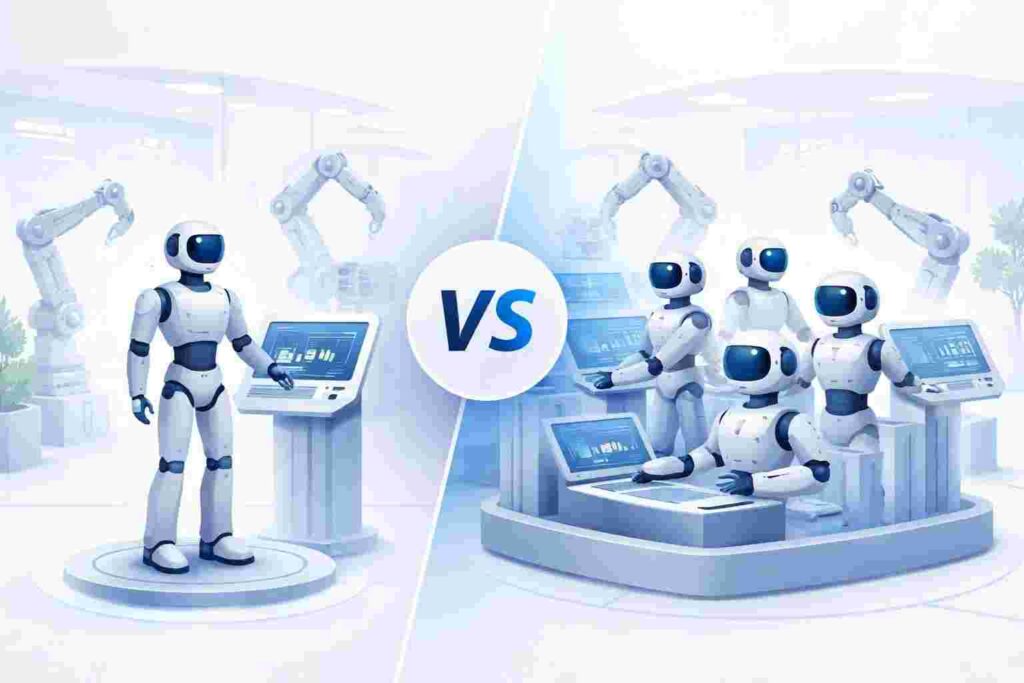
The realm of artificial intelligence has given rise to numerous methodologies and systems that enhance automation and decision-making. Among these, single-agent and multi-agent systems stand as foundational pillars, each with its unique characteristics and applications. Understanding the distinctions between these two systems is crucial for grasping their significance across various industries.
Single-agent systems operate independently, tackling specific tasks through predefined algorithms and decision-making processes. In contrast, multi-agent systems involve multiple agents that interact with one another, enabling them to cooperate or compete to achieve their respective goals. As we dive deeper into this comparison, we will explore how these systems operate and the implications they hold for sectors ranging from manufacturing to healthcare.
Foundational Concepts of Single-Agent and Multi-Agent Systems
Before diving into the technicalities, it is essential to grasp the foundational concepts surrounding single-agent and multi-agent systems. This section aims to define what each system entails and address some common misconceptions.
Definition of Single-Agent Systems
At its core, a single-agent system consists of a solitary entity that perceives its environment and acts upon it. These systems utilize various algorithms to analyze specific input and produce an output that aligns with built-in objectives. Examples include simple rule-based engines or basic autonomous robots that perform tasks without collaboration.
Definition of Multi-Agent Systems
Conversely, multi-agent systems comprise multiple autonomous agents that can communicate and collaborate to perform tasks or make decisions. Each agent may have its own set of goals, and the interactions between them can lead to emergent behaviors and complex problem-solving capabilities. Applications often include simulations, distributed control systems, and complex adaptive systems.
Key Characteristics of Each System
- Single-Agent Systems: Autonomy, rule-based decision making, task specificity.
- Multi-Agent Systems: Collaboration, communication, inter-agent negotiation.
- Both systems rely on algorithms to function but differ significantly in their scope and adaptability.
- While single-agent systems may be governed by deterministic processes, multi-agent systems tend to exhibit stochastic behaviors due to agent interactions.
Common Misconceptions
- Many assume that single-agent systems offer superior performance in all circumstances, neglecting situations where collaborative efforts yield better results.
- Another misconception is that multi-agent systems are unnecessarily complex, while simpler tasks could benefit from single-agent solutions without the overhead of collaboration.
- Some believe that multi-agent systems always require sophisticated infrastructure, disregarding the potential of simpler frameworks.
Technical Mechanisms Behind Single-Agent and Multi-Agent Systems
With foundational knowledge established, we now shift our focus to the technical mechanisms underlying both types of systems. Understanding how these systems function will give greater insight into their operational frameworks.
Architecture of Single-Agent Systems
The architecture of a single-agent system typically consists of three components: perception, reasoning, and action. The agent senses its environment through input devices (sensors), processes this information using algorithms, and then performs actions through output devices (actuators). This structure facilitates a straightforward, linear approach to task execution.
Architecture of Multi-Agent Systems
Multi-agent systems feature a more complex architecture where multiple agents interact within a shared environment. These systems often incorporate decentralized decision-making processes, allowing for greater efficiency. Agents use messaging protocols to communicate, sharing information critical for collaboration. This architecture can lead to emergent behavior that cannot be solely attributed to individual agent actions.
Communication Protocols and Algorithms
- Single-agent systems often employ straightforward algorithms such as decision trees or rule-based systems.
- Multi-agent systems utilize diverse communication protocols, such as FIPA (Foundation for Intelligent Physical Agents) standards, to facilitate interactions.
- Algorithms in multi-agent environments include negotiation algorithms, such as auction-based methods, where agents compete for resources.
- Collaborative filtering methods are often utilized in multi-agent systems for information sharing and coordination.
System Interactions and Coordination
Effective coordination in multi-agent systems is crucial for successful outcomes. Agents need to synchronize their actions to achieve common goals while adapting to the dynamic environment. Techniques such as coalition formation and consensus algorithms are vital for navigating challenges arising from agent interactions.
Business Impact of Agent Systems Across Industries
The implementation of agent systems, either single or multi-agent, carries significant business implications. As we explore the various applications of these systems, we will analyze how they contribute to operational efficiencies and yield tangible returns on investment (ROI).
Manufacturing Industry Applications
In manufacturing, single-agent systems can enhance process automation, improving efficiency through streamlined operations. For example, robotic arms in assembly lines utilize single-agent frameworks to optimize production lines. On the other hand, multi-agent systems enable collaboration among robots and human workers, leading to enhanced quality control and real-time adjustments based on feedback from different agents.
Healthcare Sector Innovations
Healthcare is another sector where both agent types are making waves. Single-agent systems are used in diagnostic tools, such as AI-powered image recognition software for identifying diseases. Meanwhile, multi-agent systems facilitate telemedicine services where different healthcare agents—patients, doctors, and diagnostic systems—interact, ensuring robust patient care and real-time data sharing.
Finance and Trading Systems
The financial sector heavily relies on these systems for various applications. Single-agent systems can assist in high-frequency trading strategies, making instantaneous decisions based on market trends. Conversely, multi-agent systems play a critical role in decentralized finance (DeFi) where multiple agents (smart contracts) collaborate to execute trades and manage liquidity.
Supply Chain Management Advances
- Single-agent systems optimize inventory management and shipping logistics.
- Multi-agent systems coordinate multiple stakeholders—manufacturers, distributors, retailers—to adjust to market demand dynamically.
- The integration of agent systems leads to lower operational costs and improved service delivery.
- Real-time tracking solutions powered by multi-agent systems enhance transparency and responsiveness.
Strategic Advantages of Single-Agent vs Multi-Agent Systems
While both single-agent and multi-agent systems offer unique benefits, understanding their strategic advantages can guide businesses in making informed decisions regarding which system to implement based on their specific needs.
Efficiency and Speed
- Single-agent systems excel in scenarios requiring high-speed execution of tasks, often surpassing multi-agent solutions where coordination delay may occur.
- Multi-agent systems can mitigate bottlenecks by distributing tasks across agents, leading to improved overall throughput.
- The decision of which system to employ depends on operational complexity and the need for collaboration.
Scalability Considerations
Single-agent systems generally take longer to scale, as each agent operates independently. Multi-agent systems, conversely, are inherently more scalable, as adding new agents can enhance overall capabilities without significantly altering existing infrastructure.
Resource Optimization
Companies may find that multi-agent systems optimize resource allocation more effectively than single-agent counterparts. For instance, in a logistics application, a multi-agent system can manage multiple delivery agents, dynamically routing them based on real-time conditions, thus enhancing resource utilization.
Flexibility in Problem Solving
- Multi-agent systems exhibit greater flexibility, allowing for innovative solutions to complex problems through collaborative efforts.
- Single-agent systems may struggle to adapt to unforeseen scenarios requiring more intricate interactions.
- In rapidly changing environments, the adaptability of multi-agent systems can be a significant advantage.
Limitations and Risk Considerations of Agent Systems
Like any technological advancement, single-agent and multi-agent systems come with their limitations and associated risks. This section exposes potential dangers, helping businesses to prepare effectively.
Reliability Issues
Reliability remains a challenge for both single-agent and multi-agent systems. Single-agent systems can fail if an agent encounters an unexpected condition, leading to system downtime. Multi-agent systems can struggle when agents miscommunicate or conflict arises among competing goals.
Complexity of Multi-Agent Coordination
The complexity of coordinating multiple agents can introduce hurdles in system performance, particularly in environments with dynamic variables. Effective communication protocols and synchronization methods are essential, highlighting the need for robust design in multi-agent systems.
Security Vulnerabilities
- Both systems are susceptible to cyber threats, but multi-agent systems have heightened risks due to their interconnected nature.
- Single-agent vulnerabilities can lead to system exploitation, while multi-agent vulnerabilities may result in cascading failures across connected agents.
- Regular security assessments and updates are crucial for maintaining system integrity.
Regulatory Challenges
As regulations surrounding technology evolve, both single-agent and multi-agent systems face potential compliance issues. Businesses must stay informed of legal requirements, especially in sensitive sectors such as healthcare and finance.
Comparative Evaluation of Single-Agent and Multi-Agent Systems
To provide a clear picture of how single-agent and multi-agent systems differ, the following table outlines their features, along with case usage scenarios, performance metrics, and cost analysis.
| Aspect | Single-Agent Systems | Multi-Agent Systems |
|---|---|---|
| Architecture | Linear, deterministic | Decentralized, adaptive |
| Scalability | Limited, needs significant adjustments | High, agents can be added dynamically |
| Collaboration | None | Required, facilitates negotiation and problem-solving |
| Use Cases | Simple task automation | Complex, coordinated tasks across various domains |
| Performance | Feasibility dependent on task complexity | Emergent behaviors enhance overall performance |
| Cost | Low initial investment | Higher initial and operational investment |
Statistics and Market Trends in Agent Systems
Understanding the statistical landscape gives businesses genuine insight into the performance and adoption of single-agent vs multi-agent systems across various markets. Recent reports indicate the market for agent-based systems is projected to grow substantially over the next several years.
Market Growth Projections (2023-2028)
Projections suggest that the global multi-agent systems market will surpass $50 billion by 2028, expanding at a compound annual growth rate (CAGR) of approximately 22% from 2023. This growth is driven by the increase in demand for AI solutions and automation technologies, as companies seek to enhance their operational capabilities.
Adoption Rates of AI Systems
- According to recent surveys, 78% of organizations have begun implementing some form of AI, with a significant percentage exploring multi-agent solutions.
- This trend illustrates a growing recognition of the advantages that collaborative agent systems can provide.
- Industries are increasingly investing in agent systems to remain competitive and maximize efficiency.
Impact on Workforce Dynamics
The introduction of these systems has significant implications for workforce dynamics. As automation technologies develop, companies are projected to see a shift in job roles, with a focus towards jobs requiring oversight and coordination of systems rather than simple task execution.
Real-World Case Studies: Success with Agent Systems
To illustrate the practical applications of single-agent and multi-agent systems, we can explore case studies demonstrating their success in diverse areas and measurable results.
Case Study in E-Commerce
A notable application of single-agent systems in e-commerce can be seen through inventory management systems. Retailers utilizing single-agent interfaces found that order processing times were reduced by 30% after implementing automated stock replenishment systems.
Case Study in Robotics
In a robotic application, a multi-agent system was successfully deployed in a warehouse environment where multiple robots collaborated to pick and pack orders. This led to a 50% increase in throughput compared to traditional single-agent systems, showcasing the power of collaboration.
Before and After Metrics
- Post-implementation of a multi-agent system resulted in a 70% reduction in order lead time due to enhanced coordination among robots.
- Healthcare systems that transitioned from single-agent diagnostic tools to multi-agent approaches saw a 40% improvement in diagnosis speed and accuracy.
- Manufacturing operations that incorporated multi-agent systems noted a decrease in operational costs by 25%, enhancing overall profitability.
Future Outlook for Agent-Based Systems
Looking ahead, both single-agent and multi-agent systems are poised for significant evolution, particularly within the context of advancing technologies and increasingly complex market demands.
Emerging Technologies and Trends
- Artificial Intelligence is expected to integrate even further with agent systems, enhancing their functionality and decision-making capabilities.
- Quantum computing has the potential to revolutionize the efficiency of both single-agent and multi-agent systems through increased computational power.
- IoT (Internet of Things) will expand the reach of multi-agent systems, enabling smarter interactions among various devices.
- Collaborative networks may emerge, where agents can combine intelligence from diverse sources for improved outcomes.
Predictions for Industry Transformations
As organizations continue to embrace these technologies, we can anticipate significant transformations in industries such as manufacturing, finance, and healthcare. The proliferation of smart systems will facilitate enhanced operational efficiencies, driving overall growth and development.
Frequently Asked Questions About Agent Systems
What defines an agent in AI?
In artificial intelligence, an agent is defined as an entity that can perceive its environment through sensors and perform actions through actuators. These agents operate autonomously, making decisions based on pre-defined criteria or learned experiences. This autonomy sets AI agents apart from traditional software programs that require explicit instructions for every action.
How do single-agent and multi-agent systems differ in architecture?
Single-agent systems have a straightforward architecture where a single entity interacts with its environment to perform tasks. In contrast, multi-agent systems consist of multiple agents that communicate and cooperate to achieve shared goals. This architectural difference fosters a level of complexity and adaptability unique to multi-agent systems, enabling them to tackle more intricate challenges.
What are the real-world applications of these systems?
Real-world applications of single-agent systems include automation in manufacturing, such as robotic arms performing repetitive tasks. Multi-agent systems find their applications in various sectors including supply chain management, where collaboration among agents can optimize logistics and inventory management. The use of agents in smart cities for traffic management also showcases their versatility.
Can a single-agent system evolve into a multi-agent system?
Yes, it is possible for a single-agent system to evolve into a multi-agent system. This transition involves introducing additional agents that can work collaboratively or competitively based on the same operational parameters. However, adapting the existing architecture to accommodate new agents requires careful planning and an understanding of the coordination mechanisms necessary for effective interaction.
What industries benefit the most from these technologies?
Industries that stand to gain the most from implementing single-agent and multi-agent systems include healthcare, manufacturing, finance, and logistics. In healthcare, for example, multi-agent systems can improve patient outcomes by facilitating communication among healthcare providers. In manufacturing, automation via single-agent systems can streamline processes and reduce operational costs.
What challenges do businesses face in adopting agent systems?
Businesses often encounter various challenges while adopting agent systems. Technical complexities, including integration with existing infrastructure, present significant hurdles. Additionally, the need for skilled personnel to develop, implement, and maintain these systems poses a barrier to adoption. Security concerns, particularly in multi-agent environments, also necessitate careful consideration and planning to mitigate risks associated with data breaches.
Conclusion: The Future of Agent Systems
The comparative analysis of single-agent versus multi-agent systems reveals their unique strengths and applications across diverse fields. Understanding their operational mechanisms enables businesses to harness these systems to improve efficiency and effectiveness. As technology continues to advance, the potential for both systems to evolve and further intertwine with emerging technologies is significant, paving the way for more intelligent, adaptable, and collaborative solutions in the future.
In conclusion, the growing trend towards automation and intelligent systems emphasizes the importance of understanding both single-agent and multi-agent systems. Companies must evaluate their specific needs and operational demands when choosing between these frameworks, ensuring that they are at the forefront of the evolving landscape of artificial intelligence and automation.