Introduction
In today’s rapidly evolving technological landscape, agentic AI systems are becoming increasingly prevalent. These intelligent systems operate autonomously, making decisions and taking actions based on their programming and the data they gather from their environment. With their growing adoption across various industries, it is crucial to understand the security risks in agentic AI systems. Identifying these risks not only safeguards the technology but also ensures user trust and regulatory compliance.
Understanding Agentic AI Systems
To delve into the security implications, it’s important to first grasp what agentic AI systems are.
Definition of Agentic AI
Agentic AI refers to artificial intelligence systems that possess autonomy in decision-making processes. Unlike traditional AI, which operates under human supervision, agentic AI can function independently, making choices based on pre-defined objectives and evolving data inputs.
Key Characteristics
- Autonomy: The ability to operate without human intervention, learning and adapting from experiences.
- Goal-Oriented: Designed to achieve specific outcomes, often based on complex algorithms.
- Interactivity: Capable of engaging with other systems and users to enhance decision-making.
- Learning Capability: Employs machine learning to improve performance over time.
- Environment Awareness: Uses sensors and data inputs to make informed decisions.
Applications in Various Domains
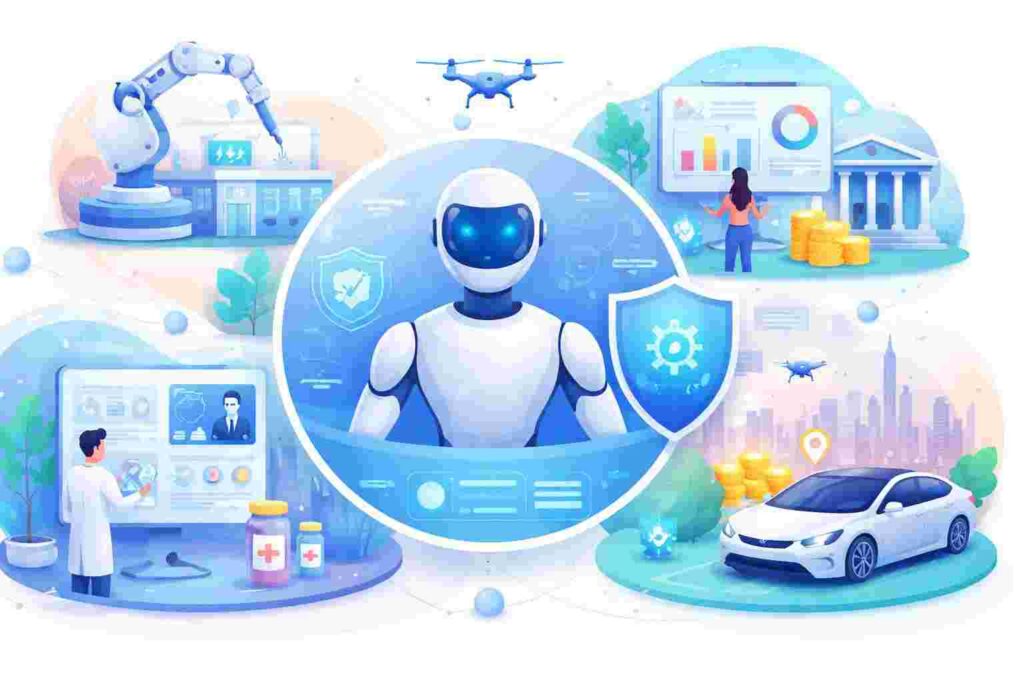
Agentic AI is utilized across multiple sectors, with significant applications including:
- Healthcare: Assisting in patient diagnosis and personalized treatment plans.
- Finance: Enabling automated trading systems and fraud detection.
- Manufacturing: Optimizing production lines and predictive maintenance.
- Transport: Powering autonomous vehicles and traffic management systems.
- Cybersecurity: Enhancing threat detection and response mechanisms.
Technical Vulnerabilities in Agentic AI
Exploring the technical vulnerabilities of agentic AI systems is crucial, as these issues can lead to serious security breaches.
Common Vulnerabilities
- Data Poisoning: Manipulating training data to skew AI decisions.
- Model Inversion: Reversing the AI model to extract sensitive data.
- Adversarial Attacks: Inputting deceptive data to confuse AI algorithms.
- Insider Threats: Malicious actions by those within the organization.
- Software Bugs: Code vulnerabilities that can be exploited.
Attack Vectors
These vulnerabilities can be exploited through several attack vectors:
- Network Attacks: Targeting AI systems via insecure network protocols.
- Physical Attacks: Manipulating the hardware on which AI systems operate.
- API exploitation: Taking advantage of unsecured application programming interfaces.
- Social Engineering: Deceiving personnel to gain privileged access.
- Supply Chain Vulnerabilities: Attacking third-party components that integrate with AI systems.
Mitigation Strategies
To combat these vulnerabilities, organizations should implement effective mitigation strategies such as:
- Regular Security Audits: Conducting frequent checks to identify vulnerabilities.
- Secure Data Handling: Ensuring data integrity and secrecy.
- Robust Testing Frameworks: Employing comprehensive testing to discover weaknesses.
- User Training: Educating employees about security best practices.
- Continuous Monitoring: Keeping an eye on systems to detect abnormal activities.
Industry-Specific Security Challenges
Different sectors face unique challenges related to the security risks in agentic AI systems. Here, we dissect some of these industries.
Healthcare
In healthcare, protecting patient data is paramount. The use of agentic AI in diagnostics and treatment poses risks of data breaches which can compromise sensitive information. Regulatory compliance, such as HIPAA in the U.S., adds another layer of complexity, requiring stringent security measures.
Financial Services
The finance sector is heavily reliant on agentic AI for automated trading and fraud detection. However, the financial implications of a security breach can be devastating, leading to significant loss of capital and trust.
Autonomous Vehicles
With the advent of self-driving cars, safety is the primary concern. Hacking an autonomous vehicle can lead to accidents, putting lives at risk. Ensuring stable, secure communication between vehicles is critical.
Manufacturing
In manufacturing, agentic AI optimizes processes, but it is susceptible to supply chain vulnerabilities. A breach could disrupt production and result in substantial financial losses.
Government Sectors
Government applications of agentic AI, from surveillance to public safety, face immense scrutiny. Security breaches in these domains can undermine national security and public trust.
Strategic Advantages of Strong Security Measures
Implementing robust security measures can yield numerous strategic advantages for organizations utilizing agentic AI.
Building Trust with Users
User trust is instrumental in the adoption of any technology. By showcasing strong security practices, organizations can enhance their credibility.
Regulatory Compliance
Compliance with regulations not only avoids legal penalties but also reinforces an organization’s commitment to security, further attracting customers.
Long-term Cost Savings
Investing in security upfront can lead to lower costs in the long run by preventing breaches that result in financial penalties and reputation damage.
Limitations and Risk Considerations
Despite efforts to secure agentic AI systems, certain limitations and risk considerations remain.
Incomplete Security Solutions
No security measure can guarantee complete safety. Organizations must be aware of the potential for undiscovered vulnerabilities.
Evolving Threat Landscape
The nature of cyber threats is constantly changing. As AI technology advances, so do the strategies employed by cybercriminals.
User Dependency on AI Decisions
As organizations increasingly rely on AI for decision-making, the risks associated with erroneous AI outputs also rise, potentially leading to severe consequences.
Comparative Analysis of Security Frameworks
To effectively counteract potential security risks, varying security frameworks can be evaluated for their applicability to agentic AI systems.
Framework A vs. Framework B
| Feature | Framework A | Framework B |
|---|---|---|
| Scalability | High | Medium |
| Cost | Moderate | High |
| User Accessibility | Complex | Simple |
| Integration with AI | Direct | Indirect |
| Incident Response Time | Fast | Slow |
Strengths and Weaknesses
Both frameworks have distinct strengths and weaknesses, impacting their suitability for different organizations and needs.
Recommendation Matrix
Organizations should choose frameworks based on their specific requirements, considering factors such as budget, existing infrastructure, and the scale of their operations.
Market Trends & Security Statistics
Recent market trends indicate a growing focus on security within agentic AI systems.
Growth Statistics
According to a recent report, the AI security market is projected to reach $37.74 billion by 2026, reflecting a CAGR of 28.5% during the forecast period.
Incident Reports
Moreover, a study by Cybersecurity Ventures estimates that cybercrime could cost the world $10.5 trillion annually by 2025, further emphasizing the urgent need for robust security measures.
Investment Trends
Investment in AI security technologies is expected to increase significantly, as organizations recognize the potential risks and strive to fortify their defenses.
Case Studies: Measurable Outcomes
Implementing strong security measures for agentic AI brings tangible benefits. Here, we present two notable case studies.
Case Study 1: Risk Reduction
A leading healthcare provider adopted a robust security framework for their AI diagnostic system. As a result, they reported a 50% reduction in security incidents within the first year, significantly boosting patient confidence.
Case Study 2: Cost Savings
A financial institution invested in advanced AI security protocols which resulted in a 30% decrease in fraud losses. This not only protected their assets but also improved their overall financial performance.
Lessons Learned
These case studies highlight the importance of proactive security measures and the positive outcomes that can result, encouraging other organizations to prioritize security in their AI systems.
Future Outlook on Agentic AI Security
As agentic AI systems evolve, so too will the security landscape.
Emerging Technologies
Technologies like quantum computing and blockchain are anticipated to play significant roles in enhancing AI security measures, providing new ways to protect sensitive data.
Regulatory Changes
With increasing concerns regarding privacy and security, organizations should expect more stringent regulations around the use of AI, necessitating compliance measures.
Predicted Challenges
AI still faces challenges such as adversarial attacks that change over time, making continuous adaptation essential for security strategies.
Frequently Asked Questions
What are the main security risks?
The primary security risks associated with agentic AI systems include data poisoning, adversarial attacks, and insider threats. Each of these vulnerabilities can be exploited, leading to data breaches or system malfunctions. It is essential for organizations to understand these risks to establish effective countermeasures.
How can these risks be mitigated?
Mitigating risks involves a combination of regular security audits, robust data handling practices, and comprehensive training programs for users. By implementing these strategies, organizations can significantly reduce their exposure to vulnerabilities inherent in agentic AI systems.
What industries are most affected?
Industries most affected include healthcare, finance, and government sectors. Each of these domains relies heavily on the functionality of agentic AI, making them particularly vulnerable to security breaches that can have significant ramifications.
What are the statistics on AI security breaches?
As mentioned earlier, the financial costs associated with cybercrime could reach $10.5 trillion by 2025. This staggering figure highlights the urgent need for organizations to strengthen their AI security frameworks to prevent potential breaches.
How does AI security impact consumer trust?
Consumer trust is heavily influenced by an organization’s perceived commitment to security. Demonstrating robust security measures can increase user confidence, fostering loyalty and encouraging wider adoption of agentic AI technologies.
What are the future trends in AI security?
Future trends indicate a significant rise in investments in AI security technology, alongside regulatory changes that will mandate stricter compliance measures. Organizations must adapt proactively to stay ahead of evolving threats and maintain secure operational environments.
Conclusion and Recommendations
In conclusion, the security risks in agentic AI systems require urgent attention. Stakeholders must recognize these risks to implement robust security measures that not only protect their systems but also enhance user trust and compliance. It is essential for organizations to:
- Conduct regular security assessments and updates.
- Invest in training programs for all personnel.
- Foster a culture of security within the organization.
- Stay informed about emerging threats and adapt accordingly.
- Engage with industry leaders to share insights and best practices.
By embracing these recommendations, stakeholders can navigate the complex landscape of security within agentic AI systems confidently. The path forward is clear; proactive measures will ensure the integrity and trustworthiness of these transformative technologies.