
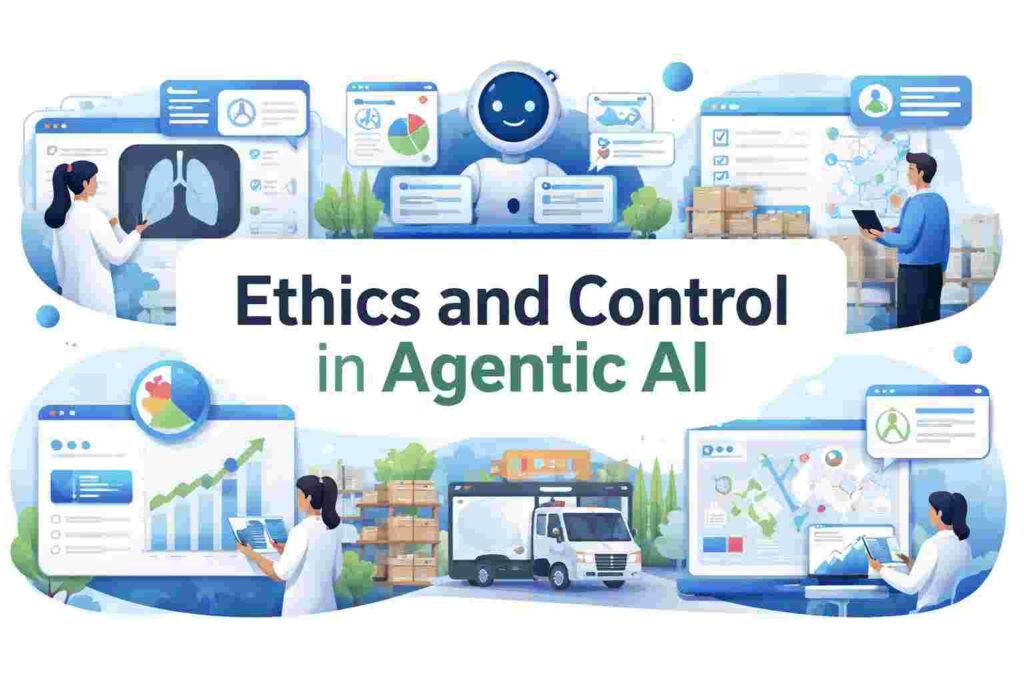
As we delve into the realm of artificial intelligence, the concept of Agentic AI Ethics is becoming increasingly relevant. Agentic AI refers to autonomous systems that possess decision-making capabilities, which raises significant ethical considerations. In an age where AI influences various sectors, from healthcare to finance, understanding the ethical landscape becomes paramount. This article aims to explore the intricacies of agentic AI, examining its implications, control mechanisms, and essential ethical guardrails.
Understanding Agentic AI and Its Implications
In this foundational section, we will define agentic AI, explore its characteristics, and review the ethical frameworks guiding its development.
Definition of Agentic AI
Agentic AI stands out in the AI landscape due to its capability to act autonomously, make decisions, and achieve set goals without human intervention. Unlike traditional AI, which primarily follows pre-programmed instructions, agentic AI systems learn from their environments and adapt their behaviors accordingly. This ability introduces both opportunities and challenges regarding accountability, ethical standards, and operational control.
Key Characteristics of Agentic AI
- Autonomy: Operates independently to execute tasks.
- Reactivity: Responds to varying environmental stimuli.
- Learning: Adapts and improves through experience.
- Goal-driven: Pursues specific objectives based on predefined criteria.
- Interactivity: Engages with users or other systems.
Ethical Frameworks for AI Development
Multiple ethical frameworks guide the development of agentic AI systems. Familiar frameworks include:
- Utilitarianism: Focuses on outcomes that maximize overall happiness.
- Kantian Ethics: Emphasizes duty and adherence to rules.
- Virtue Ethics: Concentrates on the moral character of developers and users.
- Social Contract Theory: Advocates for systems that respect societal norms and values.
Technical Frameworks for Control in AI Systems
This technical section describes various mechanisms that can be deployed to control agentic AI systems effectively.
Architecture of Control Mechanisms
At the core of agentic AI is a robust architecture that enables control over autonomous functions. This involves:
- Defining operational boundaries through restrictions.
- Implementing oversight systems that track decisions.
- Utilizing fail-safe protocols that minimize malfunction impacts.
- Integrating human-in-the-loop systems to ensure accountability.
Feedback Loops and Safety Protocols
Feedback mechanisms play a critical role in guiding AI systems based on their performance. These systems continuously gather data, allowing engines to adjust their output accordingly. By incorporating feedback loops, organizations can avoid mistakes and reinforce ethical standards. Safety protocols further enhance this by ensuring that actions undertaken by AI are predictable and aligned with societal norms.
Algorithm Transparency and Explainability
One of the most significant challenges in deploying agentic AI is ensuring transparency. Users need assurance that AI systems operate under ethical guidelines. Achieving algorithm transparency involves:
- Documenting decision-making processes.
- Making model architectures public for scrutiny.
- Providing easy-to-understand explanations for AI outputs.
Impact on Business Across Different Industries
In this section, we will assess how agentic AI can affect various industries, highlighting both benefits and ethical implications.
Healthcare Innovations and Ethical Considerations
Agentic AI is revolutionizing healthcare by enhancing diagnostic processes and treatment plans. AI systems can analyze vast datasets and identify potential health risks that human practitioners might overlook. Although this enhances efficiency, it also raises ethical questions regarding patient privacy and data security, necessitating stringent ethical considerations.
Finance and Risk Management in AI
Financial institutions leverage agentic AI for predictive analytics and automated trading. By forecasting market trends, AI systems can contribute to increased profitability. However, the use of AI in finance also poses ethical challenges, such as bias in decision-making, which could fundamentally alter economic equity.
Logistics and Supply Chain Efficiency
AI systems are streamlining logistics by optimizing supply chains. From inventory management to route planning, agentic AI automates processes that were traditionally labor-intensive. While this leads to cost savings, any technical failures must be closely monitored to avoid disruption in the supply chain.
Strategic Advantages of Ethical AI Implementation
Prioritizing ethics in agentic AI deployment offers organizations a plethora of strategic benefits.
Building Trust with Consumers
Ethical AI practices breed consumer trust. As organizations transparently communicate their AI operations and responsibly handle data, they cultivate a loyal customer base, which can translate into a significant competitive advantage. In the digital age, trust is invaluable.
Enhancing Brand Reputation
An organization’s commitment to ethical AI is an essential component of its brand reputation. Companies leading in ethical practices are more likely to be recognized favorably in public perception, leading to improved customer relationships and business outcomes.
Long-term Compliance and Regulatory Advantages
Organizations that prioritize ethical considerations in AI are better equipped to adapt to evolving regulations. Proactive compliance with AI governance ensures sustainability, mitigates risks, and promotes longevity in the market.
Limitations and Risks of Agentic AI
This section identifies key risks and limitations associated with the deployment of agentic AI, reinforcing the importance of ethical implementation.
Bias and Discrimination Risks
Agentic AI systems can perpetuate existing biases present in training data. If unchecked, these biases can result in discriminatory outcomes, undermining public trust and potentially causing harm. Organizations must be vigilant in identifying and correcting biases to foster fair AI practices.
Data Privacy Concerns
The integration of AI into various sectors amplifies data privacy concerns. Lack of proper data governance can lead to unauthorized access and misuse of personal information. Organizations must adopt transparent data practices to mitigate these risks.
Technical Failures and Accountability
Even well-designed AI systems can experience technical failures. When failures occur, accountability becomes a critical issue. Clear guidelines and fail-safe measures must be established to protect against reputational and financial repercussions.
Comparison of AI Ethics Across Sectors
Understanding how different sectors approach AI ethics is vital for establishing best practices.
| Aspect | Healthcare | Finance |
|---|---|---|
| Regulatory Environment | High restrictions; HIPAA compliance | Moderate; Dodd-Frank regulations |
| Bias Challenges | Patient care biases | Market manipulation biases |
| Data Sensitivity | Highly sensitive data | Financial data |
| Public Perception | High trust if transparent | Distrust; needs transparency |
Statistics and Market Trends in AI Ethics
In this section, we will highlight pertinent statistics and trends that underscore the importance of ethical AI practices.
Market Growth Metrics for Ethical AI Solutions
The ethical AI segment is expected to reach $67.3 billion by 2026, growing at a CAGR of 25.2% from 2021 to 2026, indicating that businesses recognize the significant value in integrating ethical considerations into AI.
Trends in Regulatory Compliance
Recent surveys suggest that 70% of organizations are prioritizing compliance with AI regulations and ethical guidelines, a clear marker of the increasing importance placed on ethical AI practices.
User Trust Metrics in AI Technologies
Research indicates that 85% of consumers express concerns about AI bias and accountability, reinforcing the need for transparent practices that can build user confidence.
Real-World Case Studies of Agentic AI
Analyzing real-world implementations of agentic AI provides valuable insights into its effects and outcomes.
Case Study: AI in Diagnostics – Before and After
Before deploying an AI-based diagnostic tool, a major healthcare provider relied on manual analysis of test results, which resulted in an error rate of 15%. After integrating an AI diagnostic tool, this error rate was reduced to 3%, showcasing significant improvement in patient care and operational efficiency.
Case Study: Financial Fraud Detection Outcomes
A prominent bank implemented an agentic AI system designed to detect fraudulent transactions. Pre-implementation, it faced a fraud detection rate of 40%. Post-implementation, the detection rate surged to 75%, demonstrating the immense potential of AI in mitigating financial risks.
Case Study: AI in Customer Service Transformation
Following the integration of AI-driven chatbots into its customer service sector, a retail company reported a 60% decrease in response time and a 20% increase in customer satisfaction ratings. This transformation showcased AI’s value in enhancing user experience.
Future Outlook of Ethics in Agentic AI
As we look toward the future, it’s essential to discuss the challenges and opportunities surrounding ethics in AI development.
Emerging Technologies and Ethical Implications
Emerging technologies, such as quantum computing, are set to revolutionize AI capabilities. However, this brings forth ethical concerns surrounding security and decision-making autonomy that require careful consideration and regulatory frameworks.
Anticipated Regulatory Changes
With increasing public concern over AI practices, regulatory bodies worldwide are expected to impose stricter guidelines. Anticipating these changes will allow organizations to adapt proactively, ensuring compliance and maintaining ethical operations.
Predictions on Public Perception of AI
Public perception of AI is likely to evolve as organizations continue to prioritize ethical practices. As transparency and accountability become integral components of AI deployment, consumer trust is expected to grow, potentially leading to wider acceptance of AI technologies.
Frequently Asked Questions about Agentic AI Ethics
What are the main ethical concerns with AI?
The primary ethical concerns with AI revolve around issues such as bias, transparency, accountability, and data privacy. Bias can manifest when AI systems learn from flawed datasets, leading to unjust outcomes. Transparency is crucial for users to understand how AI makes decisions, as lack of clarity can foster distrust. Accountability is another significant concern; when an AI system fails or makes a mistake, determining liability is complex. Finally, data privacy issues are paramount, as organizations must handle personal and sensitive information responsibly.
How can organizations ensure ethical AI deployment?
Organizations can ensure ethical AI deployment by establishing clear ethical guidelines and governance structures. This involves continuous monitoring and assessment of AI systems to identify bias and inaccuracies. Further, companies should prioritize training data integrity and invest in diverse datasets to minimize biased learning outcomes. Implementing transparency measures, such as providing stakeholders with insights into how AI operates, can foster trust and accountability.
What are the implications of AI bias?
AI bias can lead to discriminatory practices, producing outcomes that adversely impact marginalized groups. For example, biased algorithms in hiring processes may favor particular demographics, perpetuating discrimination. Additionally, AI bias can erode trust in technology. When users perceive AI as unjust or unfair, it can lead to pushback against system implementations, making bias detection an essential focus for developers.
How does regulation affect AI ethics?
Regulation significantly impacts AI ethics by establishing guidelines and standards that organizations must follow. Well-defined regulations can help mitigate risks associated with biased algorithms, enhancing accountability and user trust. However, overly stringent regulations may stifle innovation and limit the flexibility necessary for AI systems to adapt and evolve. Thus, finding a balance between regulation and innovation is crucial for the ethical development of AI.
What role do stakeholders play in AI ethics?
Stakeholders, including developers, policymakers, and users, play a fundamental role in shaping AI ethics. Developers must prioritize ethical considerations in design and implementation, while policymakers must create a supportive legislative environment. Users contribute to ethical conversations by voicing concerns and expectations regarding AI performance. Engaging all stakeholders in the ethical discourse ensures comprehensive frameworks that are applicable across various contexts.
What are the future challenges for AI ethics?
Future challenges for AI ethics will include navigating the complex landscape of emerging technologies, maintaining public trust, and responding to ever-evolving regulatory frameworks. As AI systems become more powerful, ethical considerations surrounding autonomy, data privacy, and accountability will require continuous vigilance and proactive governance. Furthermore, public perception of AI is likely to shift, necessitating adaptive ethical strategies that account for changing societal expectations.
Conclusion: Navigating the Future of Agentic AI Ethics
In conclusion, as agentic AI continues to evolve, the importance of addressing ethics cannot be overstated. Organizations must embrace responsible practices that not only enhance technological capabilities but also foster trust and accountability among users. By doing so, they can navigate the complexities of agentic AI efficiently and responsibly, ensuring a future where technology serves humanity ethically and beneficially.