
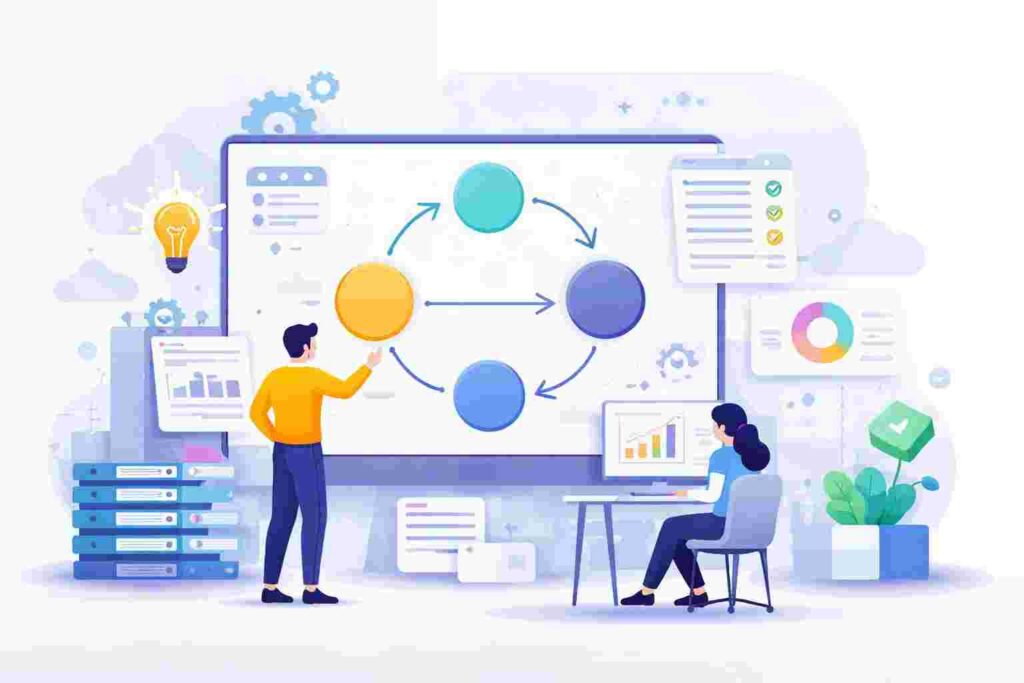
In the rapidly evolving realms of automation and artificial intelligence, reliable agent loops stand out as crucial components that dictate the efficiency and effectiveness of various applications. Understanding how to design these loops is fundamental to harnessing the power of intelligent systems.
Fundamentals of Agent Loops
To effectively engineer agent loops, it is essential to grasp their foundational elements. These loops serve as the backbone for enabling agents to make decisions based on their environment, adapt to situations, and perform tasks autonomously.
Definition and Purpose
An agent loop is a repeated cycle in which an agent performs tasks based on inputs from its environment, processes this information, and executes actions. The primary purpose is to create an interactive system that continually learns and improves its performance.
Key Components of Agent Loops
- Input Sensors: Collect data from the environment.
- Processing Unit: Analyzes inputs, often through algorithms or decision-making models.
- Action Executors: Carry out tasks based on processed information.
- Feedback Mechanism: Provides loops back to input, helping the agent learn.
Types of Agent Loops
Different applications utilize various types of agent loops, including but not limited to:
- Simple Reactive Loops: Respond to stimuli without memory.
- Deliberative Loops: Utilize internal models of the world to make decisions.
- Evolving Loops: Adapt algorithms based on ongoing feedback and learning.
Technical Mechanisms Behind Agent Loops
The architecture and inner workings of agent loops are paramount to their reliability and effectiveness. Understanding the technical mechanisms allows developers and researchers to innovate and improve these systems continually.
Algorithms Used in Agent Loops
Several algorithms are pivotal for processing and decision-making within agent loops:
- Reinforcement Learning Algorithms: Learn optimal actions through trial and feedback.
- Markov Decision Processes: Provide a mathematical framework for decision-making.
- Neural Networks: Enable complex patterns to be recognized and acted upon.
Architecture of Agent Systems
Agent loops can be structured through various architectural designs, including:
- Reactive Architectures: Focus on direct interaction with the environment without internal state.
- Hierarchical Architectures: Utilize multiple layers of processing to streamline decision-making.
- Distributed Architectures: Allow for multiple agents to work in concert, communicating and coordinating actions.
Programming Languages and Frameworks
Several programming languages and frameworks are widely adopted for implementing agent loops:
- Python: Highly favored for its vast libraries supporting machine learning and AI.
- Java: Known for robustness and object-oriented features.
- R: Used primarily in statistical computing and data analysis.
Evaluating Business Impact of Agent Loops
Agent loops can contribute significantly to various sectors, yielding enhanced efficiency and overall performance. This section delves into the tangible business impacts of implementing reliable agent loops.
Impact on E-commerce
In the e-commerce space, agent loops facilitate better customer experiences through:
- Personalized Recommendations: By analyzing previous customer behavior, systems deliver tailored product suggestions.
- Inventory Management: Agents dynamically adjust stock levels based on predictive analytics.
- Fraud Detection: Intelligent loops assess transactions for unusual patterns that may indicate fraud.
Implications for Customer Support
Businesses are increasingly utilizing agents to enhance customer support, leading to outcomes such as:
- 24/7 Availability: Automated agents can engage customers outside of regular business hours.
- Rapid Response Times: Agent loops enable instant replies to customer inquiries.
- Cost Reduction: With fewer human resources required, operational costs significantly decrease.
Use in Manufacturing and Supply Chain
Agent loops contribute to optimization in manufacturing and supply chains through:
- Predictive Maintenance: Agents forecast machinery failures before they occur.
- Real-time Monitoring: Continuous data collection ensures optimal operational conditions.
- Dynamically Adjusting Production: Loops adjust output based on real-time demand data.
Strategic Advantages of Effective Agent Loop Design
Effective design of agent loops plays a critical role in establishing competitive advantages in various industries, with strategic benefits that can reshape operational performance.
Increased Efficiency
Agent loops optimize processes, leading to significant reductions in time and costs. For instance, automated systems can handle repetitive tasks far faster than human counterparts.
Enhanced Decision Making
With the ability to process vast amounts of data and learn from feedback, agent loops contribute to more informed and timely decisions, which can mitigate risks and seize opportunities promptly.
Scalability and Adaptability
As organizations grow, reliable agent loops provide an adaptable framework that scales with operations, ensuring consistent performance even under changing conditions.
Limitations and Risks of Agent Loops
Despite their advantages, designing agent loops comes with several limitations and risks that must be managed.
Common Failures
- Data Quality Issues: Poor input can lead to incorrect conclusions and actions.
- Overfitting: Models that learn too specifically may perform poorly on new data.
- System Complexity: Increased complexity can lead to higher failure rates.
Ethical Considerations
Agents must operate under ethical standards, especially when handling sensitive data. Concerns surrounding privacy must be addressed through robust protocols. Failure to do so can result in loss of trust and legal repercussions.
Reliability Concerns
The reliability of agent loops is paramount to their performance. Any lapses in decision-making can have dire consequences, especially in critical applications like healthcare and autonomous vehicles.
Comparison of Agent Loop Models
Choosing the right model for agent design involves understanding various frameworks and their implications. Below we evaluate some popular agent loop models based on performance metrics, cost-effectiveness, and adaptability.
| Model | Performance Metrics | Cost Efficiency | Adaptability |
|---|---|---|---|
| Reinforcement Learning | High performance in complex environments | Higher upfront costs | Highly adaptable to changes |
| Reactive Systems | Fast responses with moderate performance | Low implementation cost | Less adaptable to changes |
| Hierarchical Structures | Efficient in breaking down complex tasks | Moderate costs; scalable | Scalable and adaptable |
Statistics and Market Trends in Agent Loop Deployment
The market for agent loop technologies has seen substantial growth over recent years, driven by advancements in AI and automation.
Market Size and Growth Rate
According to a report by Fortune Business Insights, the global AI market size was valued at approximately $97.2 billion in 2021 and is expected to reach $1,581.70 billion by 2028, growing at a CAGR of 40.2% during the forecast period.
Adoption Rates Across Industries
A survey conducted by McKinsey revealed that 50% of companies reported high adoption of AI technologies, including reliable agent loops, with the manufacturing sector experiencing the highest rates of integration at 70%.
Investment Trends in Automation and AI
Investment in AI technologies is surging, with projections indicating a global investment in AI could surpass $500 billion by 2024, reflecting the anticipated impact of reliable agent loops on productivity.
Real-World Case Studies of Reliable Agent Loops
Examining the outcomes of deployed agent loops in different industries can provide valuable insights into their effectiveness.
Case Study in E-commerce
One prominent e-commerce retailer implemented an agent loop for personalized recommendations. Before the implementation, their customer conversion rate was 2.3%. Post-implementation, this rate surged to 4.7%, indicating the positive impact of tailored customer interactions.
Case Study in Healthcare
A leading healthcare provider deployed an intelligent agent loop for patient scheduling. Initially, their patient no-show rate was 20%. After implementing the system, the no-show rate decreased to 8%, significantly improving operational efficiency.
Case Study in Customer Support
A telecommunications company utilized agent loops in their customer support chats. Prior to implementation, resolution rates stood at 60%. Following the integration of reliable agent loops, their rates climbed to 90%, demonstrating enhanced problem-solving capabilities.
Future Outlook for Agent Loop Technologies
The future of reliable agent loops is promising, with various trends emerging that will shape their development and deployment.
Advances in AI and Learning Algorithms
As research in AI progresses, newer learning algorithms are expected to enhance the capabilities of agent loops, enabling more sophisticated interactions and decision-making.
Integration with IoT
The convergence of agent loops with Internet of Things (IoT) technologies will expand their applicability, allowing for real-time data processing in a multitude of environments.
Predictions for Industry Adoption
Analysts project widespread adoption across sectors, with expectations that reliable agent loops will become a standard in operational frameworks, particularly in automation-heavy industries.
Frequently Asked Questions About Agent Loops
What are the key differences between agent loops and traditional programming?
Agent loops empower systems to operate autonomously by reacting to stimuli and learning from experiences, whereas traditional programming follows a strict, pre-defined set of instructions that do not allow for such adaptability. This fundamental difference allows agent loops to evolve and enhance their performance based on environmental feedback.
How do agent loops adapt to changing environments?
Agent loops incorporate feedback mechanisms that enable them to analyze environmental changes and adjust their actions accordingly. By using machine learning algorithms, these systems can identify new patterns in real-time data and modify their behavior to optimize performance, making them versatile and resilient.
Are there specific industries where agent loops are more beneficial?
While agent loops can be beneficial across numerous sectors, industries such as e-commerce, healthcare, and manufacturing have seen profound impacts due to their reliance on real-time data and decision-making. These industries often require dynamic systems that adapt to user behaviors, machine conditions, or market trends to maintain competitive advantages.
What performance metrics should be monitored?
Essential performance metrics for agent loops include response time, accuracy of predictions, adaptability measures, and overall system throughput. Monitoring these metrics allows for continuous improvement and ensures the reliability of the agent’s performance in meeting objectives.
How can small businesses implement agent loops?
Small businesses can start by identifying repetitive tasks that consume significant resources and explore simple rule-based agent systems. Through platforms offering AI capabilities, they can deploy solutions that enhance efficiency without requiring extensive infrastructure, facilitating gradual integration of reliable agent loops into their operations.
What are the best practices for designing agent loops?
Best practices include focusing on user experience to ensure the agent meets consumer needs, employing robust feedback systems for iterative improvement, ensuring data integrity, and maintaining ethical standards while handling sensitive information. Continuous monitoring and adaptation are also crucial to sustaining performance and enhancing reliability over time.
Conclusion and Key Takeaways
In summary, the design of reliable agent loops plays a vital role in harnessing the benefits of automation and artificial intelligence. As explored throughout this guide, effective agent loops enhance efficiency, facilitate better decision-making, and provide strategic advantages across industries.
Recap of Key Points
From understanding the foundational aspects of agent loops to exploring advanced technical mechanisms, it is clear that investing in reliable agent loop design can yield significant returns. Businesses must consider both the benefits and risks involved while continuously innovating.
Final Thoughts on Implementation
Successful implementation requires a careful analysis of organizational goals, a robust understanding of potential limitations, and commitment to monitoring and optimizing agent performance. By embracing the future of reliable agent loops, organizations can position themselves for success in an increasingly automated world.
Encouraging Innovation in Agent Design
With ongoing advancements in technology, fostering innovation in the design and application of agent loops is essential. Organizations are encouraged to experiment and learn from results, ultimately enhancing their processes and outcomes.