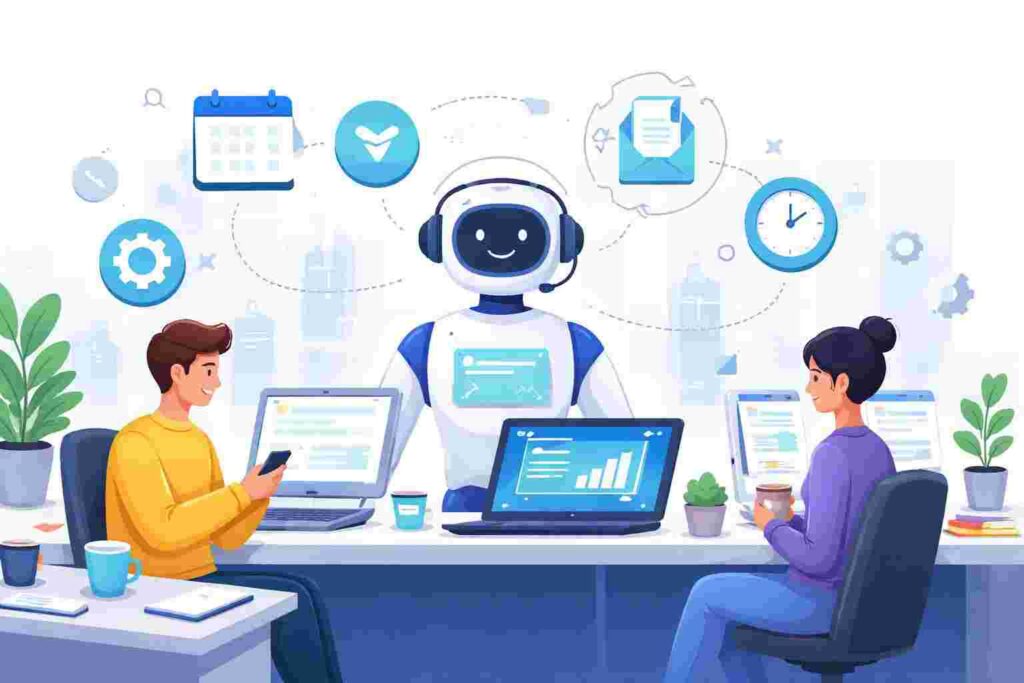

In today’s rapidly evolving tech landscape, the concept of an AI coding assistant has gained significant traction among developers and organizations. With the increasing demand for efficient coding practices and the need to optimize workflows, AI coding assistants play a pivotal role in enhancing productivity. This comprehensive guide will delve into the core aspects of building an AI coding assistant, examining its architecture, technologies, business implications, and future prospects.
Understanding AI Coding Assistants
The first step in our exploration is to establish a foundational understanding of what AI coding assistants are and how they function. These tools utilize advanced algorithms to assist developers in coding tasks, offering features that enhance coding efficiency.
Definition of AI Coding Assistants
At their core, AI coding assistants are software tools that leverage artificial intelligence to aid developers in writing, debugging, and optimizing code. They can suggest code snippets, correct errors, and provide documentation in real-time, thereby reducing the cognitive load on programmers.
How AI Enhances Coding Practices
AI enhances coding practices by automating repetitive tasks, thereby allowing developers to focus on more strategic and creative aspects of software development. For instance, AI assistants can:
- Suggest relevant code snippets based on context.
- Offer solutions to common coding problems.
- Analyze code for potential bugs and errors.
- Recommend best practices for code efficiency and readability.
Key Features of AI Coding Assistants
AI coding assistants come equipped with a myriad of features, including:
- Real-time code suggestions and autocompletions.
- Error detection and debugging support.
- Integration with version control systems.
- Context-aware recommendations based on prior code.
- Support for multiple programming languages.
Architecture and Technologies Behind AI Coding Assistants
Understanding the architecture and technologies that power AI coding assistants is crucial for developers seeking to create or implement these tools within their workflows. The technology stack typically includes various machine learning models and natural language processing (NLP) techniques.
Natural Language Processing (NLP) in Coding
Natural Language Processing plays a vital role in AI coding assistants, enabling them to understand and interpret queries in natural language. NLP techniques help the assistant comprehend programming languages and the nuances of syntax, allowing for more accurate code generation and suggestions.
Machine Learning Models for Code Suggestion
Machine learning models, particularly neural networks, are trained on vast datasets of code to enable intelligent code suggestion. These models learn coding patterns and practices, making them capable of generating contextually appropriate code snippets.
Integration with IDEs and Development Tools
For an AI coding assistant to be effective, it must seamlessly integrate with existing integrated development environments (IDEs) and development tools. This includes support for:
- Popular IDEs like Visual Studio Code and IntelliJ IDEA.
- Collaboration tools such as GitHub and Bitbucket.
- Continuous integration/continuous deployment (CI/CD) pipelines.
- API accessibility for further customization.
The Business Impact of AI Coding Assistants
The business implications of implementing AI coding assistants are profound. Organizations that effectively integrate these tools stand to gain significant advantages in terms of productivity, cost savings, and quality assurance.
Increased Developer Productivity
AI coding assistants enhance productivity by reducing the time developers spend on repetitive tasks. Studies have shown that developers using AI tools can complete coding tasks up to 40% faster than those who do not.
Cost Savings for Businesses
The implementation of AI coding assistants can lead to substantial cost savings for businesses. By increasing the output and efficiency of coding teams, companies can:
- Reduce overtime costs.
- Minimize errors and subsequent bug fixes through better quality control.
- Streamline recruitment by lowering the need for larger teams.
Enhanced Code Quality Assurance
With AI-driven tools constantly analyzing code, businesses benefit from enhanced code quality assurance. AI coding assistants can:
- Identify code vulnerabilities and suggest fixes.
- Facilitate adherence to coding standards.
- Promote best practices across development teams.
Strategic Advantages of Implementing AI Coding Assistants
Organizations that adopt AI coding assistants can harness strategic advantages, positioning themselves ahead of competitors in the crowded tech landscape.
Fostering Innovation and Creativity
By alleviating the burden of mundane coding tasks, AI coding assistants allow developers to concentrate on innovation and creativity. This shift in focus can lead to:
- Development of unique software solutions.
- Enhanced collaboration among teams.
- Increase in project experimentation without substantial risk.
Reducing Time-to-Market for Software Projects
The use of AI tools reduces the time it takes to bring software projects to market. With faster coding and debugging processes, organizations can:
- Rapidly iterate on projects based on user feedback.
- Launch updates more frequently, maintaining relevance.
- Optimize resource allocation for quicker project completion.
Empowering Remote Development Teams
As remote work becomes more prevalent, AI coding assistants can empower distributed teams to collaborate effectively. Features such as real-time suggestions and error-correction tools help ensure:
- Consistency in code quality across remote locations.
- Fluid communication among team members.
- Improved project management capabilities.
Challenges and Limitations in Developing AI Coding Assistants
While the benefits are substantial, there are challenges and limitations associated with developing and deploying AI coding assistants.
Data Privacy and Security Issues
One of the primary concerns with AI coding assistants is data privacy. As these tools often require access to proprietary codebases, organizations must ensure:
- Implementation of robust security protocols to safeguard sensitive data.
- Compliance with relevant data protection regulations such as GDPR.
- Regular audits and assessments of security measures.
Dependence on Quality Training Data
AI coding assistants rely heavily on large datasets for training. The quality of these datasets directly affects the assistant’s performance. Key considerations include:
- Ensuring diverse inputs to minimize bias.
- Utilizing clean and well-structured codebases for training.
- Regular updates to the training data as coding practices evolve.
Understanding Contextual Limitations
Despite their capabilities, AI coding assistants may struggle with understanding the context of specific codebases. This is vital because:
- Context-aware recommendations are crucial for effective solutions.
- Understanding project-specific requirements can be challenging.
- Continuous feedback loops from users are necessary to improve contextual understanding.
Comparative Analysis of Leading AI Coding Assistants
As the market for AI coding assistants continues to grow, various tools have emerged, each offering unique features and functionalities. A comparative analysis helps potential users make informed choices.
Feature Differentiation Among Tools
Leading AI coding assistants vary in terms of their features. Below is a comparison of several popular tools:
| Tool Name | Key Features | Programming Languages Supported | Price |
|---|---|---|---|
| GitHub Copilot | Contextual Suggestions, Autocomplete, Pair Programming | Python, JavaScript, TypeScript, Ruby | $10/month |
| Tabnine | Code Completion, AI Training on Projects, Multi-language Support | Multiple Languages | $12/month |
| Kite | Real-time Syntax Checks, Documentation Lookup, Line-of-Code Suggestions | Python, Java, C++ | $19.90/month |
User Experience Comparison
User experience often dictates the success of AI coding assistants. User feedback reveals several critical aspects:
- Usability and interface design are significant factors.
- Integration capabilities with existing workflows must be seamless.
- Support and documentation impact the effectiveness of users’ experience.
Effectiveness in Different Programming Languages
Different tools may perform better with specific programming languages. For instance:
- GitHub Copilot excels in JavaScript and Python projects.
- Kite provides robust support for data science applications in Python.
- Tabnine demonstrates versatility with multi-language environments.
Statistics and Market Trends in AI Coding Assistants
The growth and adoption of AI coding assistants are underscored by compelling statistics that demonstrate their impact on the software development industry.
Market Growth Projections
The AI coding assistant market is projected to grow significantly. According to recent studies, the market for AI programming tools is expected to reach $8 billion by 2025, illustrating a compound annual growth rate (CAGR) of 25% over the next few years.
Usage Statistics Among Developers
A survey conducted among software developers revealed that **62%** are currently using AI coding assistants in their projects, with that number likely to increase as more developers recognize the benefits.
Impact on Software Development Industry
The integration of AI coding assistants has not only streamlined coding practices but has also reshaped the broader software development landscape. Key impacts include:
- Increased adoption of agile methodologies.
- Growth in remote development opportunities.
- A shift toward more collaborative and hybrid team models.
Case Study: Successful Implementation of an AI Coding Assistant
Analyzing real-world implementations provides valuable insights into the measurable impacts of AI coding assistants. One notable case study involved a medium-sized software development company.
Project Overview and Objectives
The company set out to improve its coding efficiency and reduce error rates within its development team. They decided to implement GitHub Copilot as their primary AI coding assistant.
Implementation Process and Challenges
The implementation involved several stages, including:
- Training sessions for developers to familiarize them with the tool.
- Integrating Copilot with their existing IDEs and workflows.
- Initial resistance from some team members who were used to traditional coding methods.
Measurable Outcomes Achieved
After a three-month implementation period, the company reported:
- A **30% increase** in coding speed.
- A reduction in critical bugs by **25%**.
- Improved overall developer satisfaction rates.
The Future Outlook of AI Coding Assistants
As AI technology continues to evolve, so too will the capabilities of AI coding assistants. It is essential to consider how these advancements may reshape the future of software development.
Emerging Trends in AI and Development
New trends are emerging within AI development that will affect coding assistants, including:
- Increased use of reinforcement learning for better adaptability.
- Greater emphasis on collaborative AI tools that work alongside human developers.
- Expansion of AI capabilities into areas such as user experience design.
Potential New Features and Capabilities
The future of AI coding assistants may include:
- Enhanced contextual awareness for more precise code generation.
- Support for more programming languages and frameworks.
- Advanced integration with project management tools for better workflow.
Long-Term Impact on Software Engineering Jobs
As AI coding assistants become more prevalent, the landscape of software engineering roles will likely change. While fears of job loss are prevalent, the reality is that AI will augment human efforts rather than replace them. Key insights into this shift include:
- The demand for developers with AI proficiency will rise.
- New roles focusing on AI system oversight and development will emerge.
- Software engineers will increasingly focus on building solutions that leverage AI technologies.
Frequently Asked Questions about AI Coding Assistants
What programming languages do AI coding assistants support?
AI coding assistants typically support a wide range of programming languages, including but not limited to Java, Python, JavaScript, Ruby, and C++. Each tool may have its strengths in specific languages based on the underlying technology and training data it utilizes. Developers should choose an assistant that aligns with the languages they primarily use in their projects.
How do AI coding assistants learn from developer inputs?
AI coding assistants employ machine learning algorithms that can continually learn from the code and input provided by developers. Whenever a developer uses the tool, it collects data that informs future recommendations. The more data it processes, the better it becomes at understanding coding patterns and preferences, refining its suggestions based on previous interactions.
Can AI coding assistants be used for all coding tasks?
While AI coding assistants can significantly streamline many aspects of the coding process, they are not infallible. They excel at repetitive tasks like code completion and bug fixes but may struggle with complex tasks requiring deep contextual understanding. Developers are encouraged to use AI assistants as supplementary aids rather than primary decision-makers in their coding processes.
What are the security measures for using AI coding assistants?
Security measures for AI coding assistants include end-to-end encryption of data transmitted between the IDE and the AI tool, adherence to best practices in data privacy, and ensuring that sensitive information is not inadvertently shared with the AI systems. Organizations should also implement strict access controls and train developers on securely using these tools.
How do I integrate an AI coding assistant into my workflow?
Integrating an AI coding assistant is typically straightforward. Start by selecting an assistant compatible with your existing tools and IDE. Next, follow the installation and configuration instructions provided by the assistant, ensuring any necessary plugins or extensions are enabled. Finally, encourage developers to familiarize themselves with the tool and gradually incorporate it into their daily coding practices.
Are AI coding assistants suitable for beginners?
AI coding assistants can be incredibly beneficial for beginners, providing real-time suggestions and corrections that can enhance learning. They can help new coders understand best practices and reduce common errors. However, it is crucial that beginners also develop a foundational understanding of programming principles to avoid over-reliance on these tools.
Conclusion: The Role of AI Coding Assistants in the Future of Development
In conclusion, AI coding assistants represent a transformative shift in the way software development is carried out. By understanding the foundational aspects, technical frameworks, business impacts, and future trends, developers and organizations can fully embrace these tools. As we move forward, the continuous evolution of AI coding assistants will undoubtedly redefine efficiency and innovation within the tech industry.